First Impressions
The first spray of Dragonfly transports you to that liminal moment just after rain, when a garden exhales its relief and the air shimmers with possibility. There''s an immediate brightness—part citrus sparkle, part aldehydic fizz—that feels less like traditional perfumery and more like capturing the iridescent wings of its namesake in flight. The opening is decidedly aquatic, but not in the generic "marine" way that dominated the 1990s. This is water with personality: mineral-rich, slightly saline, alive with the green promise of wet petals and damp earth. The heliotrope and peony announce themselves with powdery sweetness, while lemon provides just enough tang to keep things from drifting into overly sentimental territory.
The Scent Profile
Zoologist''s 2017 creation unfolds in three distinct movements, each revealing a different facet of this complex composition. The top notes deliver that distinctive ozonic quality (scoring 49% in the accord profile) alongside dominant floral elements—rain-soaked aldehydes dance with heliotrope''s almond-tinged sweetness, while peony and lemon create a bright, dewy introduction that''s both fresh and slightly soapy.
As Dragonfly settles, the heart reveals its most unconventional chapter. Rice appears as a creamy, almost sake-like undertone, pairing unexpectedly well with lotus and iris to create a powdery floral accord that registers at 60% intensity. Cherry blossom adds ephemeral sweetness, while clover introduces a honeyed, herbaceous quality. This is where the composition becomes most divisive—the rice note contributes to that briney, almost oceanic character that some find fascinating and others find perplexing. It''s an intellectual center, asking you to reconcile garden florals with something distinctly aquatic and mineral.
The base anchors this aerial composition with sandalwood and amber providing warmth, while musk adds skin-like softness. Papyrus and oakmoss ground the florals with earthy, slightly bitter green notes that prevent the fragrance from floating away entirely. Yet even here, the aquatic character persists—these aren''t heavy, resinous woods but rather driftwood-like impressions, sun-bleached and salt-kissed.
Character & Occasion
Dragonfly earns its reputation as a quintessential spring fragrance, scoring a perfect 100% for that season in wearer preferences. It captures spring''s essence: renewal, moisture, blooming gardens after April showers. Summer follows closely at 77%, where the aquatic freshness makes perfect sense against warm skin and humid air. Fall and winter appearances (25% and 10% respectively) are minimal—this is decidedly not a fragrance for cold weather contemplation.
The day/night breakdown tells an even clearer story: 89% day versus just 19% night. Dragonfly is an unapologetically daytime scent, best suited for casual wear when you want something distinctive but not demanding. It''s the fragrance for weekend farmers'' markets, waterside lunches, gallery openings on sunny afternoons. The fresh and aquatic qualities (45% and 68% respectively) make it office-appropriate, though its unconventional character means it won''t fade into background pleasantness.
This is feminine-leaning in its floral dominance (100% in accord strength), but anyone drawn to aquatic florals and willing to embrace powder could wear it confidently.
Community Verdict
The Reddit community delivers a decidedly mixed verdict, scoring Dragonfly at 6.2 out of 10—tepid enthusiasm that reflects genuine division. Based on 15 documented opinions, the conversation reveals three camps.
Admirers celebrate its uniqueness, noting it stays true to Zoologist''s bold identity while remaining surprisingly wearable. The salty, briney ocean-like character wins specific praise from those seeking something beyond conventional aquatics. "Inoffensive despite unconventional notes" appears repeatedly as a compliment—this is weird, but approachably so.
Critics, however, raise legitimate concerns. The powdery quality proves polarizing, with some finding it cloying or dated. More significantly, longevity clocks in around just four hours for many wearers—a disappointment at this price point. Perhaps most tellingly, skin chemistry variation runs high; what blooms beautifully on one person turns soapy or flat on another.
The broader rating of 3.8 out of 5 from 953 votes supports this mixed reception—solid but not stellar, appreciated but not universally loved.
How It Compares
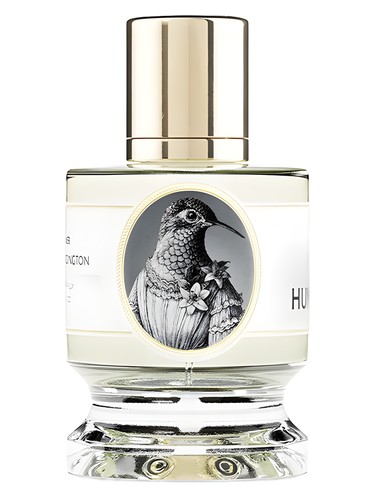
Within Zoologist''s own menagerie, Dragonfly finds kinship with Hummingbird and Nightingale, both exploring lighter, more floral territories than the house''s animalic offerings. It shares DNA with Hermès'' Un Jardin Sur Le Nil in its aquatic-floral approach and Byredo''s Bal d''Afrique in sophisticated wearability. Yet Dragonfly leans harder into its aquatic strangeness, embracing that rice-and-salt character that makes it more challenging than any of these comparisons.
In the broader aquatic floral category, it stands apart through sheer peculiarity—this isn''t trying to be fresh and easy, but rather capturing something more specific and ephemeral.
The Bottom Line
Dragonfly succeeds at what Zoologist does best: creating olfactory experiences that prioritize concept and craft over mass appeal. It genuinely smells like its inspiration—that hovering, iridescent moment between water and air, garden and sky. The 3.8 rating from nearly a thousand voters represents respectable appreciation rather than passionate devotion, and the mixed community sentiment reflects honest limitations.
The four-hour longevity is this fragrance''s Achilles heel, making value-for-money a legitimate concern. However, for niche collectors seeking distinctive aquatic florals, or those specifically drawn to powdery, saline compositions, Dragonfly offers something genuinely unusual. Sample before committing—skin chemistry matters significantly here—but if it works on you, it works beautifully. Best suited for those who view perfume as artistic expression rather than all-day presence, and who understand that sometimes the most interesting flights are also the briefest.
AI-generated editorial review