First Impressions
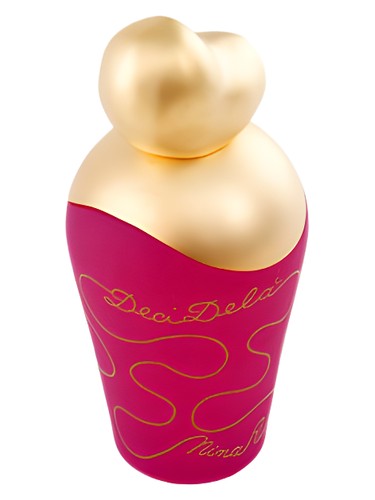
The first spray of Deci Dela is like biting into sun-warmed stone fruit at a summer market—except someone''s tucked a bouquet of wildflowers into your basket. This 1994 Nina Ricci creation opens with an unapologetic fruit salad of apricot, peach, raspberry, and red currant, softened by the curious addition of boronia and osmanthus. It''s a bold opening, the kind that announces itself without shouting, and it immediately clarifies why the fruity accord dominates at a full 100% intensity. But here''s the thing: this isn''t the syrupy, candied fruit explosion that would come to define the early 2000s. There''s a certain restraint here, a sophistication that speaks to its mid-''90s origins when perfumers still believed fruit could be elegant.
The Scent Profile
That opening fruit medley—heavy on the fuzzy sweetness of peach and apricot—is tempered almost immediately by boronia''s violet-like character and osmanthus with its apricot-leather undertones. It''s a clever composition trick: using osmanthus to bridge the gap between the literal fruit notes and what''s coming next. Within fifteen minutes, the heart begins to emerge, and suddenly you''re standing in a proper garden rather than an orchard.
Sweet pea leads this floral quartet, bringing its delicate, almost translucent quality that keeps the composition from becoming too heavy. Rose and jasmine follow—classic perfumery workhorses that could easily dominate, but here they''re woven in with restraint alongside freesia''s peppery greenness. The 69% floral accord makes perfect sense at this stage; these aren''t suffocating greenhouse blooms, but rather cut flowers in a sunny room, their sweetness captured at that perfect moment before they fade.
The base is where Deci Dela reveals its true complexity and shows why it earned a respectable 4.09 out of 5 from nearly a thousand voters. Resins and patchouli provide an earthy foundation—not the head-shop patchouli of the ''70s, but the softer, more refined version that emerged in the ''90s. Cypress adds an unexpected green-woody note that keeps things from sliding into pure amber territory, while vanilla and sandalwood wrap everything in a creamy, skin-like warmth. The result registers as 50% woody and 27% powdery, with just enough amber (24%) to give it that glowing quality without turning it into a full oriental.
This isn''t a linear fragrance. Over six to eight hours, it moves from fruit-forward exuberance to floral sophistication, finally settling into a woody-powdery-sweet skin scent that lasts well into the evening.
Character & Occasion
Deci Dela''s data tells us it works across all seasons, and wearing it confirms why: it has enough fruit and sweetness for warm weather joy, but sufficient woody depth to handle cooler temperatures. The 61% sweetness rating is perfectly calibrated—present enough to feel indulgent, but restrained enough to maintain sophistication.
The neutral day/night designation makes sense once you experience the fragrance. It''s versatile in the way well-tailored separates are: appropriate anywhere you choose to take them, dependent entirely on how you style the rest. Spray it lightly for daytime meetings, and it reads as professional but personable. Apply more generously for evening, and those resinous base notes step forward, lending drama and depth.
This is a fragrance for someone who appreciates fruit in perfume but refuses to smell like a teenager''s body spray. It''s for the woman who remembers when fruity florals had backbone, who values complexity over trending minimalism. It suits both the boardroom and the dinner date, adapting to context with surprising ease.
Community Verdict
With 995 votes and a 4.09 rating, Deci Dela sits comfortably in "very good" territory—not quite reaching cult status, but clearly beloved by those who''ve discovered it. That rating suggests a fragrance that delivers on its promises without major flaws, one that may not blow minds but consistently pleases. The substantial vote count indicates this isn''t just a forgotten curiosity; people are still seeking it out, still forming opinions about a perfume that''s now three decades old.
How It Compares
The comparison to Trésor by Lancôme, Poison by Dior, and Dolce Vita by Dior positions Deci Dela firmly in the powerhouse era of ''90s feminines—fragrances that weren''t afraid of projection or complexity. Like LouLou by Cacharel, it embraces both sweetness and depth. The Angel by Mugler comparison is particularly interesting, suggesting that while Deci Dela is more traditionally structured, it shares that gourmand sensibility that was revolutionary at the time.
Where Deci Dela distinguishes itself is in its fruit-forward opening combined with a more classically woody-resinous base. It''s less confrontational than Poison, more fruit-driven than Trésor, and more wearable than the full-throttle patchouli-vanilla of Angel.
The Bottom Line
Deci Dela deserves better than obscurity. This is a fragrance that captures the best of ''90s perfumery—bold enough to make an impression, complex enough to reward attention, wearable enough for regular rotation. The 4.09 rating reflects exactly what you get: a very good, occasionally great fragrance that won''t disappoint but might not become your desert island scent.
If you love fruity florals with substance, if you''re hunting for vintage Nina Ricci bottles, or if you''re simply curious about what sophisticated fruit smelled like before it became a commodity—Deci Dela is worth the search. It''s a reminder that not every great fragrance needs to be groundbreaking; sometimes being excellent is enough.
AI-generated editorial review