First Impressions
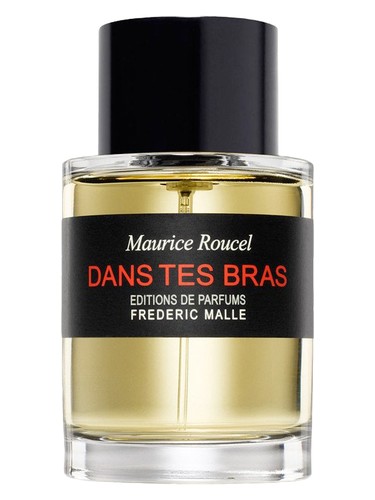
There''s something deliberately alien about Dans Tes Bras — French for "in your arms" — that announces itself from the first spray. This is not a fragrance designed to seduce immediately or comfort with familiarity. Instead, Frederic Malle''s 2008 creation presents an opening that feels intentionally strange, almost confrontational in its refusal to be pretty in conventional terms. The initial impression hovers somewhere between the warmth its name promises and something far more cerebral, a woody-powdery presence that seems to exist in its own atmospheric pocket. It''s the olfactory equivalent of entering a room where the light hits differently, where familiar objects cast unexpected shadows.
The Scent Profile
Without specified note breakdowns, Dans Tes Bras reveals itself primarily through its dominant accord structure — and what a structure it is. The composition is anchored by an uncompromising woody foundation (registering at 100% in its accord profile), but this isn''t the clean cedar or sandalwood of mainstream feminines. Instead, it''s a more abstract woodiness, dry and slightly dusty, that provides the skeleton for everything else to cling to.
Almost immediately, a pronounced powdery quality (87%) envelops that woody core, creating the sort of vintage-tinged softness that recalls face powder compacts and the intimate spaces the fragrance''s name evokes. This isn''t the face powder of modern cosmetics but something more nostalgic, more textile — like burying your face in a cashmere sweater that''s been stored with sachets.
Musk (55%) weaves through this foundation with a skin-like intimacy, while violet (39%) adds an unexpected floral-powdery dimension that reads more iris-like than garden flower. These elements create the fragrance''s signature strangeness: it''s simultaneously warm and cool, intimate and distant, floral and decidedly not. Minor aromatic (23%) and amber (21%) accords add subtle complexity, preventing the composition from becoming too linear or one-dimensional.
The drydown is where converts are made. As the initial strangeness settles, Dans Tes Bras reveals an addictive quality that keeps wearers returning despite — or perhaps because of — its unconventional nature. The woody-powdery-musky trilogy finds its balance, creating a second-skin effect that''s both comforting and mysteriously alluring.
Character & Occasion
Dans Tes Bras finds its ideal expression in the transitional seasons, performing best in fall (100%) and spring (85%) when its complex warmth neither overwhelms nor disappears. Winter (64%) provides a suitable backdrop, though the fragrance lacks the heavy richness typically associated with cold-weather scents. Summer (37%) proves challenging — this is not a fragrance built for heat, where its powdery woods might feel suffocating rather than enveloping.
The day/night split tells an interesting story: while predominantly a daytime fragrance (98%), it maintains respectable evening versatility (55%). This suggests a composition with the sophistication for night but the restraint that makes it office-appropriate — though "appropriate" might not be the first word that comes to mind when experiencing its peculiar character.
This is a fragrance for those seeking something witchy, mysterious, or simply different. Its intimate sillage means it won''t announce you from across a room, but it will intrigue those who get close enough to notice. It''s the scent equivalent of a knowing glance rather than a wave across a crowded space.
Community Verdict
The r/fragrance community, drawing from 26 opinions, awards Dans Tes Bras a positive sentiment score of 7.8/10 — solid approval from a group not easily impressed by unconventional compositions. The praise centers on its complexity and the unusual note interplay of violet, heliotrope, and musk. Multiple users describe it as "genuinely addictive," with particular admiration for the sophisticated drydown and well-calibrated sillage that "lingers perfectly."
However, the community doesn''t shy from acknowledging what makes this fragrance challenging. The descriptor "strange and alien" appears repeatedly, with honest assessments that it''s "not for everyone." The unusual opening requires patience and multiple wearings to appreciate fully. This isn''t a weakness so much as a feature — Dans Tes Bras rewards those willing to sit with its strangeness rather than demanding immediate gratification.
The consensus positions it as ideal for those actively seeking complex, unconventional fragrances, with particular suitability for witchy or mysterious moods and evening wear where intimate projection is desired over projection for its own sake.
How It Compares
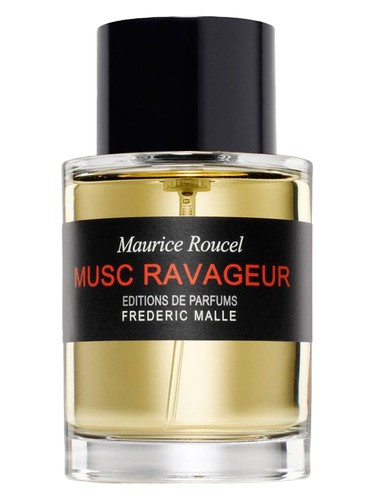
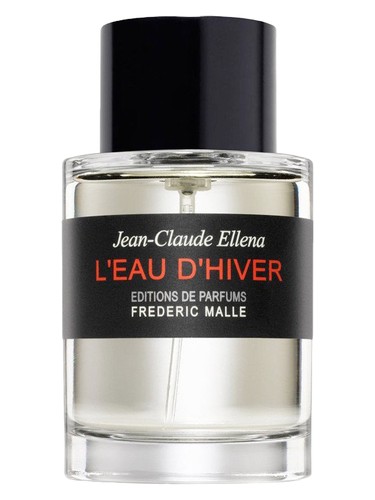
Dans Tes Bras sits comfortably within the Frederic Malle catalog alongside Iris Poudre, French Lover, L''Eau d''Hiver, and Musc Ravageur — all fragrances that prize sophistication and complexity over accessibility. It shares DNA with Serge Lutens'' Feminité du Bois, suggesting a lineage of woody feminines that refuse to conform to traditional floral sweetness.
Where Iris Poudre leans more decidedly into its namesake note and Musc Ravageur turns up the volume on sensuality, Dans Tes Bras occupies a middle ground: unconventional but wearable, intimate but not simple, strange but ultimately compelling.
The Bottom Line
With a rating of 3.83/5 from 1,773 votes, Dans Tes Bras enjoys solid appreciation without achieving universal acclaim — exactly what one might expect from a fragrance this deliberately peculiar. This isn''t a perfume for beginners or those seeking safe compliments. It''s for the adventurous wearer who finds beauty in the unconventional and has the patience to let a fragrance reveal itself on its own terms.
At Frederic Malle pricing, it''s an investment, but one that delivers genuine complexity and a wearing experience unlike most mainstream offerings. Sample first — the strangeness will either captivate or alienate, with little middle ground. For those it captures, Dans Tes Bras offers an addictive alternative to conventional femininity, a woody-powdery embrace that''s as intellectually satisfying as it is emotionally resonant.
AI-generated editorial review