First Impressions
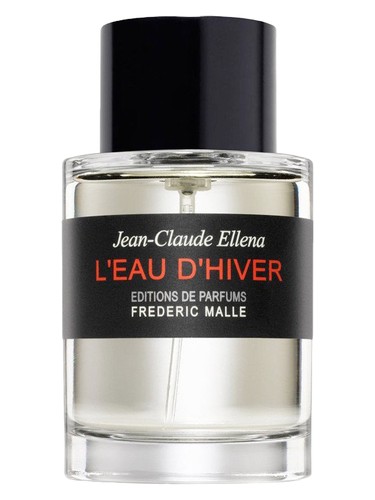
The first spray of L''Eau d''Hiver feels like stepping into a pale winter morning where frost has softened all the edges. There''s an immediate brightness—bergamot and lemon dance with pink pepper—but it''s veiled, filtered through something ethereal. This is Jean-Claude Ellena at his most restrained, creating a fragrance that seems to glow from within rather than announce itself. The green notes and calamus add an almost aqueous quality, as if the citrus has been dissolved in mineral water. Within moments, the scent begins its gentle descent into something warmer, more intimate—a powdery embrace that feels both vintage and entirely modern.
The Scent Profile
L''Eau d''Hiver''s opening quintet of bergamot, lemon, grapefruit, pink pepper, and green notes, grounded by the medicinal whisper of calamus, creates a peculiar effect: citrus that feels hushed rather than vibrant. These aren''t the shouting citruses of eau de colognes; they''re muted, contemplative, already hinting at the powdery heart waiting to emerge.
The transition to the heart is where Ellena''s genius truly reveals itself. An extraordinarily complex bouquet unfolds—heliotrope and iris form the powdery backbone, supported by violet''s suede-like softness. But look at the supporting cast: hawthorn''s almond-like greenness, honey''s golden warmth, lily of the valley''s clean brightness, jasmine, orange blossom, rose, and ylang-ylang. On paper, this reads like a floral cacophony. In practice, it''s a masterclass in restraint. Each element is present but held in perfect suspension, creating a milky, almost innocent floral cloud with surprising depth. The heliotrope and iris partnership dominates, delivering that signature powdery effect (registering at 94% in accord analysis) while the honey adds just enough sweetness to keep things from becoming austere.
The base is where L''Eau d''Hiver earns its "winter water" name. White musk—the fragrance''s dominant accord at 100%—wraps everything in a soft-focus haze. Hay and angelica contribute a subtle herbaceousness, while cedar and sandalwood provide structure without weight. Tonka, benzoin, and amber add warmth, but again, everything is diffused, softened, made gentle. The result is a scent that feels like cashmere against skin, present but never imposing.
Character & Occasion
The data tells a compelling story about L''Eau d''Hiver''s versatility. Spring claims near-perfect suitability at 99%, which makes absolute sense—this is a fragrance about renewal and softness, about things emerging rather than declaring. Winter follows at 76%, likely because of that musky warmth and the name''s promise. Fall registers at 56%, summer at 39%, suggesting that extreme heat may overwhelm its delicate construction.
The day/night split is even more revealing: 100% for daytime wear versus just 31% for evening. This isn''t a fragrance for cocktail hours or dramatic entrances. It''s for morning meetings, lunch with friends, gallery openings, quiet dinners. The community data confirms this, identifying it as ideal for "everyday wear" and "when not wanting to make a bold statement."
Officially positioned as feminine, L''Eau d''Hiver has that soft androgyny common to iris-based fragrances. The powdery musk combination reads as classically elegant rather than overtly gendered—anyone drawn to clean, sophisticated scents will find something to appreciate here.
Community Verdict
With a solid 4.22 out of 5 rating from 3,891 votes, L''Eau d''Hiver enjoys strong appreciation, even if it doesn''t generate the fervent devotion of some of Malle''s more assertive offerings. The Reddit fragrance community, based on 71 opinions, gives it a positive sentiment score of 7.8 out of 10.
The praise is consistent and specific: users celebrate its "soft and powdery without being heavy" character and its "good depth and complexity despite subtle nature." Multiple commenters highlight the "unique and lovely scent profile" and note it as a standout work from the acclaimed Jean-Claude Ellena.
The criticisms are equally telling. The community notes that L''Eau d''Hiver is "rarely discussed" and "may be too subtle for some preferences." In an era of projection monsters and social media-friendly powerhouses, a fragrance that prioritizes intimacy over broadcast can feel overlooked. This isn''t a weakness of the perfume itself, but rather a mismatch with certain expectations.
The community identifies it as particularly excellent for "everyday wear," "elegant occasions," and those moments when subtlety is the point rather than the compromise.
How It Compares
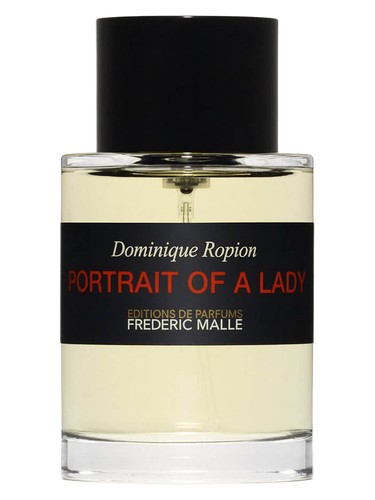
L''Eau d''Hiver sits in fascinating company. Its closest sibling is Iris Poudre, also from Frederic Malle, which takes the powdery iris theme in a more direct, uncompromising direction. Guerlain''s Angélique Noire shares the angelica note but ventures into darker, more mysterious territory. Lipstick Rose, another Malle creation by Ralf Schwieger, explores a more overtly cosmetic powderiness. Hermès'' Un Jardin Sur Le Nil offers a similar understated elegance but tilts more green and aquatic, while Shalimar provides a reference point for classical powdery oriental structures.
Within this constellation, L''Eau d''Hiver distinguishes itself through sheer quietness—it''s arguably the most restrained of the group, the most committed to its whisper aesthetic.
The Bottom Line
L''Eau d''Hiver won''t be everyone''s fragrance, and that''s precisely the point. In a market increasingly dominated by loud, sweet, projection-focused compositions, Ellena''s 2003 creation for Frederic Malle stands as a reminder that complexity and beauty can exist in understatement. The 4.22 rating reflects genuine appreciation from those who understand what it''s trying to achieve.
This is a fragrance for people who view perfume as an intimate expression rather than a public announcement. If you find yourself drawn to iris, heliotrope, and soft musks—if you appreciate the Japanese concept of ma (negative space)—L''Eau d''Hiver deserves your attention. At Frederic Malle pricing, it''s an investment, but one that rewards with versatility and timeless elegance. Sample first, preferably on a cool spring morning, and give it time to reveal its quiet depths. Some fragrances demand attention; this one requests consideration.
AI-generated editorial review