First Impressions
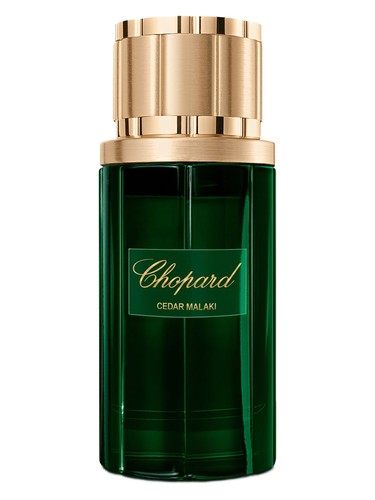
The first spray of Cedar Malaki is an act of defiance. This is Chopard announcing, with quiet confidence, that femininity and force need not be mutually exclusive. A rush of cypress and cardamom meets your senses—resinous, spiced, unapologetically green. There''s lavender here too, but not the soft, sleepy kind you''d find in linen sprays. This is lavender with backbone, sharpened by artemisia''s herbal bite and lifted by a whisper of grapefruit that keeps the opening from becoming too austere. Within moments, you realize you''re not smelling a fragrance that seeks approval. Cedar Malaki knows exactly what it is: a woody monument rendered in 100% arboreal intensity, asking you to meet it on its own uncompromising terms.
The Scent Profile
The architecture of Cedar Malaki is surprisingly straightforward for a fragrance this striking. That opening salvo—cypress, cardamom, artemisia, grapefruit, and lavender—creates a aromatic haze that''s both medicinal and comforting. The cypress dominates early on, its sharp, coniferous character reinforced by cardamom''s warm spice. This isn''t a gentle introduction; it''s a statement delivered with conviction.
As the top notes settle, typically within twenty minutes, the cedar emerges. And not just any cedar—Atlas Cedar specifically, joined by its unnamed cedar companion. This dual-cedar heart is where the fragrance earns its name and its 100% woody accord classification. The effect is monolithic but never monotonous. Atlas Cedar brings its characteristic dry, slightly pencil-shaving quality, while the supporting cedar adds depth and a subtle smokiness. The 47% aromatic accord lingers here too, ensuring the composition maintains its herbal complexity rather than becoming a simple wood study.
The base is where Cedar Malaki reveals its amber (33%) and warm spicy (30%) underpinnings. Cypriol oil—also known as nagarmotha—contributes an earthy, almost vetiver-like quality that accounts for the fragrance''s 27% earthy accord. Labdanum adds resinous warmth and that crucial amber glow, while patchouli deepens the woods with its familiar dark richness. Tonka bean appears last, offering just enough sweetness to soften the edges without compromising the composition''s austere beauty. The result is a fragrance that dries down woody, slightly sweet, unmistakably serious.
Character & Occasion
Here''s where Cedar Malaki gets interesting. Chopard has positioned this as a feminine fragrance, yet its DNA reads decidedly unisex, if not masculine-leaning. With its overwhelming woody dominance and aromatic intensity, this is a scent that transcends traditional gender boundaries—which may very well be the point.
The data suggests Cedar Malaki works across all seasons, and this makes sense given its balanced composition. The fresh cypress and lavender keep it from becoming too heavy in warmer months, while the amber and tonka base provides enough warmth for cooler weather. However, the fragrance''s intensity and seriousness skew it toward autumn and winter in practice. This isn''t a lighthearted spring scent; it''s contemplative, grounded, earthy.
As for day versus night, the community data shows no clear preference, which speaks to Cedar Malaki''s versatility. It works equally well in a boardroom as it does at an evening gathering—professional enough for daytime, distinctive enough for nighttime. This is a scent for someone who wants to project confidence without flash, substance over showmanship.
Community Verdict
With a rating of 4.03 out of 5 from 340 votes, Cedar Malaki has found its audience. This is a strong showing, particularly for a 2023 release that hasn''t had years to build a following. The rating suggests a fragrance that delivers on its promise—those seeking a serious, woody composition are finding exactly what they want.
That said, 340 votes indicates this isn''t a blockbuster release. Cedar Malaki is niche in spirit if not in brand positioning, appealing to those who actively seek out woody fragrances rather than casual shoppers looking for crowd-pleasers. The rating''s strength lies in its specificity: people who love this type of scent really love this one.
How It Compares
The comparison list reads like a who''s who of dark, woody intensity: Encre Noire A L''Extreme and its non-extreme sibling, Bois Impérial, Bentley For Men Absolute, and Oud Wood. These are all fragrances built on serious wood foundations, and placing Cedar Malaki in this company is telling.
Where Cedar Malaki distinguishes itself is in its aromatic opening and its amber warmth. Encre Noire is famously austere and vetiver-focused, while Oud Wood centers on its titular ingredient''s exoticism. Cedar Malaki splits the difference—woody like the former, warmer like the latter, but with an herbal complexity that''s distinctly its own. It''s perhaps closest to Bois Impérial in spirit, though Cedar Malaki''s lavender and cypress give it a Mediterranean quality that Essential Parfums'' offering lacks.
The Bottom Line
Cedar Malaki is Chopard taking a risk, and largely succeeding. This is not a safe fragrance, nor is it trying to be. For those who love woody compositions—truly love them, not just tolerate them—this offers a compelling take on the cedar theme with enough aromatic interest and amber warmth to keep it from becoming a one-note exercise.
The 4.03 rating from 340 voters tells you this isn''t for everyone, but it doesn''t need to be. It''s for the person who considers Encre Noire too stark, Oud Wood too sweet, and most "feminine" fragrances too timid. It''s for someone who wants their presence announced through substance rather than volume.
Should you try it? If you''ve nodded along while reading this review, yes. If you''re seeking something fresh, fruity, or conventionally feminine, look elsewhere. Cedar Malaki rewards those who approach it on its terms, and punishes no one else—it simply isn''t for them. At a time when so many fragrances try to please everyone, there''s something admirable about one that knows exactly who it is.
AI-generated editorial review