First Impressions
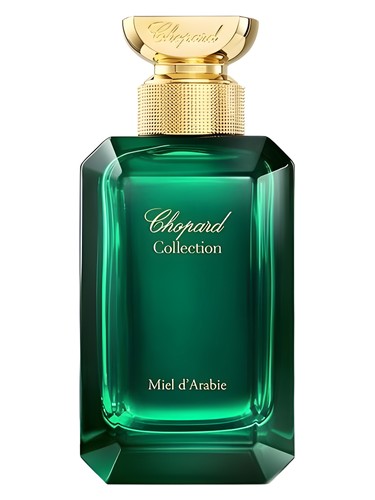
The first spray of Miel d''Arabie is an unapologetic declaration of intent. This is honey—not the timid drizzle over breakfast toast, but the viscous, amber-dark nectar pulled straight from ancient combs, still warm from the hive. Chopard doesn''t ease you into this 2018 creation; instead, you''re immediately enveloped in a sweetness that manages to feel both indulgent and sophisticated. There''s an immediate warmth here, a spiced radiance that prevents the honey from becoming cloying or one-dimensional. Within moments, you understand this isn''t a fragrance for the faint-hearted—it''s a statement, worn like liquid gold against the skin.
The Scent Profile
While Chopard has kept the specific note breakdown close to the vest, the accord structure tells a remarkably clear story. At 100% dominance, honey is undeniably the protagonist of this olfactory narrative, but it''s the supporting cast that elevates Miel d''Arabie from simple sweetness to compelling complexity.
The warm spicy accord, registering at 88%, wraps itself around that honey core almost immediately. Think of it as the aromatic equivalent of amber resin heated over flame—there''s a richness that suggests cinnamon, perhaps cardamom, spices that have historically traveled the same trade routes as precious honey. This spice element is crucial; it adds depth and prevents the composition from becoming a straightforward gourmand.
As the fragrance settles, a substantial woody base emerges at 79%, grounding all that golden sweetness with something more austere and structured. This isn''t the fresh-cut cedar of sporty masculines, but rather a deeper, possibly sandalwood-influenced foundation that adds gravitas. The woods here feel resinous, slightly smoky even, as if honey-soaked wood has been left to cure in desert heat.
The sweet accord (65%) works in tandem with the honey, while a surprising 50% fruity presence adds subtle brightness—perhaps the natural fruit-like facets of certain honey varietals, or dried fruits steeped in that spiced syrup. Most intriguing is the 49% green accord, which likely provides essential contrast, a whisper of beeswax or propolis that reminds you of the hive''s botanical origins.
The evolution is less about dramatic transformation and more about these elements shifting in prominence throughout the wear. The honey remains constant, but the spices flare and recede, the woods gradually assert themselves, and that green element provides periodic moments of relative freshness against an otherwise opulent backdrop.
Character & Occasion
The community data reveals Miel d''Arabie as quintessentially a cold-weather creature. Fall scores a perfect 100%, with winter close behind at 84%—and for good reason. This is a fragrance that thrives when temperatures drop, when its warmth becomes a cashmere wrap against biting air. The honey and spice combination feels perfectly calibrated for shorter days and longer nights, for the season when amber-hued fragrances come into their own.
Spring receives a moderate 45%, suggesting it could work during transitional weather, while summer''s mere 27% confirms what you''d suspect: this is too rich, too warm for genuine heat. Save it for air-conditioned evenings at most.
The day/night split is telling: 70% day versus 61% night suggests remarkable versatility within its seasonal sweet spot. It''s polished enough for professional settings in cooler months—though those in conservative workplaces should apply with discretion—yet possesses enough presence and sensuality for evening wear. This is a fragrance that moves seamlessly from autumn lunches to winter dinners.
As a feminine fragrance, it suits someone who appreciates sweetness but demands sophistication, who wants to be noticed but not shouted. It''s for the woman who treats fragrance as an integral part of her presence, not an afterthought.
Community Verdict
With a solid 4.06 out of 5 stars from 927 voters, Miel d''Arabie has clearly resonated with a substantial audience. This isn''t a cult fragrance with limited appeal—nearly a thousand people have weighed in, and the rating sits comfortably above the "good" threshold into "very good" territory. That level of approval, combined with the voting volume, suggests a fragrance that delivers on its promises without major polarizing weaknesses. The consensus appears clear: this is a well-executed honey fragrance that satisfies its target audience while maintaining enough complexity to interest serious fragrance lovers.
How It Compares
The company Miel d''Arabie keeps is illustrious and revealing. Angel by Mugler suggests shared DNA in terms of unapologetic sweetness and warmth. Serge Lutens'' Chergui points to that honey-spice-tobacco axis, while By Kilian''s Angels'' Share indicates a boozy, barrel-aged richness. Xerjoff''s Dolce Amalfi hints at Mediterranean sweetness, and Tom Ford''s Black Orchid suggests dark, opulent intensity.
What distinguishes Miel d''Arabie within this group is its directness. While Angel is more overtly gourmand and Chergui more austere and tobacco-forward, Chopard''s creation plants its flag firmly in honey territory and explores that theme thoroughly. It''s less experimental than the Lutens, more accessible than the Xerjoff, warmer than Black Orchid, and more focused than Angel. It occupies a sweet spot—pun intended—between niche complexity and luxe accessibility.
The Bottom Line
Miel d''Arabie represents Chopard''s ability to create a fragrance with clear vision and confident execution. At 4.06 stars from nearly a thousand votes, it''s proven itself as more than a passing curiosity in the honey fragrance category. This is a well-crafted composition that knows exactly what it wants to be and achieves it without apology.
Is it groundbreaking? Perhaps not. But it doesn''t need to be. What it offers is reliability: a gorgeous honey fragrance bolstered by warming spices and grounding woods, perfectly suited to cold weather and versatile enough for various occasions. For those who love honey-dominant fragrances but want something more refined than basic gourmands, this deserves serious consideration. Sample it when autumn arrives, and let that golden amber warmth make its case against your skin.
AI-generated editorial review