First Impressions
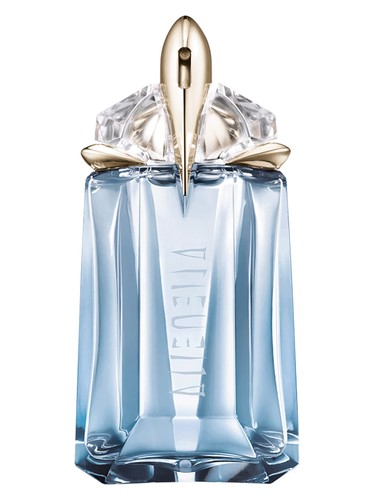
The first spray of Alien Mirage feels like plunging your hands into cool spring water under harsh sunlight—a paradox of temperature and luminosity that immediately sets it apart from its predecessor. Where the original Alien announced itself with unapologetic jasmine sambac intensity, Mirage whispers with a mineral transparency that''s almost shocking if you come to it expecting the mothership''s typical trajectory. Pink pepper adds a delicate effervescence, like champagne bubbles breaking against wet stone, while those mineral accords create an aquatic shimmer that hovers between abstract and achingly real. This is Mugler stripped of its typical velvet darkness, standing naked in broad daylight.
The Scent Profile
The opening mineral accord dominates completely—not in volume, but in character definition. It''s the skeleton key to everything that follows, a crystalline framework that transforms what could have been another floral release into something genuinely distinctive. The pink pepper doesn''t behave as a traditional spice here; instead, it adds a subtle carbonation, a barely-there tingle that enhances the wet-stone quality rather than introducing heat. Think rain on hot pavement, that particular petrichor moment when minerals release their scent into humid air.
As Mirage settles into its heart, lotus and syringa (better known as lilac) emerge through that mineral veil like flowers glimpsed through frosted glass. The lotus brings a clean, slightly aquatic sweetness—not the heady, narcotic quality of jasmine, but something more restrained, almost meditative. Syringa contributes a powdery-green facet that reads distinctly spring-like, recalling actual garden encounters rather than perfume counter florals. Together, these white florals create the blend''s substantial floral and white floral accords (68% and 66% respectively), but they''re always tempered by that overriding minerality. This isn''t a bouquet; it''s flowers reflected in water.
The base brings hinoki wood and white amber into focus, anchoring what could have floated away entirely. Hinoki, a Japanese cypress traditionally used in temple construction and bathing rituals, adds a clean, almost soapy woodiness—spiritual rather than earthy. It''s responsible for much of that 66% woody accord rating, though it manifests as refinement rather than heft. The white amber provides gentle warmth without the heaviness typical of amber-dominant fragrances (it registers at just 49%, notably restrained for a Mugler release). The overall effect is like sunlight filtered through sheer curtains: present, warming, but never overwhelming.
Character & Occasion
The data tells a remarkably clear story about Alien Mirage''s natural habitat: this is a warm-weather, daytime fragrance with an almost singular focus. With 95% suitability for both spring and summer, dropping sharply to 43% for fall and a mere 20% for winter, Mirage knows exactly what it wants to be. It''s a solar fragrance in the truest sense—one that seems to require actual sunlight to fully express itself.
The day/night split is equally decisive: 100% day versus 41% night. This isn''t a fragrance that transforms into something sultry and mysterious after dark; it simply continues being its transparent, mineral self, which may feel underwhelming when evening calls for more presence.
This is ideal for those who''ve always admired the Alien aesthetic but found the original too heavy for their lifestyle. It suits minimalist dressers, lovers of clean architectural spaces, anyone who gravitates toward "no-makeup makeup" and barely-there jewelry. It''s particularly appealing for warm climates where traditional perfumes can feel suffocating, offering enough character to feel intentional without ever becoming cloying.
Community Verdict
With a solid 4.03 out of 5 rating based on 716 votes, Alien Mirage has achieved respectable community approval. This isn''t a polarizing release—the rating suggests consistent satisfaction rather than passionate devotion from some and rejection from others. It delivers on its promise competently, earning appreciation without necessarily inspiring obsession. For a flanker that radically reinterprets its parent fragrance, this represents genuine success. The voting base is substantial enough to be meaningful, suggesting this isn''t a forgotten release but one that continues to find its audience.
How It Compares
Within the Mugler universe, Alien Mirage sits closest to Alien Flora Futura, another attempt to lighten the mothership''s intensity. But where Flora Futura leaned green and vegetal, Mirage chooses mineral coolness as its differentiator. The comparison to both Poison and Pure Poison by Dior is telling—these are iconic fragrances reimagined for contemporary sensibilities, heritage DNA expressed through modern minimalism. The Libre reference suggests a shared appeal to those seeking substantial femininity without vintage heaviness. Against the original Alien, Mirage sacrifices power and longevity for wearability and versatility—a trade-off that will delight some and disappoint others.
The Bottom Line
Alien Mirage succeeds precisely because it doesn''t try to be Alien. It''s a genuine reinterpretation rather than a simple dilution, using that dominant mineral accord to create something coherent and purposeful. At 4.03/5, it''s performing well above average, particularly impressive for a flanker that could easily have felt unnecessary.
The weaknesses are predictable: anyone seeking projection, longevity, or cold-weather comfort should look elsewhere. This is sheer, close-to-skin, and decidedly seasonal. But for those specific spring and summer months, for daytime wear when you want presence without announcement, Mirage delivers admirably. It''s worth exploring if you appreciate fragrances that prioritize texture and mood over volume, or if you''ve been searching for that elusive "fresh but interesting" combination that so often disappoints. This crystalline vision won''t suit everyone, but for its intended audience—and intended season—it''s precisely calibrated.
AI-generated editorial review