First Impressions
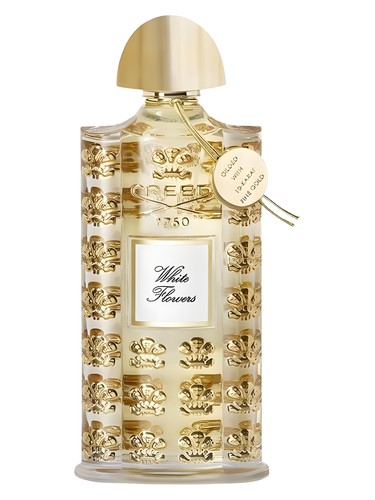
The first spray of Creed''s White Flowers feels like stepping into a garden just after sunrise, when dew still clings to petals and the air carries that particular crispness of early morning. There''s an immediate burst of green apple and lemon—not the candied sweetness of many fruit-forward fragrances, but something more naturalistic, almost dewy. The violet leaf adds an earthy, slightly metallic verdancy that grounds what could have been a predictable opening. This isn''t a white floral that announces itself with heady indolic richness; instead, it whispers an invitation, fresh and clean, with just enough complexity to intrigue.
The Scent Profile
The opening acts as a palate cleanser, a crisp prelude dominated by that green apple-lemon combination softened by violet leaf. This trinity creates something unexpectedly sophisticated—the citrus provides sparkle without aggression, while the green notes add texture and depth. It''s a brief but essential introduction, lasting perhaps twenty minutes before the heart begins to emerge.
And what a heart it is. Italian jasmine and Moroccan jasmine form a duet of white florals that manages to feel both opulent and restrained. The dual jasmine approach creates dimension: you get the creamy, almost buttery sweetness of one variety playing against the greener, more tea-like qualities of the other. Bulgarian rose enters the composition not as a star but as a supporting player, adding a subtle pink softness that prevents the jasmine from becoming too linear. Geranium provides a slightly spicy, minty undertone that keeps everything lifted and fresh rather than allowing the florals to become too heavy or soporific.
The transition to the base is seamless rather than dramatic. Narcissus brings an almost honeyed, slightly animalic quality that adds intrigue without pushing into overtly sensual territory. The musk stays clean and skin-like, while sandalwood provides a creamy, smooth foundation that feels more whispered than shouted. This isn''t the rich, woody sandalwood of older fragrances; it''s subtle, serving primarily to give the florals somewhere soft to land. The base doesn''t transform the character so much as allow it to settle into a second-skin presence that lingers gently for several hours.
Character & Occasion
The community data tells a clear story: this is a warm-weather daytime fragrance, and wearing it confirms exactly why. With spring scoring 97% and summer at 80%, White Flowers thrives in temperatures where its fresh green opening and bright florals can breathe and expand. In colder months (winter rating at just 18%), it feels somehow muted, as if the composition needs warmth and air to fully express itself.
The 100% day rating versus 31% night rating is equally telling. This isn''t a fragrance for candlelit dinners or evening events where you want presence and projection. Instead, it excels at garden parties, outdoor brunches, office environments where you want to smell polished but not imposing, and weekend errands where you still want to feel put-together.
The feminine coding feels accurate without being restrictive—this is a refined, elegant composition that leans traditionally feminine through its florals, but the green elements and restraint in the base keep it from veering into overtly sweet or girlish territory. It suits someone who appreciates classic white florals but wants them presented with a modern, fresh sensibility rather than vintage bombast.
Community Verdict
A rating of 4.12 out of 5 from 459 voters suggests a fragrance that delivers on its promises without necessarily breaking new ground. This is a solidly above-average score, indicating broad appreciation without the passionate devotion that pushes fragrances into the 4.5+ territory. The relatively substantial voter count gives this rating credibility—this isn''t a niche obscurity with a handful of devoted fans, but a well-tested composition that consistently performs well.
That said, the score also suggests this isn''t a fragrance that converts skeptics or redefines categories. It''s well-executed rather than revolutionary, appreciated rather than obsessed over.
How It Compares
Within its category, White Flowers occupies interesting territory. Compared to Jardin d''Amalfi (also by Creed), it leans more decidedly floral and less citrus-driven. Against Tom Ford''s Jasmin Rouge, it''s significantly fresher and less opulent—where Jasmin Rouge goes warm and spicy, White Flowers stays green and bright. Robert Piguet''s Fracas represents the opposite approach: a tuberose-centered white floral bombshell that dominates any room, while White Flowers prefers subtlety.
The comparison to Coco Mademoiselle is perhaps most interesting—both share that balance of fresh and floral, both work beautifully for daytime, but Coco Mademoiselle has more patchouli depth and versatility. White Flowers is the choice when you want something more singularly focused on the floral experience itself.
The Bottom Line
White Flowers succeeds at exactly what it attempts: a refined, wearable white floral composition for warm weather and daytime wear. At its 4.12 rating, it''s a fragrance that will please far more often than it disappoints, though it may not inspire the kind of passionate devotion reserved for more daring compositions.
For someone seeking an elegant spring and summer signature, especially for professional or daytime social settings, this is absolutely worth exploring. It''s particularly well-suited to those who appreciate white florals but find many examples too heavy, sweet, or evening-oriented. The Creed house style—that emphasis on natural-smelling ingredients and restrained elegance—shines here.
However, if you''re seeking versatility across seasons, dramatic projection, or evening glamour, look elsewhere. This is a fragrance that knows its lane and stays in it beautifully, which is both its strength and its limitation.
AI-generated editorial review