First Impressions
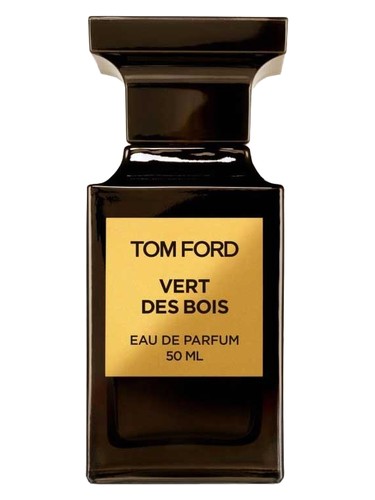
The first spray of Vert des Bois is not an invitation—it''s a challenge. Poplar buds and olive tree crash into consciousness with an almost medicinal intensity, their green bitterness sharpened by a piercing anise note that feels more surgical than sweet. This is not the manicured greenery of a formal garden; this is the scent of bark stripped fresh from the branch, of unripe fruit crushed between fingers, of woods that don''t particularly care whether you find them beautiful. And yet, beneath that confrontational opening lies something undeniably compelling: a plum accord that whispers of softness to come, if only you''re patient enough to wait.
Tom Ford released Vert des Bois in 2016 as part of his Private Blend collection, and it remains one of the line''s most divisive creations. With a rating of 4.15 out of 5 stars from 664 voters, the numbers suggest appreciation—but those numbers don''t tell you about the struggle many wearers face in actually loving what they''ve come to respect.
The Scent Profile
The opening acts of Vert des Bois feel deliberately abrasive. Poplar buds deliver an intensely resinous, almost medicinal quality—imagine the sharp green snap of early spring growth, before nature has softened its edges. The olive tree note adds a briny, slightly bitter dimension that''s genuinely unusual in mainstream perfumery, while anise cuts through with its licorice-like clarity. Plum attempts to mediate this confrontation, offering a dark, slightly fermented sweetness, but it''s largely drowned out in these first crucial minutes.
As the fragrance settles into its heart, mastic (lentisque) emerges as the crucial bridge between harshness and wearability. This Mediterranean resin brings a piney, slightly citric quality that feels like sunlight finally breaking through dense tree cover. Jasmine appears too, but this isn''t the creamy indolic jasmine of classic perfumery—it''s sketched lightly, more suggestion than statement, lending just enough floral character to remind you this is technically a feminine fragrance, though the classification feels almost arbitrary here.
The base is where Vert des Bois finally exhales. Patchouli—present at 33% in the accord breakdown—dominates with an earthy, slightly chocolate-tinged richness. Woody notes (the fragrance scores 100% in this accord) layer in undefined but unmistakable depth, while tonka bean brings a subtle vanilla-like warmth that never veers into sweetness. This foundation is where the fragrance becomes genuinely beautiful, where all that initial aggression resolves into something contemplative and surprisingly comforting. The balsamic character (35% of the accord profile) threads through everything, providing a resinous cohesion that makes sense of the journey you''ve just taken.
Character & Occasion
Vert des Bois is overwhelmingly an autumn fragrance, scoring 100% for fall wear, which makes perfect sense—this is the scent of leaves turning, of sap slowing, of woods preparing for dormancy. It transitions reasonably well into spring (69%) and winter (62%), but summer (25%) is largely untenable unless you appreciate smelling aggressively woody in warm weather.
The day versus night data tells an interesting story: 78% day, 71% night. This near-equal split suggests a fragrance that doesn''t necessarily shine in either context but rather exists in its own temporal space. It''s perhaps best suited to those in-between moments—late afternoon walks, early evening gatherings, times when the light is uncertain and you want a fragrance that matches that ambiguity.
Who is this for? Despite being marketed as feminine, Vert des Bois reads decidedly unisex, its woody and aromatic profile (21%) making it accessible to anyone drawn to challenging compositions. This is a fragrance for those who''ve exhausted their interest in immediately pleasing scents, who want something that demands active engagement. The community identifies winter wear, niche enthusiasts, and performance occasions as ideal contexts—and that last designation is telling. At times, Vert des Bois feels more like art than adornment.
Community Verdict
The Reddit fragrance community''s sentiment registers as mixed, with a score of 6.5 out of 10—and reading through the actual feedback, that ambivalence becomes vividly clear. Users consistently praise the fragrance''s quality and craftsmanship, noting its clever composition and the interesting tension between its contrasting notes. Performance receives particular acclaim, with excellent projection that ensures this isn''t a fragrance anyone will overlook.
But the criticisms are equally emphatic. The abrasive, harsh opening proves genuinely off-putting for many wearers. More than one reviewer struggles to identify appropriate occasions for wearing it—a damning observation for a fragrance at this price point. The word "polarizing" appears repeatedly, with users noting they find it difficult to like consistently, even when they recognize its technical excellence. Perhaps most telling is the widespread acknowledgment that Vert des Bois faces potential discontinuation due to poor sales, suggesting that critical appreciation hasn''t translated to commercial success.
Several community members describe it as a "performance piece" rather than a wearable daily fragrance—a characterization that feels both insightful and slightly sad. It''s a fragrance to be admired more than loved, respected more than reached for.
How It Compares
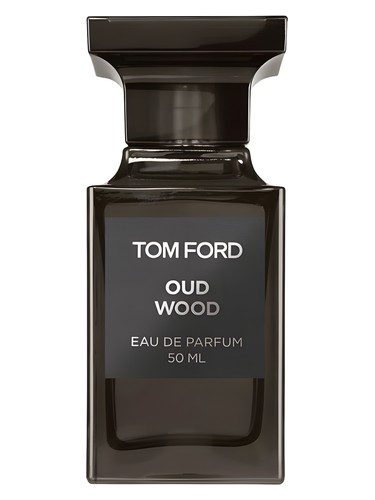
The similar fragrances list reads like a who''s who of challenging woody compositions: Lalique''s Encre Noire, Tom Ford''s own Vert d''Encens and Oud Wood, Grey Vetiver, and Tauer''s L''Air du Desert Marocain. These are all fragrances that prioritize character over comfort, that ask their wearers to meet them halfway.
Within this context, Vert des Bois distinguishes itself through its unusual olive and anise notes—elements that none of its peers quite replicate. It''s perhaps less linear than Encre Noire, less meditative than Vert d''Encens, and more aggressive than the relatively restrained Grey Vetiver. It occupies its own peculiar corner of the woody genre, which may explain both its cult appreciation and its commercial struggles.
The Bottom Line
Vert des Bois is a fragrance that''s easier to respect than to love. Its 4.15 rating reflects genuine quality—this is impeccably constructed, with performance that justifies its luxury positioning. But those numbers obscure the real question: do you want to wear something this deliberately challenging?
If you''re drawn to fragrances that function as conversation pieces, that make statements rather than simply smell pleasant, Vert des Bois deserves your attention. Sample it first—ideally multiple times, as this isn''t a fragrance that reveals itself in a single wearing. Give it the patience it demands, and you may find yourself captivated by its uncompromising vision.
But if you''re seeking something reliably wearable, something that brings consistent pleasure rather than intellectual fascination, acknowledge that this may be a Tom Ford too far. Sometimes the most interesting fragrances aren''t the most lovable ones—and Vert des Bois is fascinating precisely because it refuses to care whether you find it lovable at all.
AI-generated editorial review