First Impressions
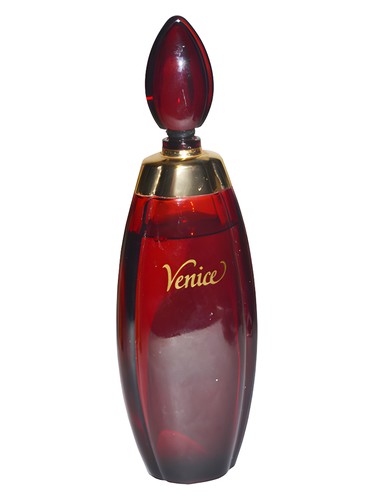
The first spray of Venice transports you to an era when perfumery wasn''t afraid of volume. This 1986 release from Yves Rocher opens with an unexpected sophistication—a bright burst of bergamot and lemon tempered immediately by the warm, woody embrace of palisander rosewood. There''s a fleeting sweetness from peach that never quite becomes fruity, held in check by sharp green notes that give the opening a vintage character. This is the scent of ambition bottled: Yves Rocher, known for accessible pricing, reaching boldly toward the opulent orientals that dominated the decade.
Within moments, you understand why this fragrance has earned its 4.25 out of 5 rating from over a thousand votes. Venice doesn''t apologize for its presence. It announces itself with the confidence of fragrances triple its price point, wrapped in that unmistakable 80s aesthetic—bold, unapologetic, and deliciously excessive.
The Scent Profile
The evolution of Venice reveals a masterclass in classical perfume construction. Those initial citrus and rosewood notes fade within fifteen minutes, making way for a heart that could rival any prestige counter offering from its era. Rose and jasmine form the floral backbone, but this isn''t a simple floral bouquet. The inclusion of orris lends a refined, almost aristocratic powderiness that becomes Venice''s signature trait—reflected in that strong 78% powdery accord rating.
Carnation adds a spicy, almost clove-like warmth that distinguishes this from sweeter florals, while ylang-ylang contributes a creamy richness. But the real surprise is the patchouli appearing at the heart rather than relegated to the base. It''s earthy and grounding, preventing the florals from becoming too pretty or polite. This is where you begin to understand the dominant 100% woody accord—it''s woven throughout the composition, not just sitting at the bottom.
The base is where Venice truly earns its comparison to classics like Obsession and Coco. Sandalwood and oak moss create a structure that feels both vintage and timeless, while vanilla, amber, and benzoin soften the edges with a warmth that reads as almost edible. The inclusion of civet and opoponax—ingredients less common in modern perfumery—adds a subtle animalic quality and resinous depth that marks this firmly as a product of its time. Musk ties everything together, creating a skin-scent that lingers for hours with impressive tenacity.
That 57% vanilla accord never dominates; instead, it swirls through the woody, amber foundation (56%), creating something simultaneously cozy and sophisticated. The 45% warm spicy rating manifests as a constant hum of carnation and the natural spice of patchouli and opoponax, while the 43% mossy accord anchors everything with traditional chypre-like gravitas.
Character & Occasion
The community data tells an unambiguous story: Venice is a cold-weather champion. With 95% winter and 90% fall suitability ratings, this is not a fragrance for tentative spring afternoons or summer heat. The combination of heavy florals, prominent woods, and resinous base notes demands cooler temperatures to truly shine. In summer''s heat, Venice would likely become overwhelming; in winter''s chill, it becomes enveloping.
The day versus night split is equally revealing—48% day wearability versus 100% night suitability. Venice can certainly be worn during daytime, particularly in professional settings where its powdery sophistication reads as polished and put-together. But it truly comes alive in evening contexts: dinner reservations, theater nights, autumn weddings, holiday gatherings. There''s an inherent formality to its structure, a dressed-up quality that makes it feel special rather than casual.
This is a fragrance for someone who appreciates vintage aesthetics without necessarily wanting to hunt down actual vintage bottles. It suits those who find modern fragrances too sheer, too safe, or too focused on fresh notes. If you''ve worn Samsara and loved it, if you mourn the reformulation of classics, if you believe perfume should make a statement—Venice deserves your attention.
Community Verdict
A 4.25 rating from 1,029 votes represents more than casual appreciation—it signals a devoted following. For a fragrance from an accessible brand, now nearly four decades old, to maintain this level of enthusiasm speaks volumes. The community clearly values what Venice offers: substantial presence, classical composition, and remarkable performance, all at a fraction of what designer alternatives command.
The vote count itself suggests this isn''t a forgotten relic but an actively worn and discussed fragrance. People return to Venice, recommend it, and advocate for it. In an era of constant new releases and hype cycles, that kind of sustained appreciation is rare and meaningful.
How It Compares
The listed similarities are instructive. Dune by Dior shares that woody-amber structure but leans more oceanic. Obsession by Calvin Klein matches the intensity and spice but goes darker and more overtly sensual. Samsara by Guerlain captures similar sandalwood richness with more pronounced florals. Coco by Chanel offers comparable sophistication with a sharper, more angular profile. Paloma Picasso parallels the vintage opulence and carnation-rose heart.
Venice sits comfortably among these icons, offering a similar aesthetic at unprecedented accessibility. It lacks the prestige branding and refined subtlety of a Chanel or Guerlain, but it doesn''t lack quality or character. For those building a collection or discovering classic orientals, Venice serves as both introduction and destination.
The Bottom Line
Venice by Yves Rocher represents something increasingly rare: a genuinely well-composed fragrance at an accessible price point that doesn''t compromise on presence or performance. Its 4.25 rating is well-earned, reflecting a composition that honors classical perfumery principles while remaining wearable and relevant decades after its release.
Should you try it? If you gravitate toward woody, powdery orientals; if you prefer fragrance with substance over subtlety; if you want something distinctive for cold-weather evenings—absolutely. Venice won''t be for everyone. It''s unabashedly bold, decidedly vintage in style, and unapologetically feminine in the classical sense. But for those who appreciate these qualities, it''s a small revelation: proof that excellence doesn''t always require a premium price tag.
AI-generated editorial review