First Impressions
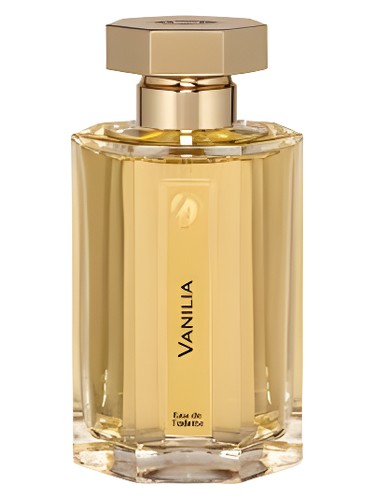
There''s a reason Vanilia appeared in 1978, years before vanilla became synonymous with sweetness and frosting. From the first spray, this is vanilla reimagined—not as dessert, but as architecture. The opening suggests carved wood dusted with golden pollen, a floral warmth that hovers somewhere between sunset and amber light. This isn''t the vanilla of candles or confections; it''s vanilla as it might grow in a sun-warmed forest, rooted in earth and bark, reaching toward pale yellow blossoms overhead. The impression is simultaneously comforting and sophisticated, familiar yet refined in a way that announces L''Artisan Parfumeur''s founding vision: to approach perfumery as art, not mere commerce.
The Scent Profile
While the specific note breakdown remains something of a mystery—fitting for a fragrance from an era when mystique mattered more than marketing—the accord structure tells the story clearly. Vanilia builds itself on a foundation where vanilla dominates at full intensity, but it''s the woody accord running at 99% that provides the revelation. This is vanilla interwoven with wood so seamlessly that distinguishing between them becomes almost impossible. They breathe together.
The yellow floral element, registering at 78%, brings an unexpected dimension. Rather than the indolic richness of white florals or the sharp greenness of aldehydic blooms, there''s a suggestion of heliotrope perhaps, or the almond-like softness of certain ylang compositions. These florals don''t announce themselves with fanfare; they simply glow, lending warmth and a subtle powdery quality (captured in that 64% powdery accord) that softens vanilla''s edges without veering into makeup-counter territory.
That sweetness rating of 59% proves telling. Yes, Vanilia reads as sweet, but it''s a measured sweetness, restrained and adult. The 29% balsamic accord likely provides resinous depth—think of benzoin or Peru balsam adding their honeyed, slightly smoky character to the composition''s lower registers. This creates a fragrance that develops rather than simply projects: it opens bright and woody-floral, settles into creamy vanilla comfort, then gradually reveals those darker, more contemplative balsamic tones as hours pass.
The experience unfolds with a coherence that suggests expert blending rather than dramatic transitions. Vanilia doesn''t announce its movements; it simply evolves, the way afternoon light gradually shifts from gold to amber to dusk.
Character & Occasion
The seasonal data reveals something fascinating: Vanilia achieves near-perfect balance between fall (62%) and winter (61%), while maintaining substantial wearability in spring and summer (both at 49%). This isn''t the heavy, monolithic vanilla bomber that hides in your coat until November. Instead, it possesses enough wooden structure and floral lift to work across three seasons comfortably, finding its fullest expression when temperature drops but never becoming unwearable when it rises.
That day/night split—100% day versus 46% night—clarifies Vanilia''s essential character. This is a daylight vanilla, a companion for errands and afternoon meetings, for cozy cafés and autumn walks through parks where leaves are just beginning to turn. The powdery-woody construction keeps it office-appropriate; the vanilla warmth makes it approachable and human-scaled. Evening wear isn''t forbidden, but Vanilia shines brightest in natural light, perhaps because those yellow floral notes truly come alive when they can play against sunshine.
Marketed as feminine, though the woody-vanilla core could certainly transcend those boundaries for anyone drawn to warmer, more grounded vanillas over sugary interpretations. This feels tailored for someone who appreciates restraint, who wants presence without performance.
Community Verdict
The 4.02 out of 5 rating across 364 votes positions Vanilia firmly in "very good" territory—beloved by those who discover it, if not universally acclaimed. That number suggests a fragrance that delivers on its promises without necessarily revolutionizing every wearer''s collection. It''s solid, reliable, beautiful in its specific way.
The vote count itself deserves attention. At 364 ratings, Vanilia hasn''t achieved blockbuster status in the contemporary fragrance conversation, but it maintains a devoted following decades after its introduction. This is a perfume sustained by genuine appreciation rather than marketing momentum, which may be the sincerest compliment of all.
How It Compares
The similar fragrances list reads like a masterclass in sophisticated warmth: Guerlain''s Samsara and L''Heure Bleue, Serge Lutens'' Un Bois Vanille, Dior''s Dolce Vita and Dune. These are perfumes united by their refusal to choose between comfort and complexity.
Un Bois Vanille offers the most direct comparison—another woody vanilla construction—though Lutens tends toward more explicit sweetness and spice. Vanilia maintains greater restraint, leaning harder into those floral-powdery elements. The Guerlain references (particularly L''Heure Bleue) suggest shared DNA in that powdery-floral territory, though Vanilia centers vanilla where Guerlain centers anise and tonka. Dune''s oceanic woodiness and Dolce Vita''s fruited warmth provide context for Vanilia''s own woody-floral balance, placing it in distinguished company without being overshadowed.
The Bottom Line
Vanilia stands as testament to L''Artisan Parfumeur''s founding philosophy: take familiar materials and render them unfamiliar through unexpected juxtapositions. A 4.02 rating indicates this approach succeeds more often than it falters, creating a vanilla fragrance that satisfies comfort-seekers while offering enough complexity to hold attention.
Is it revolutionary? No. But perhaps revolution was never the point. Vanilia offers something potentially more valuable: a wearable, well-constructed fragrance that does exactly what it promises with grace and restraint. For anyone exhausted by vanilla''s modern reputation as shorthand for basic or boring, Vanilia provides historical proof that the note, when handled with respect and imagination, can anchor compositions of real beauty.
Worth exploring for woody vanilla lovers, Guerlain devotees seeking something less formal, and anyone curious about fragrance history. At over four decades old, Vanilia hasn''t just survived—it remains relevant, which may be the finest compliment any perfume can receive.
AI-generated editorial review