First Impressions
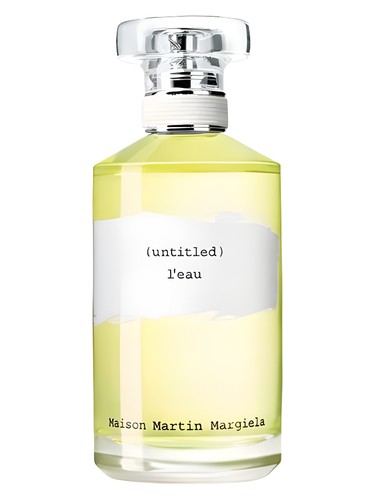
The first spray of Untitled L''Eau feels like stepping into a concept store where white walls amplify every detail. This is fragrance as design philosophy—ruthlessly edited, supremely confident in what it chooses to reveal. That opening burst is pure citrus radiance, but not the kind that screams for attention. Instead, it whispers with the quiet authority of something perfectly executed. The greenness arrives almost simultaneously, creating an effect that''s both crisp and soft, like freshly laundered linen hung to dry in a sun-dappled garden. There''s an unmistakable modernity here, a refusal to telegraph luxury through opulence. Maison Martin Margiela, the fashion house that built its reputation on deconstructed elegance and conceptual minimalism, has translated its aesthetic DNA into olfactory form with remarkable precision.
The Scent Profile
While specific note breakdowns remain as mysteriously undisclosed as a Margiela runway show (the brand has always favored intrigue over exposition), the accord analysis tells us everything we need to know about Untitled L''Eau''s architecture. This is a fragrance dominated by citrus at full intensity—imagine that accord slider pushed completely to maximum. It''s the foundation, the framework, the thesis statement.
The green accord follows close behind at 77%, creating a composition that reads like an abstract painting in shades of yellow and verdant green. This isn''t the dark, vetiver-heavy green of chypres or the dewy green of gardenia leaves. It''s sharper, more aromatic, with a 29% aromatic character that suggests herbs caught between fingers—perhaps verbena, perhaps lemon balm, perhaps something more abstract altogether. The fresh spicy element at 21% adds just enough pepper or ginger to keep things from becoming too pretty, too safe.
What''s particularly intriguing is the subtle 20% white floral presence lurking beneath all that citrus brightness. It never announces itself as "floral" in the traditional sense, but rather provides body and smoothness to what could otherwise become astringent. Think of it as the invisible architecture that keeps a minimalist building standing—you don''t see it, but you''d notice if it weren''t there.
The overall freshness registers at 29%, which might seem modest until you realize it''s working in concert with that dominant citrus accord. This isn''t fresh for fresh''s sake; it''s calibrated freshness, the kind that refreshes without overwhelming.
Character & Occasion
The community data reads like a love letter to warm weather: 94% summer suitability and 86% spring performance mark this as fundamentally a sunshine fragrance. Only 24% found it appropriate for fall, and a mere 8% would reach for it in winter. This is decisive, almost binary seasonality—Untitled L''Eau knows exactly what it is and doesn''t apologize for its limitations.
The day versus night breakdown is even more telling: 100% day wear, 12% night. This is a fragrance for natural light, for errands and al fresco lunches, for linen blazers and minimal makeup. It''s perfume for living, not performing. The woman who wears this isn''t trying to seduce or intimidate; she''s simply moving through her day with effortless style.
This makes it perfect for situations where heavy perfume feels performative or inappropriate—the office, brunch meetings, gallery openings, those perpetually chic "casual" occasions that somehow require the most thought. It''s fragrance as wardrobe staple rather than statement piece, though its very restraint is, paradoxically, quite statement-making.
Community Verdict
With a 3.96 out of 5 rating from 470 voters, Untitled L''Eau sits comfortably in "very good" territory without quite reaching "masterpiece" status. This rating feels honest and appropriate—it reflects a fragrance that executes its vision beautifully without necessarily revolutionizing the genre. The relatively substantial vote count suggests this isn''t just a curiosity piece; people are actually wearing it, forming opinions, coming back to evaluate it over time.
That near-4 rating indicates strong approval with room for personal preference. Some will find its minimalism refreshing; others might wish for more complexity or longevity. It''s the kind of score that says "this is worth your time" without overpromising.
How It Compares
The comparison set is revealing. Un Jardin en Méditerranée and Un Jardin Sur Le Nil—both Hermès creations by Jean-Claude Ellena, the master of olfactory minimalism—make perfect sense as kindred spirits. These are fragrances that value suggestion over declaration, sketch over oil painting. The inclusion of (untitled) by the same house suggests a family resemblance within Margiela''s own line.
More surprising is Coco Mademoiselle and Terre d''Hermès in the mix. What they share with Untitled L''Eau isn''t literal note overlap but rather that quality of refined restraint, of saying much with little. They''re all fragrances that trust their concept enough not to over-elaborate.
Where Untitled L''Eau distinguishes itself is in its commitment to the citrus-green narrative without compromise. While the Hermès garden fragrances explore specific locations, Margiela offers something more abstract, more conceptual—a feeling of freshness rather than a place.
The Bottom Line
Untitled L''Eau deserves its strong rating as a near-four-star fragrance that knows exactly what it wants to be. This isn''t a scent for those seeking sillage monsters or all-season versatility. It''s for the person who appreciates that sometimes the most sophisticated choice is the most restrained one.
At its heart, this is warm-weather insurance—a guarantee that you''ll smell clean, modern, and effortlessly put-together when temperatures rise. The value proposition depends on how often you need that particular olfactory solution. If your life involves significant time in spring and summer, particularly in professional or daytime social settings, this earns its place in your rotation.
Who should try it? Anyone who''s ever felt that most fragrances try too hard. Anyone who owns a white shirt in five different fabrics. Anyone who understands that Margiela''s blank label and exposed seams aren''t absence of design but design itself. This is fragrance for people who get the concept—and the concept, beautifully executed, is quite enough.
AI-generated editorial review