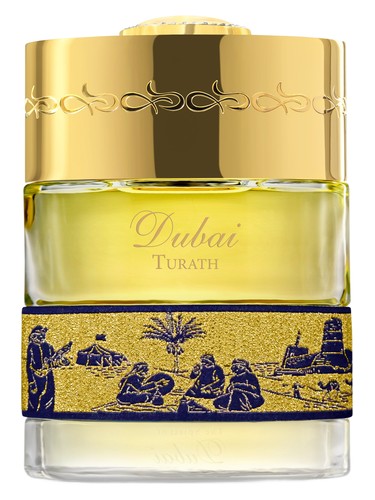
First Impressions
The first spray of Turath is an exercise in restraint—or rather, the complete abandonment of it. This is maximalism bottled, a fragrance that arrives with the subtlety of a spice market colliding with a patisserie. Dried fruits cascade over sticky candied confections while pink pepper and cardamom add crackling heat. There''s strawberry, there''s pineapple, there''s black currant—eighteen top notes in total, each vying for attention like merchants hawking their wares in old Dubai''s souks. And yet, beneath this orchestrated chaos, you sense the shadow of something darker: coffee''s bitterness, oud''s animalic whisper, the promise of smoke yet to come. The Spirit of Dubai has created something that refuses to be ignored, a fragrance that announces itself with confidence bordering on audacity.
The Scent Profile
The opening is a fruit lover''s fever dream. Dried fruits form the backbone—think dates, figs, apricots—while candied fruits add crystalline sweetness. Fresh strawberry and peach bring juiciness, pineapple contributes tropical brightness, and apple offers crisp contrast. This isn''t the polite fruitiness of Western florals; this is opulent, sticky, Middle Eastern fruit presented on silver platters. The spices arrive simultaneously: cardamom''s eucalyptus-tinged warmth, cinnamon''s sweet heat, pink pepper''s fizz, and surprisingly, cumin''s savory earthiness. Coffee adds a roasted depth, while coconut and bergamot round out this impossibly crowded opening act.
As Turath settles into its heart, the composition finally reveals its true nature. Agarwood dominates, bringing that distinctive oud profile—leathery, medicinal, slightly barnyardish in the way only genuine oud can be. Rose and saffron form the classic Middle Eastern pairing, with damask rose''s honeyed richness amplified by saffron''s metallic, almost bloody intensity. Sandalwood and cedar provide woody structure, while jasmine, iris, and lily-of-the-valley attempt to add refinement. Cypriol oil (nagarmotha) contributes its woody, smoky, almost vetiver-like character, while amyris and coriander add subtle complexity that honestly struggles to be heard amid this crowded composition.
The base is where Turath transforms into something truly distinctive. Incense and smoke billow upward, creating a censed, spiritual quality that grounds the earlier sweetness. Vanilla softens the edges while leather adds texture—not the clean suede of French perfumery, but something more raw and animalic. Ambergris and white musk provide marine-salty depth, while guaiac wood, labdanum, Peru balsam, and Tolu balsam create a resinous, ambery foundation. Patchouli, vetiver, oakmoss, and even civet round out a base that seems determined to include every classic perfume ingredient in existence.
Character & Occasion
The data tells a clear story: Turath is a cold-weather powerhouse. Winter scores 100%, fall 97%, making this undeniably a fragrance for cooler months when its dense, complex layers can unfold without overwhelming. Spring manages 72%, suggesting it might work on crisp mornings, but summer''s 32% confirms what the composition already tells us—this is far too rich for heat.
The day/night split is revealing: 63% day, but 92% night. This is a fragrance that truly comes alive after dark, when its smoky, ambery depth reads as sophisticated rather than heavy. Picture it at evening gatherings, winter weddings, formal dinners where its projection won''t be confined by office politics. The fruity opening makes it wearable during daylight hours, but the oud and incense heart feels most at home under lamplight.
This is marketed as feminine, but with its prominent oud, spices, and woody base, Turath walks the line toward unisex territory. It''s best suited for those who appreciate Arabian perfumery''s philosophy—where more is more, where complexity is celebrated, where fragrances are meant to create an aura rather than whisper.
Community Verdict
The Reddit community''s response to Turath discussions is notably mixed, scoring just 5.5 out of 10 in sentiment. However, this lukewarm reaction appears to stem not from the fragrance itself, but from the nature of the posts about it. Community members found value in the data-driven approach to fragrance discovery, particularly for uncovering niche brands, but some felt the discussion format became repetitive and low-effort.
Interestingly, there''s minimal specific feedback about Turath''s actual scent profile in these discussions. The fragrance seems to serve more as a conversation starter about highly-rated perfumes and the designer-versus-niche debate than as a polarizing scent itself. The community appreciated the discovery aspect and comparative data but wanted more substantive discussion.
What''s notable is the absence of strong negative reactions to the scent composition—the mixed sentiment relates to presentation, not performance.
How It Compares
The similar fragrances list reads like a who''s-who of luxury perfumery: Amouage''s Jubilation XXV Man, Louis Vuitton''s Ombre Nomade, Xerjoff''s Alexandria II, Mancera''s Red Tobacco, and Creed''s Aventus. What''s fascinating is that four of these five are technically masculine fragrances, further confirming Turath''s unisex character despite its feminine classification.
The Jubilation XXV comparison makes sense—both embrace maximalism and fruity-spicy-woody profiles. The Ombre Nomade connection highlights the prominent oud and incense. Alexandria II shares the amber-woody-spicy DNA, while Red Tobacco suggests a similar sweet-spicy-smoky interplay. The Aventus comparison is perhaps the most interesting, pointing to the fruity opening and sophisticated complexity, though Turath ventures far deeper into oriental territory.
At a 4.44 rating from 565 votes, Turath sits in rarified air—this level of approval suggests genuine quality and broad appeal, particularly impressive for a brand less internationally recognized than the comparison houses.
The Bottom Line
Turath is not a fragrance for minimalists. With its sprawling note pyramid and maximal approach to composition, it represents Arabian perfumery''s philosophy at full throttle. But that 4.44 rating from over 500 voters suggests this approach works more often than it fails. This is a sophisticated fruit-forward fragrance elevated by quality oud, grounded by incense and smoke, and wrapped in ambery warmth.
It''s best suited for those already comfortable with niche and Arabian perfumery, for wearers who appreciate complexity and don''t fear projection. If you love Amouage''s opulence or Louis Vuitton''s Ombre Nomade but want more fruit in the opening, Turath deserves your attention. For winter evenings, for special occasions, for those moments when you want your fragrance to be part of the conversation, this delivers.
The Spirit of Dubai may not have the name recognition of its French counterparts, but Turath proves they understand how to layer dried fruits and oud into something genuinely compelling—a fragrance that honors its heritage while achieving broad appeal.
AI-generated editorial review