First Impressions
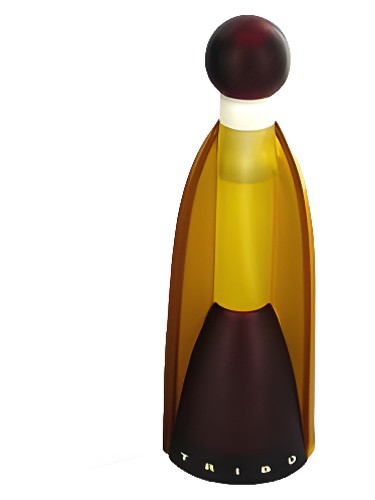
The first spray of Tribu tells you immediately that this isn''t what you''d expect from a fashion brand fragrance launched in the early ''90s. While the decade drowned in saccharine florals and fruity confections, Benetton''s 1993 release opened with something altogether more grounded: a sharp burst of black currant cutting through violet leaf''s green metallic tang, softened only slightly by Italian mandarin''s sunny citrus. This is a fragrance that refuses to play coy. The opening feels almost medicinal in its herbal directness—chamomile makes its presence known even from the first moment—before that woody backbone emerges, asserting itself as the dominant force that will carry through to the final hour on skin.
The Scent Profile
Tribu''s evolution reads like a walk from sun-dappled fruit trees into increasingly dense forest. Those opening notes—black currant and mandarin paired with violet leaf—create an unusual fruity-green alliance that skews darker than typical feminine fragrances of its era. The violet leaf contributes a cucumber-like freshness with a subtle metallic edge, preventing the black currant from becoming too jammy or sweet.
Within minutes, the heart reveals the fragrance''s true complexity. Chamomile emerges as an unexpected heroine, its apple-like sweetness tempered by a distinctly medicinal, almost bitter quality that adds gravitas. This isn''t the chamomile of bedtime tea; it''s chamomile as an aromatic statement, supported by a lush bouquet of Moroccan jasmine, ylang-ylang, geranium, and Bulgarian rose. Yet even with this floral arsenal, Tribu never becomes traditionally pretty. The geranium adds a green, slightly peppery facet, while the ylang-ylang brings creaminess without excessive sweetness. These florals feel contained, disciplined—as though they know they''re supporting players in a larger woodland narrative.
The base is where Tribu stakes its claim as a woody powerhouse. Oakmoss anchors everything with its earthy, slightly damp forest floor character, while Tahitian vetiver adds its characteristic smoky, rooty depth. Benzoin provides resinous warmth and subtle vanilla undertones, and sandalwood rounds out the composition with creamy woodiness. This foundation doesn''t just support the fragrance—it dominates it, explaining why woody registers at 100% in the accord analysis, with fruity (83%) and aromatic (80%) trailing behind, and floral elements (59%) almost an afterthought despite the substantial floral heart.
Character & Occasion
Tribu is decidedly a cool-weather companion. The data confirms what the nose knows: this fragrance thrives in fall (93%) and winter (74%), periods when its substantial woody-aromatic structure can bloom without overwhelming. Spring (56%) remains viable territory, but summer (41%) is pushing it—this isn''t a fragrance built for heat and humidity.
Its day-to-night versatility (100% day, 68% night) speaks to a rare adaptability. The herbal-fruity opening makes it perfectly appropriate for daylight hours, while that persistent woody-earthy base transitions seamlessly into evening without requiring a wardrobe change. This is a fragrance for someone who moves through their day with purpose—professional enough for the office, substantive enough for dinner, unconventional enough to signal that you''re not following the crowd.
The feminine classification feels almost quaint by contemporary standards. Tribu would sit comfortably in today''s unisex category, its woody-aromatic character equally at home on any wearer who appreciates complexity over conventional prettiness.
Community Verdict
The fragrance database shows a solid 4.01 out of 5 rating from 755 votes—a respectable score that suggests consistent appreciation, if not passionate devotion. However, the Reddit fragrance community discussions yielded no specific mentions of Tribu, a silence that speaks volumes about the fragrance''s current cultural position. Three decades after its launch, Tribu exists in that peculiar limbo of discontinued or difficult-to-find fragrances: beloved by those who know it, invisible to the broader conversation. This absence from contemporary discourse doesn''t diminish its quality, but it does contextualize it as a fragrance discovery rather than a mainstream recommendation.
How It Compares
The suggested similar fragrances create an intriguing map of Tribu''s territory. Sharing space with Light Blue by Dolce&Gabbana, Black Orchid by Tom Ford, Dune by Dior, Obsession by Calvin Klein, and Poison by Dior places Tribu in rarified air—these are landmark fragrances that defined or redefined their respective categories. The Light Blue connection likely stems from the fruity-fresh opening, while Black Orchid shares the woody earthiness. Dune parallels the aromatic, slightly austere quality, and Obsession and Poison represent that ''90s boldness and complexity. What distinguishes Tribu is its chamomile-forward heart and its refusal to commit fully to any single category—it''s too woody to be simply fruity-floral, too herbal to be conventionally pretty.
The Bottom Line
Tribu deserves more attention than its current near-invisibility suggests. A 4.01 rating from over 750 voters indicates genuine quality, not cult-following inflation. This is a fragrance that rewards those seeking substance over trend, complexity over immediate gratification. Its woody-aromatic structure feels remarkably contemporary despite its early ''90s origins—proof that good composition transcends temporary fashion.
The challenge lies in finding it. Benetton fragrances rarely command collector prices, making Tribu an accessible discovery for those willing to hunt through online resellers or vintage fragrance suppliers. For anyone fatigued by the aquatic-fresh or gourmand-sweet dichotomy dominating modern feminine fragrances, Tribu offers a third path: grounded, herbal, unapologetically woody, and entirely itself.
AI-generated editorial review