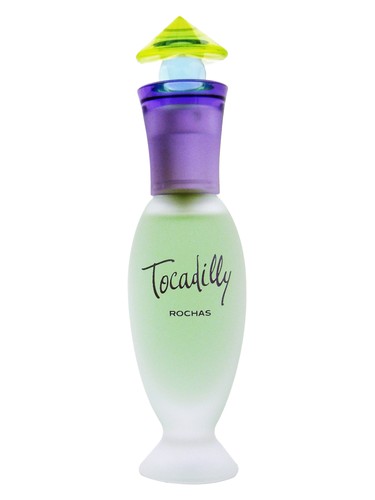
First Impressions
The first spray of Tocadilly delivers an immediate contradiction: the crisp, almost water-logged snap of cucumber colliding with the powdery romance of lilac. It''s 1997 in a bottle—that particular moment when perfumery was obsessed with transparency, with making flowers seem as if they were glimpsed through rain-washed glass. This is not the heavy-handed florals of the decades prior, nor the saccharine fruit bombs that would follow. Instead, Rochas captured something more elusive: the scent of optimism itself, bright and unencumbered.
The opening feels almost aggressively fresh, that cucumber note providing a vegetal sharpness that some will find exhilarating and others might consider too literal. But give it thirty seconds, and the lilac begins its soft persuasion, tempering the green with its characteristic soapy-sweet powder. Together, they create an effect that''s both innocent and sophisticated—like a debutante who''s read all the right books.
The Scent Profile
Tocadilly''s architecture reveals the transparent layering technique that defined late-90s perfumery. Those top notes of lilac and cucumber don''t so much fade as become translucent, allowing the heart to shine through like light through tissue paper.
The transition to the middle notes brings hyacinth and jasmine into focus, both contributing their particular brand of brightness. The hyacinth adds a green, almost sappy quality that reinforces the garden-fresh narrative, while jasmine—usually so indolic and heavy—appears here in its most well-behaved iteration. There''s also coconut listed in the heart, though it manifests less as tropical vacation and more as a creamy, barely-there softness that rounds out the sharper floral edges. This isn''t coconut suntan oil; it''s the subtle lactonic quality that gives the whole composition a skin-like warmth.
The base settles into musk, and here Tocadilly shows its era once again. This is clean musk, the kind that smells like expensive laundry or freshly dried linens. It provides longevity without weight, allowing the fragrance to hover close to skin for hours without ever announcing itself from across a room. Some might wish for more complexity here, for woods or vanilla or something with more presence, but that whisper-soft finish is entirely intentional—a feature, not a flaw.
Character & Occasion
The community data tells a story that your nose confirms: this is a spring fragrance first and foremost, with 96% of wearers identifying it as the season''s ideal companion. It''s the olfactory equivalent of that first warm day in March when you can finally leave your coat at home. Summer claims a respectable 60%, which makes sense—the ozonic and aquatic qualities (registering at 44% and 39% respectively) provide genuine refreshment in heat.
But notice how those percentages plummet for fall and winter. This is not a fragrance that wants to compete with wool scarves and crackling fires. At 28% for autumn and a mere 16% for winter, Tocadilly makes its preferences clear.
The day versus night split is even more definitive: 100% day, 17% night. This is a morning fragrance, a brunch fragrance, a running-errands-in-white-linen fragrance. Evening wear would require either considerable confidence or a very casual affair—garden parties yes, gallery openings probably not.
The dominant floral accord at 100%, backed by that substantial 68% green component, positions Tocadilly firmly in the fresh floral category. It''s for those who want to smell pretty without trying too hard, clean without being clinical.
Community Verdict
With a rating of 3.78 out of 5 based on 363 votes, Tocadilly occupies interesting territory. This isn''t a polarizing fragrance that inspires either devotion or disgust—it''s more nuanced than that. The rating suggests a broadly appreciated but perhaps not deeply loved scent. It''s well-executed enough to earn respect, accessible enough to please many, but possibly too polite to inspire passionate advocacy.
That said, over 360 people have bothered to rate a discontinued fragrance from 1997, which speaks to a certain enduring appeal. These aren''t casual samplers; these are seekers who''ve hunted down something specific. The rating reflects quality and wearability, even if it doesn''t quite reach "masterpiece" status.
How It Compares
Tocadilly sits comfortably among its listed companions: Noa by Cacharel, Anais Anais by Cacharel, Cinéma by Yves Saint Laurent, Tocade by Rochas, and Poeme by Lancôme. These are all sophisticated, somewhat understated florals that favor elegance over impact.
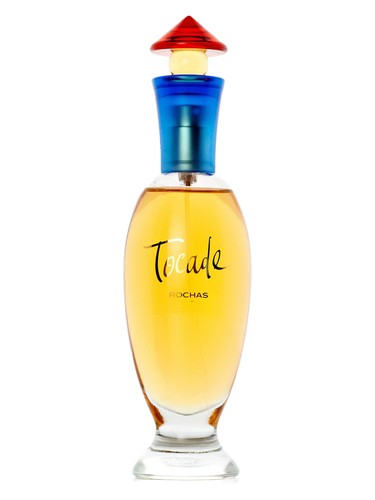
The connection to Tocade, its Rochas sibling from 1994, is particularly relevant—both share that refined femininity and preference for transparency over density. Where Tocade leans more toward amber and rose, Tocadilly takes the aquatic, green route. Among the Cacharel comparisons, Tocadilly reads as slightly more modern and less powder-focused than Anais Anais, though they share a certain demure sensibility.
What distinguishes Tocadilly is that cucumber note—a risky choice that gives it more personality than some of its more traditionally pretty competitors.
The Bottom Line
Tocadilly represents a specific moment in perfume history when houses were exploring freshness with genuine creativity rather than formula. It won''t be everyone''s signature scent—it''s too sheer, too determinedly daylight, too specifically spring-coded for that. But for those mornings when you want to smell like the best version of clean, like possibility itself, it delivers exactly what it promises.
The 3.78 rating is fair: this is a very good fragrance that stops just short of greatness. If you loved the transparent florals of the late 90s, or if you''re drawn to scents that prioritize wearability over drama, Tocadilly deserves your attention. Just don''t expect it to last until midnight, or to announce you before you enter a room. That was never its purpose.
AI-generated editorial review