First Impressions
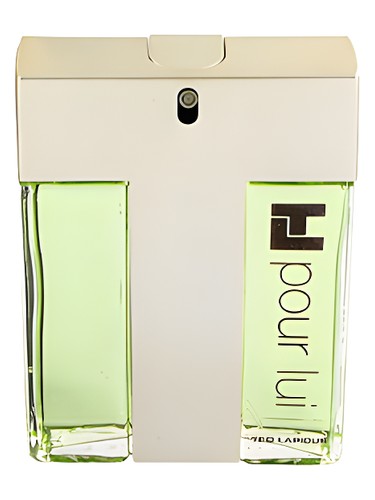
The first spray of TL Pour Lui defies expectation. Where you might anticipate a traditional masculine opening—sharp, assertive, perhaps aggressive—you''re instead greeted by something far more nuanced. Lavender and mint arrive together, not as a barbershop cliché but as a softened, almost confectionary introduction. The bergamot adds citric brightness while orange blossom whispers from the background, hinting at the creamy sweetness that will soon dominate. This is a fragrance that announces itself gently, confidently enough not to shout.
Released in 2003 by Ted Lapidus, TL Pour Lui emerged during an era when masculine fragrances were exploring softer territories—yet it carved its own path. The immediate impression is one of comfort rather than conquest, of invitation rather than intimidation. It''s this unexpected tenderness that makes the opening so compelling.
The Scent Profile
The evolution of TL Pour Lui reads like a study in contradictions that somehow cohere into harmony. Those opening lavender and mint notes establish an aromatic foundation, but they''re almost immediately softened by the presence of orange blossom—a floral note that bridges the gap between traditional masculinity and the vanilla-forward heart that defines this composition.
As the fragrance settles into its heart, vanilla takes center stage with remarkable confidence, scoring a perfect 100% in the accord breakdown. But this isn''t vanilla as a simple gourmand indulgence. Instead, it intertwines with lily-of-the-valley, creating an almost talc-like powderiness that registers at 87%—a quality that feels vintage in the best possible way. The cedar here provides structure, preventing the composition from becoming too soft, too sweet, too yielding.
The base is where TL Pour Lui reveals its classical training. Sandalwood and musk create a skin-like warmth, while amber adds a resinous glow that elevates the vanilla beyond dessert territory. Patchouli grounds everything with an earthy, slightly spicy undertone. The woody accord strength of 81% ensures that despite the dominant vanilla, this remains firmly in masculine territory—or at least in that ambiguous space where gender boundaries blur into irrelevance.
What''s fascinating is how the white floral accord (78%) weaves through the entire development, creating a soft halo around the more traditional masculine elements. This isn''t a linear fragrance that moves from bright to dark; instead, it unfolds in layers, revealing different facets depending on skin chemistry and time of day.
Character & Occasion
TL Pour Lui is unequivocally a cold-weather companion. The data tells a clear story: fall scores a perfect 100%, winter follows closely at 89%, and spring remains viable at 78%. Summer, at 32%, is where this fragrance struggles—and understandably so. The vanilla-powdery combination, while beautiful in cooler temperatures, can feel heavy and cloying in heat.
Interestingly, this is that rare masculine fragrance that performs almost equally well day or night (94% day, 85% night). The vanilla and powdery accords make it office-appropriate without being boring, while the woody-amber base provides enough depth for evening wear. It''s versatile in the way a well-tailored cashmere sweater is versatile—appropriate for many situations, but distinctly not for all.
This is a fragrance for someone who doesn''t need their scent to announce their masculinity. It''s for the man comfortable enough to wear something soft, something that reads as approachable rather than aggressive. The powdery quality gives it an almost retro charm—it could easily have been worn in the 1950s, yet it doesn''t feel dated.
Community Verdict
With a rating of 4.15 out of 5 stars from 484 votes, TL Pour Lui has earned genuine appreciation from its wearers. This isn''t a fragrance with a small cult following inflating its scores—nearly 500 people have weighed in, and the consensus is decidedly positive. That rating places it in genuinely impressive territory, suggesting that those who discover it tend to appreciate what it offers.
The substantial vote count also indicates that while TL Pour Lui might not have the name recognition of designer blockbusters, it has found its audience. These are people who likely appreciate the vanilla-forward composition, the powdery softness, and the way it differentiates itself from sharper, more conventional masculine offerings.
How It Compares
The comparison list reads like a who''s who of beloved masculine fragrances from the 1990s and early 2000s: Le Male, Joop! Homme, Zino Davidoff, Azzaro pour Homme, and Bogart Pour Homme. These are fragrances that share TL Pour Lui''s willingness to incorporate sweetness and softness into traditionally masculine structures.
Where Le Male leans into marine lavender and mint with theatrical flair, TL Pour Lui takes a more subdued approach. It shares Joop! Homme''s vanilla obsession but without the heliotrope intensity. Compared to the green brightness of Azzaro pour Homme, this is warmer, more enveloping. In this company, TL Pour Lui distinguishes itself through its pronounced powdery accord—it''s softer than most of its peers, more comforting, less interested in making a bold statement.
The Bottom Line
TL Pour Lui represents excellent value in the masculine fragrance category. Its 4.15 rating isn''t inflated hype—it reflects genuine quality and a distinctive point of view. This isn''t a fragrance trying to be everything to everyone. It knows exactly what it is: a vanilla-powered, powdery-soft masculine that trades conventional aggression for approachability.
Should you try it? If you appreciate fragrances like Le Male but wish they were less aquatic, more comforting, then absolutely. If you''re looking for a fall and winter signature that won''t smell like everyone else''s, TL Pour Lui deserves consideration. However, if you prefer crisp, clean, or intensely woody masculines, this might feel too sweet, too soft, too vintage-leaning.
The Ted Lapidus name might not carry the cachet of more celebrated houses, but TL Pour Lui proves that compelling fragrances can come from unexpected places. It''s a reminder that sometimes the most interesting scents are those that dare to whisper rather than shout.
AI-generated editorial review