First Impressions
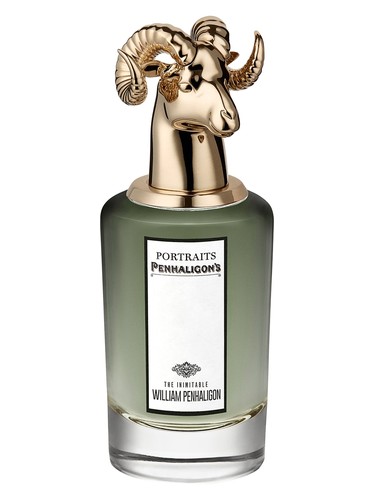
There''s something delightfully audacious about a fragrance house naming a scent after its own founder. With The Inimitable William Penhaligon, the storied British perfumer doesn''t just invoke its heritage—it bottles it. The opening spray delivers an unexpected contradiction: bright bergamot citrus colliding with creamy jasmine, a masculine framework softened by a whisper of white florals. It''s proper yet playful, confident without being loud, and immediately signals that this won''t be another derivative woody aromatic. Within moments, that jasmine accord creates an almost talc-like powderiness that hovers above the citrus, like a well-tailored suit dusted with fine powder after a morning shave. This is intentional sophistication, the olfactory equivalent of a knowing wink.
The Scent Profile
The bergamot and jasmine pairing in the opening feels brief but purposeful—a civilized greeting before the real conversation begins. Within fifteen minutes, the heart reveals its true character: vetiver and cedar form a sturdy backbone, their earthy-woody presence anchored by wisps of incense smoke. This isn''t the sharp, green vetiver of traditional masculines, nor is it the pencil-shaving cedar of dated aromatic fougères. Instead, both ingredients feel smoothed and rounded, as if viewed through frosted glass. The incense adds a meditative quality without veering into churchy solemnity.
What''s particularly notable is how the jasmine from the opening persists, threading through the woody heart and contributing to that 28% powdery accord the community has identified. It''s this powder element—subtle but unmistakable—that gives the fragrance its vintage-modern duality. You could imagine this worn in a Mayfair barbershop in 1920 just as easily as in a Shoreditch coffee shop today.
The base is where The Inimitable William settles into its skin. Sandalwood arrives with creamy warmth, while ambroxan provides that contemporary, skin-like radiance that''s become nearly ubiquitous in modern perfumery. Here, though, the ambroxan doesn''t dominate—it simply lifts the sandalwood, giving the fragrance a gentle sillage without shouting. The woody character remains dominant throughout (registering at 100% in community accord data), but it''s the interplay of amber warmth and aromatic freshness—both at 40%—that prevents this from becoming one-dimensional. As it dries down over six to eight hours, the incense and powdery elements create a soft, contemplative aura that sits close to the skin.
Character & Occasion
The community consensus paints a clear picture: this is a fragrance with a pronounced seasonal preference. It achieves perfect marks for autumn wear and scores 82% for winter—no surprise given its woody-amber composition and warm spicy undertones. What''s more intriguing is its 78% spring approval, suggesting that the bergamot-jasmine opening and aromatic facets give it enough lift for milder weather. Summer, predictably, is where it struggles at just 33%, confirming this isn''t beach-appropriate territory.
The day/night split (83% day, 68% night) reveals its versatility. This is primarily a daytime proposition—office-friendly, meeting-appropriate, refined enough for professional settings without being forgettable. Yet that 68% night approval indicates it can transition to evening affairs, particularly in cooler months. It''s the fragrance for a man who moves through his day with purpose: morning correspondence, afternoon appointments, evening dinners. It doesn''t demand attention but commands respect.
This is decidedly masculine territory, despite the jasmine''s presence. The fragrance works best on those who appreciate woody sophistication over synthetic freshness, who value quality over projection, and who understand that true luxury often whispers rather than shouts.
Community Verdict
With a rating of 4.04 out of 5 from over 1,000 votes, The Inimitable William sits comfortably in "very good" territory. This isn''t niche obscurity with 50 reviews, nor is it a mass-market release inflated by hype. A thousand voices reaching consensus above 4.0 suggests genuine quality and broad appeal within its target demographic. The rating indicates a fragrance that delivers on its promises without major divisive elements—though that jasmine-powder combination likely isn''t for everyone. Those seeking nuclear projection or groundbreaking originality should look elsewhere; this scores points for refinement and wearability rather than innovation.
How It Compares
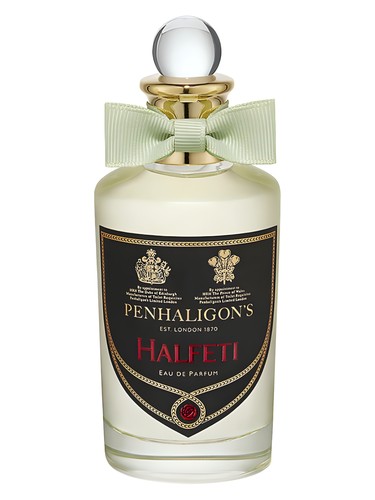
Penhaligon''s positions this alongside The Tragedy of Lord George from its own Portraits collection, and the family resemblance is clear—both favor woody sophistication and British restraint. The comparisons to Baccarat Rouge 540, Reflection Man, and Oud Wood feel more aspirational than accurate; while The Inimitable William shares the woody-amber territory, it lacks BR540''s sweet intensity, Reflection Man''s floral opulence, or Oud Wood''s smoky exoticism. The Halfeti comparison is more apt—both demonstrate Penhaligon''s skill with balancing heritage and modernity. Where this fragrance succeeds is in occupying a middle ground: more interesting than designer masculines, more approachable than challenging niche offerings, more refined than celebrity scents.
The Bottom Line
The Inimitable William Penhaligon isn''t trying to revolutionize masculine perfumery—it''s distilling 150 years of British perfume-making into a wearable, contemporary form. That 4.04 rating from over a thousand wearers reflects exactly what it is: a very good, very wearable woody aromatic with enough character to stand out and enough restraint to fit in. The jasmine-touched powder might surprise those expecting straightforward masculinity, but it''s precisely this detail that elevates the composition beyond the ordinary.
Is it worth exploring? For anyone drawn to refined, woody fragrances with autumn and winter versatility, absolutely. For those seeking maximum projection or summer freshness, probably not. The price point will be typically Penhaligon''s—not cheap, but reasonable for the quality delivered. This is a fragrance for the man who already knows what he likes and appreciates subtle distinctions. William Penhaligon himself, one imagines, would approve.
AI-generated editorial review