First Impressions
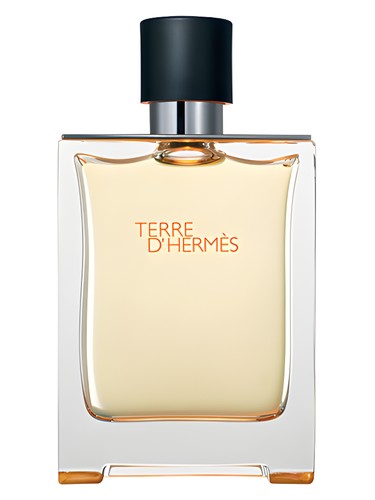
The first spray of Terre d'Hermès delivers what can only be described as an olfactory paradox: brightness with weight, airiness with presence. Orange and grapefruit burst forth not as the sweet, juice-dripping fruit of summer mornings, but as something more austere and mineral—citrus peel dried in Mediterranean sun, touched with stone dust. This is perfumer Jean-Claude Ellena's opening statement from 2006, and it remains as arresting today as it must have been nearly two decades ago. There's an immediate sense that something different is happening here, a refusal to follow the aquatic-dominated masculine fragrances that defined the early 2000s.
The name translates to "Earth of Hermès," and within seconds, you understand why. This isn't about literal dirt or patchouli bombs; it's about the relationship between sky and ground, between the ephemeral and the enduring.
The Scent Profile
Terre d'Hermès unfolds in movements rather than linear progressions. Those opening citrus notes—orange and grapefruit—dominate the composition at 100% on the accord scale, but they're treated with such restraint that they never veer into cologne territory. The fruit feels desiccated, sophisticated, more pith than pulp. This is citrus for adults.
As the fragrance settles into its heart, something remarkable happens. Pepper and pelargonium (geranium) introduce a fresh spicy character that registers at 70% intensity, but the true star here is flint. It's an unusual note, that minerality—imagine striking stones together, the smell of rain on hot pavement, the dry earthiness of a pottery studio. This is where Ellena's genius shows itself most clearly. The flint doesn't announce itself bombastically; it simply exists, threading through the composition like a backbone.
The woody accord follows closely at 88%, second only to the citrus, and here's where Terre d'Hermès plants its flag firmly in the ground. Vetiver leads the base, earthy and slightly smoky, its roots seemingly stretching deep into soil. Cedar provides structure and a pencil-shaving dryness, while patchouli adds depth without the headshop associations. Benzoin rounds everything out with subtle warmth and sweetness, though the warm spicy accord remains relatively modest at 35%—this is not a fragrance chasing trends.
The aromatic accord sits at 67%, giving the entire composition an herbal, almost meditative quality, while the earthy character registers at 43%, substantial enough to ground the brighter elements without overwhelming them.
Character & Occasion
With near-identical scores for spring (93%) and fall (92%), Terre d'Hermès reveals itself as a transitional fragrance—made for those in-between moments when nature itself seems undecided. It performs admirably in summer at 73%, though the heat may amplify its intensity, and even manages a respectable 51% in winter, though this isn't where it truly shines.
The day/night split tells the more interesting story: 100% day, 55% night. This is fundamentally a daytime composition, built for sunlight and open air. It works in the office, on weekend errands, during travel. The evening wearability exists but feels secondary—this isn't a fragrance that needs darkness to reveal its secrets.
The masculine classification feels accurate but not limiting. There's nothing aggressively gendered here, no testosterone-fueled woods or barbershop swagger. Instead, it offers a mature, contemplative masculinity—the scent equivalent of well-worn leather boots or a perfectly aged single malt.
Community Verdict
A rating of 4.28 out of 5 from over 26,000 votes speaks volumes. In the fragrance community, where opinions splinter endlessly and consensus rarely emerges, Terre d'Hermès has achieved something rare: widespread respect. These aren't just casual samplers offering quick impressions; this vote count suggests a fragrance that people live with, return to, and ultimately validate through sustained appreciation.
That rating places it firmly in "modern classic" territory—not perfect for everyone, but clearly exceptional by any reasonable standard. The sheer volume of feedback indicates both its popularity and its staying power in a market obsessed with the next release.
How It Compares
The similar fragrances list reads like a who's-who of masculine fragrance royalty. Bleu de Chanel appears twice (in different concentrations), suggesting these two titans occupy similar mental space for many wearers—though where Bleu leans cooler and more office-polished, Terre d'Hermès maintains its earthy, mineral character. L'Eau d'Issey Pour Homme and Versace Pour Homme offer alternative takes on fresh masculinity, while Terre d'Hermès Parfum represents the logical next step for those who want this same DNA in a denser, more concentrated form.
What distinguishes Terre d'Hermès in this company is its refusal to follow rather than lead. While others zigged toward aquatics and aromatics, Ellena zagged toward earth and stone.
The Bottom Line
Terre d'Hermès occupies that rare space where critical acclaim and popular success converge. Its 4.28 rating from more than 26,000 voters isn't just impressive—it's a testament to a fragrance that has aged remarkably well since 2006. In an industry where yesterday's innovation becomes tomorrow's dated cliché, this composition remains vital.
Should you try it? If you're drawn to fragrances that balance freshness with depth, if you appreciate restraint over bombast, if you want something versatile enough for daily wear but distinctive enough to be noticed—absolutely. It's particularly suited for those who've grown tired of the sweet, synthetic freshness that dominates masculine releases.
The value proposition remains strong. This is a house fragrance from Hermès, not a niche curiosity, which means reasonable pricing for the pedigree and performance you're getting. You're paying for Jean-Claude Ellena's vision, for Hermès' quality standards, and for a composition that has already proven it can transcend trends.
Even if it's not your signature, Terre d'Hermès deserves a place in any serious fragrance exploration. Some fragrances whisper. Some shout. This one simply exists, confidently and completely, like the earth itself.
AI-generated editorial review