First Impressions
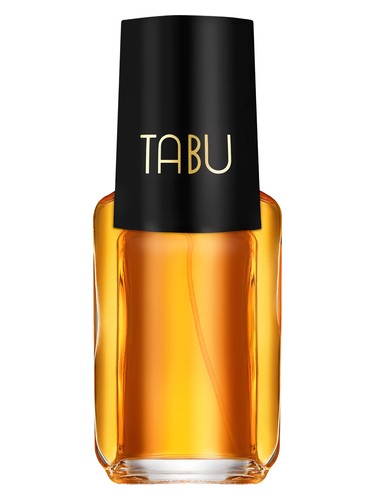
Tabu doesn''t knock on the door—it kicks it open. The first spray unleashes a torrent of spices that feel almost combustible, a bright orange-and-bergamot citrus flash immediately engulfed by the warm, resinous bite of coriander. There''s something deliberately provocative about this opening, a 1932 declaration that still feels audacious today. The neroli adds a slightly bitter, green edge that keeps the spice avalanche from turning cloying, but make no mistake: this is a fragrance designed to announce your presence from across the room, not to seduce from close quarters. Within seconds, you understand why it bears a name meaning "forbidden" or "taboo"—it has the olfactory equivalent of a knowing wink and zero shame about its intentions.
The Scent Profile
The evolution of Tabu follows a trajectory from fiery to sultry to deeply carnal. Those opening spices—bright, almost peppery—quickly give way to a heart dominated by cloves, the kind of sharp, medicinal-sweet clove note that defined countless mid-century fragrances. Ylang-ylang brings its characteristic banana-like creaminess, tempered by narcissus''s green, almost narcotic facets. Jasmine and rose appear as supporting players rather than stars, their florals nearly smothered by the intense spice and the creeping animalic warmth that begins to rise from the base.
And what a base it is. This is where Tabu reveals its true nature: a dense, almost suffocating blend of amber, civet, and benzoin creates a golden, honeyed warmth that feels genuinely vintage in construction. The civet—that distinctive, musky, slightly dirty note derived from animal glands (or synthesized today)—gives the fragrance its provocative edge, a skin-like intimacy that modern noses might find shocking. Sandalwood and patchouli provide woody anchors, while musk amplifies the already-prominent animalic character. Oakmoss, vetiver, and cedar add earthy, forest-floor complexity, though they struggle to compete with the amber-musk juggernaut. The result is a warm spicy amber fragrance that lives up to its accord ratings: 100% warm spicy, 72% amber, with woody and musky elements fighting for attention beneath a subtle powdery veil.
Character & Occasion
The data doesn''t lie: Tabu is a cold-weather creature, scoring 96% for winter and 91% for fall, while barely registering in summer (17%). This is a fragrance that thrives when temperatures drop and skin craves warming spices and resins. Spring wearers exist (23%) but likely represent the brave souls who don''t mind their perfume arriving five minutes before they do.
More telling is its day-versus-night profile: 43% day versus 100% night. Tabu was designed for dimly lit rooms, cocktails at dusk, velvet and silk rather than cotton and sunshine. Wearing this to the office would be an act of defiance; wearing it to an evening event is precisely what it was born to do. The projection and longevity are legendary—this is not a fragrance that fades politely. It lingers, it clings, it makes an impression that outlasts the wearer''s departure.
This is best suited for those who appreciate vintage fragrance architecture, who understand that perfumes once aimed to transform rather than complement. It''s for cold evenings, special occasions, and anyone who finds modern fragrances frustratingly timid.
Community Verdict
The Reddit fragrance community offers a mixed verdict with a sentiment score of 6.5 out of 10, based on 45 opinions—and that ambivalence speaks volumes. The pros are clear: Tabu is praised as a classic vintage fragrance with genuine nostalgic appeal, offering powerful projection and longevity that puts many modern compositions to shame. Intriguingly, some users champion it for layering with unexpected fragrances, suggesting creative applications beyond solo wear.
The cons are equally forthright. Tabu is "often perceived as dated or associated with older generations," a diplomatic way of saying many find it smells like their grandmother''s vanity. It''s described as "very strong and intense—not suitable for all occasions," which is perhaps the understatement of the year. Most damning for a perfume''s contemporary relevance: it receives limited discussion in modern fragrance communities, suggesting it''s largely fallen off the radar for younger scent enthusiasts.
The community identifies its ideal audience as vintage fragrance collectors, evening wear occasions, and fragrance layering experiments—niche applications rather than everyday wearing. The overall 3.93 out of 5 rating from 3,680 votes suggests respect more than adoration, with a devoted minority balanced by many who simply can''t get past its intensity.
How It Compares
Tabu belongs to a specific lineage of powerhouse oriental fragrances that dominated mid-century perfumery. Its closest relatives include Estée Lauder''s Youth-Dew, Yves Saint Laurent''s original Opium (1977), Calvin Klein''s Obsession, Chanel''s Coco Eau de Parfum, and Dior''s Dune. These fragrances share a maximalist philosophy: abundant spices, rich ambers, unapologetic projection.
Where Tabu distinguishes itself is in its raw, unpolished intensity. While later fragrances in this family achieved greater sophistication and balance, Tabu retains a bracing directness that feels almost primitive by comparison. It''s the ancestor that subsequent generations refined—respected for its DNA but acknowledged as too wild for modern sensibilities.
The Bottom Line
Tabu is a fragrance time capsule, a liquid artifact from an era when perfumes were meant to announce, seduce, and occasionally scandalize. Its 3.93 rating reflects this polarizing nature: admirers treasure its uncompromising vintage character, while detractors find it unwearably dated and overwhelmingly strong.
Should you try it? If you''re curious about perfume history, absolutely. If you collect vintage fragrances or appreciate animalic, spicy orientals, this is essential education. If you''re looking for a modern everyday scent, absolutely not. Tabu demands commitment, cold weather, and confidence. It''s not a fragrance for everyone—and it never pretended to be. In an age of safe, office-friendly scents, there''s something almost admirable about a perfume that remains this uncompromising after more than 90 years.
AI-generated editorial review