First Impressions
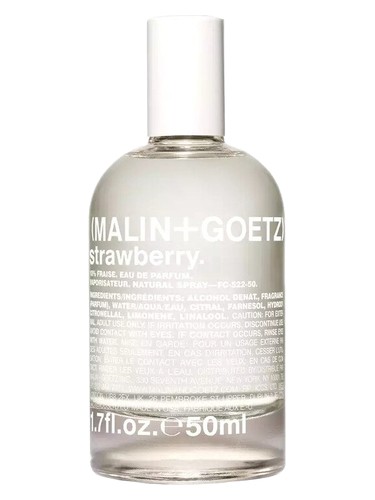
Spray Malin+Goetz''s Strawberry and prepare to recalibrate everything you thought you knew about fruit-forward fragrances. This isn''t the jammy, sugared strawberry of body mists and confectionery candles. Instead, the first breath delivers something far more intriguing: the scent of strawberry plants themselves, complete with their serrated leaves still damp with morning dew. The pink pepper adds a subtle effervescence, like champagne bubbles breaking at the surface, while bergamot provides citric brightness without veering into conventional freshness. Within seconds, you realize this is a strawberry that has been deconstructed, analyzed, and rebuilt through an apothecary''s lens—clinical yet oddly romantic, familiar yet thoroughly modern.
The Scent Profile
The opening act centers on that titular strawberry, but not in isolation. Malin+Goetz presents the fruit alongside pink pepper and bergamot in a composition that feels like capturing the entire strawberry patch rather than just its harvest. The strawberry note itself walks a tightrope between ripe sweetness and green vegetal character, setting the stage for what''s to come.
As the fragrance settles into its heart, something fascinating happens: green notes surge forward with unexpected dominance (registering at 100% in its accord profile), transforming what could have been a simple fruit fragrance into something with genuine complexity. Here, milk adds an intriguing creaminess—think strawberries with cream, but whispered rather than shouted. Jasmine weaves through with restraint, contributing a floral softness that never overwhelms the composition''s verdant backbone. This middle phase is where Strawberry reveals its true identity, straddling the line between fruity indulgence and green sophistication.
The base notes ground the fragrance in unexpected territory. Musk provides a clean, skin-like foundation that keeps the composition wearable and modern. Oakmoss lends an earthy, slightly bitter quality that counterbalances the fruit, while orris contributes that signature powdery elegance (evident in its 65% powdery accord). Cedar adds subtle woody depth, rounding out a base that''s far more complex than most fruit fragrances dare to venture. The result is a scent that maintains its fruity character while incorporating musky (70%), powdery, and woody (63%) dimensions that give it staying power and sophistication.
Character & Occasion
This is a fragrance that defies easy categorization, and its versatility shows in the data: suitable for all seasons, neither explicitly day nor night. That ambiguity is actually its strength. Strawberry functions as a seasonless companion, equally at home in spring''s first warm afternoons as in autumn''s golden light. The green-fruity character feels refreshing enough for warm weather without being so lightweight that it disappears in cooler months.
While marketed as feminine, the fragrance''s green dominance and musky-woody base make it far more unisex than traditional fruit scents. This is for someone who wants approachability with an edge—the person who loves a good strawberry but would never wear something overtly sweet. It works beautifully for creative professionals, weekend gallery visits, or any situation where you want to smell interesting without demanding attention. The composition is soft-spoken enough for close environments yet distinctive enough that people will ask what you''re wearing.
The 75% sweet accord keeps it friendly, while the green and woody elements provide enough structure to be taken seriously. This makes Strawberry particularly suited for those transitional moments: not quite casual, not quite formal. Think lunch meetings that turn into evening plans, or daytime dates with ambiguous endings.
Community Verdict
With a rating of 3.68 out of 5 from 567 votes, Strawberry sits in solid, respectable territory. This isn''t a polarizing love-it-or-hate-it composition, nor is it trying to be. The rating suggests a fragrance that delivers on its promise without necessarily revolutionizing anyone''s collection. That said, nearly 600 votes indicate genuine community interest—people are seeking this out, wearing it, and forming opinions.
The rating reflects what the fragrance is: a well-executed, wearable interpretation of a difficult note to translate into sophisticated perfumery. It''s not reaching for niche obscurity or attempting to please everyone, which is precisely why it has found its audience.
How It Compares
The similar fragrances list reveals Malin+Goetz''s positioning: Le Labo''s The Noir 29, Diptyque''s Philosykos and L''Eau Papier, BDK Parfums'' Gris Charnel, and Glossier''s You. This places Strawberry firmly in contemporary minimalist territory—fragrances that prize wearability and understated elegance over bombast. Unlike these comparisons, however, Strawberry brings fruit to the conversation while maintaining that same apothecary-clean aesthetic Malin+Goetz is known for.
Where Philosykos explores fig and L''Eau Papier investigates white musks, Strawberry carves out its own space by making a typically juvenile note feel grown-up. It shares more DNA with these paper-and-skin fragrances than with conventional fruity florals.
The Bottom Line
Strawberry by Malin+Goetz is proof that fruit fragrances can be sophisticated without losing their joy. Its 3.68 rating reflects its nature: this is a very good fragrance, not necessarily a transcendent one. It won''t convert green-fragrance haters, but for those who appreciate botanical freshness with a fruity twist, it''s genuinely compelling.
The value proposition depends on your collection gaps. If you''re drowning in white florals and heavy orientals, Strawberry offers refreshing contrast. If you already own Glossier You or multiple Diptyques, you might find the territory familiar. But for anyone seeking an everyday fragrance that smells interesting without trying too hard—or anyone who thought they couldn''t wear fruit scents—this deserves a test drive. Sometimes the most valuable fragrances aren''t the ones that make bold statements, but the ones you reach for repeatedly without thinking twice.
AI-generated editorial review