First Impressions
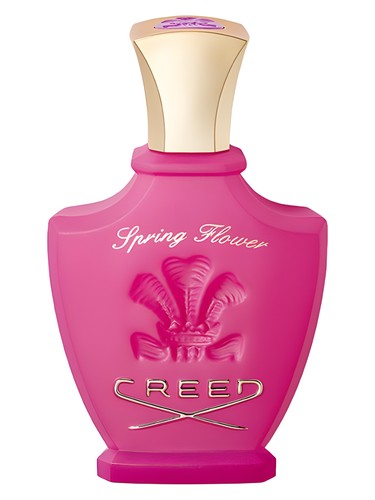
The first spritz of Spring Flower transports you to an orchard in full bloom, where fruit trees heavy with promise stand beside jasmine vines. This 1996 Creed creation opens with an exuberant burst of crisp apple, honeyed peach, and juicy melon—a trio that feels simultaneously sophisticated and playful. It''s the olfactory equivalent of biting into perfectly ripe fruit on a sun-drenched morning, with dewdrops still clinging to petals nearby. The opening is unabashedly fruity, living up to its 100% fruity accord rating, yet there''s an underlying elegance that prevents it from veering into sugary territory. Within moments, you understand why this fragrance earned its name: it captures that fleeting moment when spring surrenders to early summer, when everything feels fresh, optimistic, and achingly beautiful.
The Scent Profile
Spring Flower''s composition unfolds like a watercolor painting, each layer bleeding gently into the next with impressive grace. Those opening notes of apple, melon, and peach dominate the first fifteen minutes with their radiant freshness. The fruit accord here isn''t synthetic or candy-like; instead, it carries a naturalistic quality that feels both crisp and soft, like fruit wrapped in silk. The 57% fresh accord and 36% aquatic accord add a clean, slightly watery dimension that keeps the sweetness in check.
As the initial fruitiness begins to settle, the heart reveals itself: a classic pairing of jasmine and rose that forms the fragrance''s floral foundation. The jasmine brings its characteristic indolic richness, while the rose—accounting for 41% of the accord profile—adds a powdery, slightly spicy dimension. Together, they create the 53% white floral accord that gives Spring Flower its refined femininity. This floral duo doesn''t overpower; rather, it mingles with the lingering fruit notes to create something seamless and modern, a white floral bouquet served on a bed of orchard blossoms.
The base brings musk and ambergris into play, contributing to the 47% musky accord that grounds the composition. The musk here is soft and skin-like, while the ambergris adds a subtle marine warmth and depth. This foundation should, in theory, provide lasting power and sophistication. The drydown is where Spring Flower reveals its gentle nature—perhaps too gentle, as many wearers discover.
Character & Occasion
Spring Flower''s performance data tells a clear story: this is emphatically a daytime fragrance designed for warmer weather. With 100% spring suitability and 77% summer appeal, it''s perfectly calibrated for those months when you want something light, optimistic, and effortlessly pretty. The 100% day rating versus a mere 13% night rating confirms this is not a fragrance for dramatic evening wear or intimate dinners; instead, it shines during garden parties, brunch dates, office environments, and weekend errands.
The low marks for fall (19%) and winter (9%) make sense—Spring Flower lacks the warmth, spice, or richness needed to cut through cold weather. This is a fragrance that needs sunshine and fresh air to truly perform, which ironically becomes part of its challenge: in the very conditions where it should flourish, its delicate composition tends to evaporate quickly.
The ideal wearer appreciates understated elegance over bold projection. She values quality and heritage but isn''t looking to announce her entrance. Spring Flower suits those who treat fragrance as a personal indulgence rather than a statement piece, perfect for close-range wear where subtlety becomes an asset rather than a limitation.
Community Verdict
The fragrance community''s assessment of Spring Flower reveals a classic split between admiration and disappointment, reflected in its 6.5/10 sentiment score across 17 opinions. The praise is genuine and consistent: wearers genuinely love the scent itself. Descriptions like "smells amazing" and "beautiful floral bouquet" appear repeatedly, and the Creed brand''s luxury prestige remains a significant draw for those seeking quality and heritage.
However, the criticism is equally emphatic and centers on performance issues. Weak longevity and poor silage dominate the complaints, with many feeling the fragrance simply doesn''t last long enough to justify its premium positioning. The full retail price becomes a particular point of contention—while admirers suggest Spring Flower offers reasonable value at discounted prices around $150 or less, the consensus is clear that full retail pricing makes this a questionable investment given its fleeting nature.
The community has adapted by finding creative solutions: many recommend purchasing decants to test before committing, using Spring Flower as a layering fragrance to boost other scents, or reserving it for special occasions where the brief performance window matters less. It''s telling that a fragrance with such positive reactions to its actual scent profile generates such measured overall enthusiasm.
How It Compares
Spring Flower occupies interesting territory within the fruity floral category, sharing DNA with several modern classics. J''adore by Dior offers a more floral-forward approach with better projection. Chance Eau Tendre by Chanel provides similar freshness with more reliable performance. Narciso Rodriguez For Her emphasizes the musky aspect that Spring Flower only hints at in its base. Chloé Eau de Parfum delivers comparable rose-centric elegance, while Poison by Dior—though listed as similar—actually represents a much bolder, headier interpretation of florals.
What sets Spring Flower apart is its particular balance of fruit and flower, that orchard-in-bloom quality that feels distinctly Creed. Where it falls short is in the execution and value proposition relative to these alternatives, most of which deliver comparable or superior performance at lower price points.
The Bottom Line
Spring Flower earns its 3.6 out of 5 rating from 1,719 voters—a score that accurately reflects its split personality. The fragrance itself deserves higher marks; the performance and value proposition drag it down. This is a beautiful composition hamstrung by weak longevity, creating a disconnect between the quality you smell and the quality you experience over time.
Should you try it? Absolutely, especially if you can sample it first through a decant or tester. If you find Spring Flower at a significant discount, or if you specifically seek close-to-skin fragrances for warm weather, it might be worth the investment. The scent itself is genuinely lovely—fresh, feminine, and refined without being boring.
But approach the full retail price with caution. For most people, exploring alternatives or waiting for sales makes more sense than blind-buying at premium prices. Spring Flower is a reminder that prestige brands and beautiful scents don''t always equal great performance, and sometimes the most honest review comes from acknowledging both the beauty and the limitations.
AI-generated editorial review