First Impressions
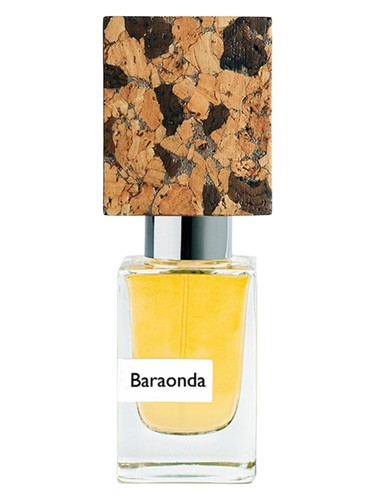
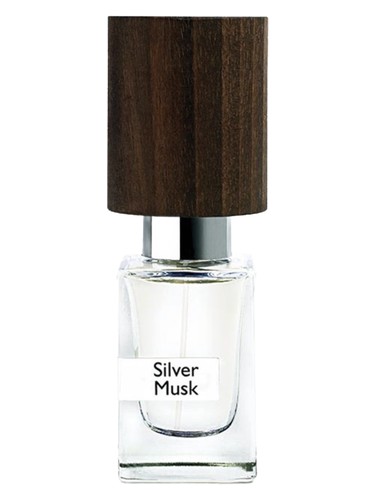
Alessandro Gualtieri isn''t known for subtlety. The creative force behind Nasomatto has built a reputation on fragrances that assault the senses with uncompromising vision—think the banana-laden chaos of Blamage or the rum-soaked delirium of Baraonda. Which makes Silver Musk, released in 2008, perhaps his most subversive creation yet. This is Gualtieri practicing restraint, and the result is captivating precisely because of what it doesn''t do.
The first spray reveals a fragrance that refuses to announce itself with fanfare. Instead, Silver Musk settles onto skin like morning fog—soft, enveloping, and oddly intimate. There''s an immediate muskiness that dominates the composition entirely, but this isn''t the sharp, laundry-detergent musk of mainstream perfumery. This is something quieter, more nuanced, with a powdery sweetness that tempers any potential aggression.
The Scent Profile
Here''s where Silver Musk becomes genuinely mysterious: Nasomatto provides no note breakdown. No bergamot, no jasmine, no vanilla to point to on a pyramid diagram. This minimalist approach to disclosure matches the minimalist approach to composition. What we know comes from what we can perceive, and what the community has identified through collective experience.
The opening—if we can call it that in such a linear fragrance—is pure musk. This accord dominates at 100%, creating a scent that doesn''t so much evolve as it simply exists. But within that musky framework lives a distinct powderiness, scoring at 50% in the accord profile. Think of vintage cosmetics, face powder compacts, the interior of a well-loved leather handbag. There''s a nostalgic quality here, something that recalls memory more than it creates spectacle.
As Silver Musk settles, subtle animalic undertones emerge—15% according to community analysis. This isn''t the raw, unwashed skin of something like Muscs Koublaï Khän, but rather a suggestion of warmth, of human presence. It''s the difference between smelling someone and smelling their cashmere sweater after they''ve taken it off. Finally, there''s a whisper of sweetness (10%) that prevents the composition from becoming austere or clinical.
The remarkable thing about Silver Musk is its refusal to journey. Where traditional fragrances move from top to heart to base, this remains fundamentally unchanged from the first spray to the final whisper on skin hours later. It''s a meditation on a single idea rather than a narrative with plot twists.
Character & Occasion
Despite being marketed as feminine, Silver Musk occupies that increasingly crowded space where gender distinctions become meaningless. This is skin in a bottle, and skin doesn''t have a gender.
The seasonal data tells an interesting story: this is overwhelmingly a spring fragrance (100%), with summer following closely at 86%. The lighter touch and airy muskiness make perfect sense in warmer weather, where heavier compositions can suffocate. Fall sees a significant drop to 61%, and winter registers at just 43%—this isn''t the cozy, enveloping musk you want when temperatures plummet.
Even more telling is the day/night split: 100% day, but only 43% night. Silver Musk is a daytime companion, the fragrance equivalent of natural lighting. It lacks the drama or projection for evening wear, instead offering quiet confidence for meetings, lunches, gallery visits, or simply running errands while smelling remarkably good. This is intimacy over announcement, personal over performative.
Community Verdict
With 1,823 votes tallying to a 4.03 out of 5 rating, Silver Musk has found its audience. This is a strong showing, particularly for a fragrance that makes no concessions to mass appeal. That it maintains this rating despite—or perhaps because of—its uncompromising singularity speaks to the quality of execution.
The vote count itself suggests a fragrance that rewards exploration. Nearly two thousand people have formed an opinion strong enough to register it, which for a niche fragrance with minimal marketing represents genuine word-of-mouth appreciation. This isn''t a scent people stumble upon; it''s one they seek out.
How It Compares
The similar fragrances list reads like a masterclass in modern musk. Frédéric Malle''s Musc Ravageur stands as perhaps the definitive contemporary musk—warmer, spicier, more overtly sensual than Silver Musk''s cooler approach. The inclusion of two other Nasomatto fragrances (Blamage and Baraonda) suggests that fans of Gualtieri''s aesthetic find common ground here despite stylistic differences.
More intriguing is the presence of Dior Homme Intense 2011, which shares that powdery, iris-tinged softness, and Marc-Antoine Barrois''s Ganymede, another exercise in minimalist futurism. Silver Musk sits comfortably among these contemporaries as perhaps the purest expression of the category—less complex than Musc Ravageur, more wearable than Ganymede, and more focused than its Nasomatto siblings.
The Bottom Line
Silver Musk won''t be for everyone, and it doesn''t try to be. This is a fragrance for people who''ve moved past the need for perfume to announce their presence, who understand that the best scents often work like good tailoring—enhancing rather than overwhelming.
At 4.03 out of 5, the community rating reflects both appreciation and acknowledgment of its limitations. This isn''t a crowd-pleaser or a compliment-getter. It''s a personal indulgence, a second-skin scent that rewards those who lean in close enough to notice.
The lack of concentration information and note breakdown could frustrate the detail-oriented, but it also feels appropriate for a fragrance this committed to mystery. What you need to know is simple: this smells like expensive musk with a powdery softness, wears beautifully in warm weather, and never shouts when a whisper will do.
Should you try it? If you''re exhausted by fragrances that perform rather than simply exist, if you appreciate restraint as much as extravagance, or if you''re simply curious what happens when Alessandro Gualtieri turns down the volume—absolutely. Silver Musk proves that sometimes the most radical statement is silence.
AI-generated editorial review