First Impressions
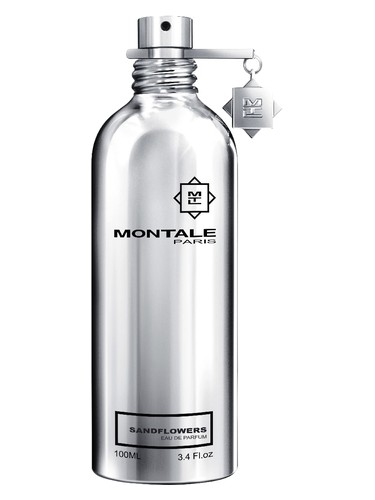
Spray Sandflowers and prepare for cognitive dissonance. The name promises sun-baked florals emerging from golden dunes, yet the first encounter delivers something altogether more complex—an aromatic blast that feels both landlocked and maritime simultaneously. This is Montale doing what Montale does best: refusing to play by conventional rules. The opening unfolds with an herbal sharpness that reads decidedly masculine at first blush, despite its feminine classification, while underneath lurks an unmistakable marine quality that suggests this desert has somehow found its way to the shoreline.
The initial spray is assertive, leading with that 100% aromatic accord that dominates the composition. It''s green, it''s fresh, and it carries an almost medicinal clarity—like crushing sage leaves while standing on a rocky Mediterranean coast. There''s an immediate tension here, a push-and-pull between the terrestrial and the aquatic that either captivates or confounds, depending on your appetite for olfactory paradox.
The Scent Profile
Without specified notes to guide us, Sandflowers reveals its architecture through accords alone—and what an unusual structure it builds. The aromatic quality serves as the backbone throughout, never quite relinquishing its grip on the composition. This isn''t the gentle lavender-led aromatic of traditional fougères, but something more austere and angular.
The woody aspect (72%) emerges as the fragrance settles, providing a sun-bleached driftwood quality that serves as the bridge between the scent''s dual personalities. It''s dry without being dusty, smooth without being polished—imagine weathered cedar planks on an abandoned dock, salt-worn and silvered by exposure.
That marine accord (also 72%) weaves through the entire development, never quite presenting as conventional aquatic freshness. Instead, it manifests as salinity (29%), as mineral quality, as that peculiar smell of air that''s traveled across water before reaching land. It''s subtle enough to avoid the melon-cucumber clichés of 1990s aquatics but present enough to give the composition its distinctive character.
The fresh spicy element (43%) adds unexpected bite, a peppery kick that enlivens what could otherwise become too meditative. Meanwhile, the mossy base (35%) grounds everything with a green earthiness, evoking wet stones and lichen rather than the powdery oakmoss of classical chypres.
What emerges is less a traditional linear development and more a constant negotiation between these elements—a fragrance that shifts its balance depending on skin chemistry, temperature, and even your own perception.
Character & Occasion
Sandflowers presents itself as a true all-season performer, and the community data backs this up completely. This is that rare fragrance equally at home in July''s humidity and January''s chill. The aromatic freshness prevents it from feeling heavy in summer, while the woody-mossy foundation keeps it from disappearing in winter''s cold.
The gender classification as feminine feels almost arbitrary here. This is one of those fragrances that could easily swing either way, perhaps making it particularly appealing to those who find conventional feminine florals too sweet or traditional masculines too aggressive. It occupies that androgynous middle ground where aromatic meets woody, where earth meets water.
As for timing, the lack of strong day-versus-night data suggests versatility, though the aromatic intensity likely makes it more natural as daywear. This isn''t a perfume that whispers; it speaks with clarity and confidence. Consider it for creative workplaces, outdoor activities, travel, or those days when you want something distinctive without being deliberately provocative.
Community Verdict
With 883 votes landing at 3.66 out of 5, Sandflowers occupies interesting territory in the Montale lineup. This isn''t universal adoration, but neither is it dismissal. The rating suggests a fragrance that divides opinion—likely beloved by those who appreciate its unconventional character and merely tolerated by those seeking more straightforward compositions.
That score tells a story of a perfume that rewards patience and understanding. This isn''t love at first spray for most wearers; it''s the kind of fragrance that reveals its intelligence over time, that makes more sense the longer you live with it. The substantial vote count indicates genuine community engagement—enough people have tried it and formed opinions to make that rating meaningful.
How It Compares
The comparisons offered provide fascinating context. Encre Noire by Lalique shares that austere, woody-aromatic severity. Dune by Dior offers another take on marine-meets-earth olfactory landscapes. Un Jardin Sur Le Nil brings similar green freshness, while Bal d''Afrique and Kenzo Jungle L''Elephant suggest the unexpected—slightly exotic, confidently different.
What sets Sandflowers apart is its refusal to fully commit to any single identity. Where Dune feels definitively coastal and Encre Noire unquestionably earthy, Sandflowers maintains its paradoxical nature throughout. It''s less refined than the Hermès, less exotic than the Byredo, less darkly dramatic than the Lalique—but it carves its own niche precisely through this ambiguity.
The Bottom Line
Sandflowers deserves its 3.66 rating—not because it''s merely "pretty good," but because it''s the kind of fragrance that will strike some as brilliant and others as bewildering. If you''re seeking a safe crowd-pleaser, look elsewhere. If you want something that challenges the desert-flower premise with marine minerals and aromatic herbs, this warrants exploration.
Montale''s strength has always been in pushing boundaries, and Sandflowers exemplifies this approach. It''s for those who appreciate fragrances that ask questions rather than provide easy answers, who want something genuinely versatile across seasons, and who don''t mind a composition that refuses conventional gender categorization.
Try before you buy, certainly—but do try it. Give it time on skin. Let it confound you. Sometimes the most interesting fragrances are the ones we can''t quite pin down, and Sandflowers remains wonderfully, stubbornly elusive.
AI-generated editorial review