First Impressions
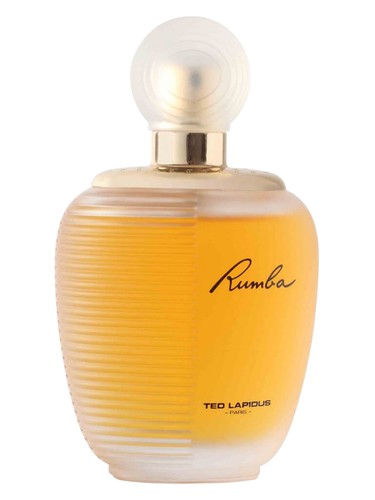
The first spray of Rumba is an unabashed declaration. This is not a fragrance that tiptoes into a room—it tangos in with a cascade of plum, peach, and mirabelle that borders on the baroque. Within seconds, raspberry and bergamot join the opening fanfare, while an unexpected whisper of basil adds a green, almost savory counterpoint to all that sweetness. Orange blossom hovers at the edges, lending a honeyed floral warmth that hints at the opulent garden waiting to bloom. This is 1989 distilled: excess as virtue, volume as confidence, sweetness without apology.
The scent sits at that fascinating intersection where fruit stops being fresh and starts becoming syrupy, almost confected. It''s the olfactory equivalent of velvet curtains and statement jewelry—gorgeous, perhaps a touch overwhelming, and utterly confident in its own skin.
The Scent Profile
Rumba''s evolution is less a gentle unfolding and more a dramatic costume change. Those opening fruits—lush, jammy, almost intoxicating in their concentration—gradually make way for one of the most maximalist floral hearts in perfumery''s recent history. Jasmine and rose form the backbone, but they''re joined by tuberose''s creamy opulence, gardenia''s buttery richness, and the powdery sweetness of heliotrope. Marigold adds a golden, slightly spicy warmth, while carnation contributes its characteristic clove-like spiciness. Magnolia, orchid, and lily-of-the-valley round out this crowded bouquet, with honey weaving through it all like liquid gold.
It''s a lot. There''s no getting around it. This heart phase is a white floral arrangement on steroids, sweet and heady and completely unapologetic about taking up space. The individual notes blur together into something almost abstract—less "I smell jasmine" and more "I am enveloped in THE CONCEPT OF FLOWERS."
The base is where Rumba reveals its sophistication. Oakmoss and leather provide a vintage backbone that grounds all that fruity-floral exuberance. Plum reappears here, no longer fresh but stewed and rich, mingling with vanilla and tonka bean in a dessert-like embrace. Sandalwood and cedar offer woody structure, while patchouli, musk, and ambergris contribute depth and that distinctive animalic quality that prevents the sweetness from becoming cloying. Styrax adds a resinous, balsamic touch that feels almost ecclesiastical—incense after the party.
Character & Occasion
The community data tells a clear story: Rumba is a cold-weather creature. With perfect scores for winter wear and near-perfect marks for fall, this is emphatically not a summer spritz. The sweetness, the density, the sheer presence of it all demands cooler temperatures. Spring registers as barely viable, while summer is essentially off the table unless you''re in air conditioning or enjoy making a very bold statement indeed.
Interestingly, while it performs adequately during the day (62% approval), Rumba truly comes alive at night (96%). This makes perfect sense—the fragrance has an inherent drama that feels most at home after dark. Think dinners, theater, cocktails, celebrations. This isn''t your boardroom scent; it''s what you wear when the goal is to be remembered.
The dominant sweet accord (100%) combined with substantial floral (85%) and fruity (76%) notes creates a decidedly feminine profile that reads mature rather than youthful. The animalic undertone (61%) and woody base (62%) prevent it from skewing too saccharine or girlish. This is a fragrance for someone who''s comfortable with presence, who doesn''t mind being noticed.
Community Verdict
With a rating of 3.76 out of 5 from 1,087 votes, Rumba occupies interesting territory. It''s not a unanimous crowd-pleaser, and that''s actually part of its charm. This rating suggests a fragrance that inspires strong reactions—those who love it truly love it, while others find it too much. For a scent this bold, this uncompromising in its sweetness and projection, that divide is entirely expected.
The substantial number of votes indicates this isn''t some forgotten obscurity; it''s a fragrance with a dedicated following more than three decades after its launch. That longevity speaks to something compelling in the formula, a certain magic that keeps people returning despite shifting trends toward minimalism and "skin scents."
How It Compares
The comparison set reads like a who''s-who of powerhouse feminines from the late ''80s and early ''90s: Poison, Coco, Amarige, Diva. These are fragrances that helped define an era when more was more and subtlety was someone else''s problem. Among this crowd, Rumba distinguishes itself through its pronounced fruitiness—it''s sweeter and more gourmand-leaning than the spicier Poison or the more austere Coco. The inclusion of Cabotine is interesting, as it represents a slightly fresher, greener interpretation of florals, suggesting Rumba''s basil and certain green notes create common ground.
Where Rumba stands out is in its particular balance of fruit and animalic notes. It''s sweeter than most of its cohort but with enough leather and musk to maintain complexity.
The Bottom Line
Rumba isn''t for everyone, and it doesn''t pretend to be. This is a fragrance that asks whether you''re ready for its particular brand of vintage maximalism—and you need to answer honestly. If you prefer gentle, office-appropriate scents that stay close to the skin, this will feel like sensory assault. If you''ve been mourning the death of big, bold, unapologetically feminine fragrances, Rumba might just be your new obsession.
The 3.76 rating reflects reality: this is a polarizing scent, but for its admirers, it''s irreplaceable. Given that vintage bottles and reformulations can often be found at accessible price points, the value proposition is strong for anyone curious about this era of perfumery. Spray sparingly (seriously), save it for cold evenings, and embrace the drama. Rumba doesn''t dance quietly—and that''s precisely the point.
AI-generated editorial review