First Impressions
The first spray of Roses on Ice is a shock to the system—and that''s precisely the point. By Kilian''s 2020 release announces itself with an icy blast of cucumber and juniper berries, their crisp greenness amplified by a sharp citric bite of lime. This isn''t your grandmother''s rose garden; it''s that same garden flash-frozen at dawn, each petal encased in crystalline frost. The violet leaf adds a metallic, almost aqueous quality, while pink pepper provides just enough warmth to remind you there''s still life beneath the chill. It''s ozonic to its core—the data confirms this accord at full intensity—and it makes no apologies for its arctic disposition.
The Scent Profile
The opening act is dominated by that remarkable cucumber-juniper-lime trinity, a combination that reads more like a high-end gin and tonic than a traditional feminine fragrance. The violet leaf contributes a green, slightly bitter edge, while pink pepper weaves through with its subtle spice. This top note phase is where Roses on Ice truly earns its name—everything feels frost-kissed, transparent, and impossibly clean.
As the fragrance settles into its heart, the rose finally emerges, but it''s a rose unlike most in the luxury perfume canon. Supported by prominent ozonic notes, this isn''t a rich, velvety Turkish rose or a jammy Bulgarian variety. Instead, it''s stripped down, almost spectral—imagine rose petals soaked in mineral water and left outside on a cool spring morning. The aquatic quality (registering at 75% in the accord breakdown) keeps everything light and airy, preventing the rose from ever becoming traditionally romantic or heavy. There''s something undeniably modern about this interpretation, even if it won''t satisfy rose purists seeking opulence.
The base is where things get complicated—and where body chemistry apparently plays Russian roulette with the composition. Theoretically, you''re descending into a foundation of musk, sandalwood, ambroxan, and cedar. The woody accord (41%) should provide grounding, while ambroxan contributes that clean, skin-like quality beloved by contemporary perfumery. But this is also where the fragrance reportedly stumbles for many wearers, transforming in unpredictable ways depending on individual skin chemistry.
Character & Occasion
The data tells a clear story: Roses on Ice is a warm-weather creature through and through. With summer registering at 100% and spring at 94%, this is emphatically not a fragrance for cozy sweater season. Fall and winter performance drops off dramatically (28% and 23% respectively), which makes perfect sense given its crystalline, ozonic character. Heavy outerwear would smother this fragrance''s delicate presence.
The day versus night split is equally decisive—97% day, only 26% night. This is a daytime companion for brunch, garden parties, office wear in warmer months, or weekend errands when you want to feel polished but not overpowering. The aquatic-green-ozonic profile simply doesn''t have the depth or projection to command attention in evening settings.
As for who should reach for this bottle? The feminine designation and aromatic-green profile suggest someone who appreciates contemporary, minimalist aesthetics over baroque complexity. This is for the person who finds traditional rose fragrances too stuffy, who wants their florals served with ice rather than honey.
Community Verdict
Here''s where we need to talk honestly: based on 62 community opinions, Roses on Ice receives decidedly mixed reviews, earning a sentiment score of 6.5 out of 10. The overall rating of 3.56 out of 5 from 2,325 votes tells a similar story—this is a fragrance that inspires ambivalence as much as admiration.
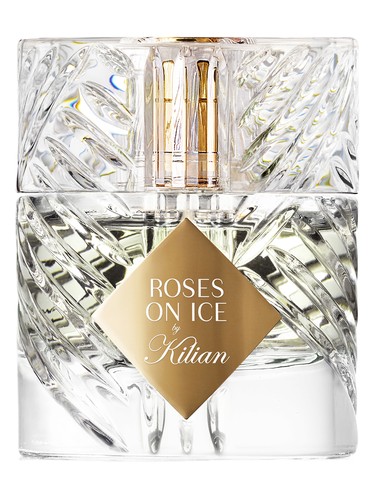
The pros are legitimate: many find the rose and floral character genuinely beautiful, praising its elegant and sophisticated profile. The bottle design also garners consistent appreciation, as one would expect from By Kilian''s luxury positioning.
But the cons are significant and recurring. The most damning criticism? This fragrance is highly polarizing on skin, performing very differently than on paper. Multiple community members report that while Roses on Ice smells stunning on a test strip, it can become cloying or outright unpleasant once it interacts with body chemistry, particularly in the base phase. Adding insult to injury, poor longevity and weak projection are frequently mentioned—a particular frustration given the luxury price point.
The consensus recommendation is emphatic: skin testing is non-negotiable before purchase. This is not a blind-buy fragrance, no matter how compelling the concept.
How It Compares
The similar fragrances list is intriguing in its diversity: Delina by Parfums de Marly, Coco Mademoiselle by Chanel, Bal d''Afrique by Byredo, Wood Sage & Sea Salt by Jo Malone London, and Oud Wood by Tom Ford. What they share is a certain modern refinement and a departure from traditional perfume structures.
Jo Malone''s Wood Sage & Sea Salt probably comes closest in terms of aquatic minimalism, while Delina offers a more straightforward (and arguably more successful) approach to contemporary rose. Where Roses on Ice distinguishes itself is in that aggressive ozonic-aquatic treatment—it''s more conceptual, more experimental, and consequently more risky.
The Bottom Line
Roses on Ice is a fragrance that succeeds brilliantly at its stated concept while simultaneously demonstrating why not every clever idea translates to wearable perfume. The ozonic rose-on-ice interpretation is genuinely original, and for those whose skin chemistry cooperates, it can be a beautiful warm-weather signature.
But honesty compels acknowledgment of its significant weaknesses: inconsistent performance, questionable longevity, and that troubling tendency to turn unpleasant on certain skin types. At By Kilian''s luxury pricing, these aren''t minor quibbles—they''re legitimate deal-breakers for many potential customers.
Who should try it? Those with skin that typically plays well with ozonic and aquatic fragrances, anyone seeking an unconventional rose, and people who prioritize uniqueness over reliability. But try it you must—on your own skin, over several hours, before committing. This ice queen demands chemistry, and not everyone will make the cut.
AI-generated editorial review