First Impressions
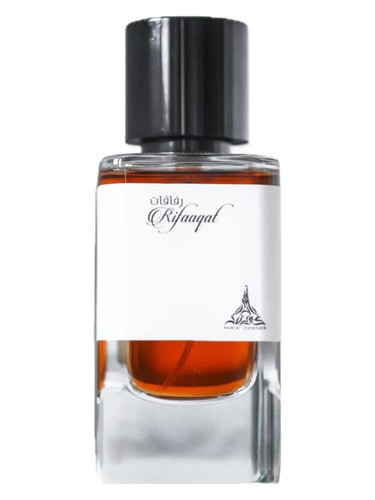
The first spray of Rifaaqat announces itself with unapologetic confidence. A sharp trinity of peppers—black and pink alongside the resinous bite of elemi—creates an opening that demands attention rather than requests it. This is not a fragrance that whispers. Within moments, the spicy assault begins its metamorphosis, revealing the complex tension at the heart of Paris Corner''s 2023 release: a composition that prioritizes presence over subtlety, performance over refinement. That initial burst carries the promise of warmth to come, though whether that warmth reads as inviting or overwhelming depends entirely on your tolerance for synthetic intensity.
The Scent Profile
Rifaaqat''s architecture reveals itself in bold, decisive strokes. The opening triumvirate of black pepper, elemi, and pink pepper creates a fresh spicy accord that registers at maximum intensity—the data shows it at 100%, and your nose confirms it immediately. The peppers crackle with aggressive energy while elemi adds a lemony, pine-like sharpness that cuts through with almost medicinal precision.
As the top notes settle, the heart emerges with a Middle Eastern signature: olibanum and saffron. The frankincense brings its characteristic resinous smokiness, while saffron contributes that distinctive leathery-metallic sweetness. This combination should create mystique and depth, and to some degree it does. However, this is where the composition''s reliance on powerful aroma chemicals becomes most apparent. The heart phase doesn''t so much evolve as it shifts registers, maintaining that aggressive projection that defines the fragrance''s character.
The base is where Rifaaqat attempts its seduction. Vanilla arrives at 97% intensity according to the accord analysis, paired with cedarwood to prevent the sweetness from becoming cloying. The vanilla here isn''t the soft, gourmand comfort of a patisserie—it''s reinforced with what many detect as synthetic amber molecules and woody-musky bases that create that distinctive "Middle Eastern perfume oil" character. The cedarwood provides structure, though it too carries the mark of aromatic chemicals rather than naturalistic wood notes. The result is warm, persistent, and undeniably long-lasting, with amber and balsamic accords rounding out a base that clings to skin and fabric with remarkable tenacity.
Character & Occasion
The seasonal data for Rifaaqat tells a clear story: this is a cold-weather warrior. Winter scores 100%, fall comes in at 89%, and the fragrance drops precipitously to 25% for spring and a mere 7% for summer. This makes perfect sense given the heavy spice and vanilla construction—Rifaaqat is built for environments where its warmth becomes an asset rather than an assault.
The day versus night breakdown reveals another interesting dimension: while 43% find it acceptable for daytime wear, a full 83% consider it suitable for evening occasions. This suggests a fragrance with enough intensity to cut through the sensory competition of nightlife, though perhaps too much presence for office environments or close-quarters daytime situations.
As for who should wear it, the data indicates a feminine classification, though the spicy-woody-amber profile could easily skew unisex. This is for someone who wants their presence felt before they enter a room, who values performance metrics like longevity and projection above all else, and who doesn''t mind turning heads—for better or worse.
Community Verdict
Here''s where we must address the elephant in the room: the Reddit fragrance community sentiment registers at just 3.5 out of 10, despite a broader rating of 4.28 from nearly 3,000 votes. This dramatic split reveals a deeply polarizing fragrance.
The community acknowledges Rifaaqat''s strengths: longevity and projection are undeniable, and it offers an affordable entry point to niche-adjacent fragrances for those exploring beyond designer offerings.
However, the criticisms are specific and damning. Users repeatedly cite "excessive synthetic amber and musky chemicals" that create what many describe as offensive odors. The heavy-handed use of specific aroma chemicals—Amber Xtreme and Iso E Super are mentioned by name—produces harsh, metallic, or even body-odor-like qualities that some noses simply cannot tolerate. This appears to be characteristic of certain Middle Eastern fragrance styles that favor aggressive synthetic woody-amber and musk bases for maximum performance.
The consensus from these 22 opinions suggests that while the fragrance delivers on longevity, it sacrifices actual pleasant scent quality in pursuit of sheer strength. Many users report genuine sensitivity to the chemical composition, making this a high-risk purchase for those with discerning or reactive noses.
How It Compares
Rifaaqat sits in interesting company. Its listed similarities include Lattafa''s Asad, Maison Martin Margiela''s By the Fireplace, Jean Paul Gaultier''s Le Male Le Parfum, Afnan''s 9pm, and Armani''s Stronger With You Intensely. These comparisons span from affordable Middle Eastern houses to prestigious European brands, suggesting Rifaaqat occupies that ambiguous space where accessibility meets aspiration—though whether it successfully bridges that gap remains contentious.
The Bottom Line
Rifaaqat presents a fascinating case study in modern perfumery''s divide between performance and artistry. With 4.28 stars from 2,893 votes, it clearly has its admirers. The numbers don''t lie: this fragrance delivers presence, longevity, and cold-weather warmth at a price point that makes experimentation feasible.
However, the community verdict cannot be ignored. If you''re sensitive to synthetic musks or amber molecules, if you''ve had adverse reactions to heavily chemical Middle Eastern fragrances, or if you value natural-smelling compositions, Rifaaqat poses significant risk. But for collectors willing to gamble, for those who prioritize sillage above all else, or for anyone who''s found their chemistry meshes well with Paris Corner''s style, this spicy vanilla powerhouse might just be your winter signature. Just make sure you sample before you commit.
AI-generated editorial review