First Impressions
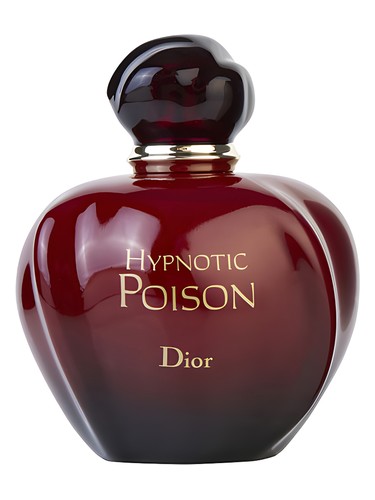
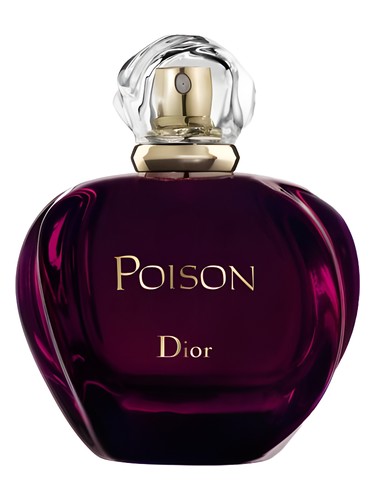
The first spray of Poison is not a whisper—it''s a declaration. That signature purple bottle holds something audacious: a burst of jammy plum and wild berries that immediately announces its presence, undercut by the unexpected sharpness of coriander and anise. This is the scent that earned its dangerous name in 1985, when Dior unleashed what would become one of the most polarizing fragrances in modern perfumery. There''s an almost narcotic quality to that opening, sweet yet shadowed, like biting into forbidden fruit in a dimly lit room. The Brazilian rosewood adds a creamy, slightly peppery warmth that prevents the fruit from tipping into candy territory—but just barely.
The Scent Profile
Poison''s evolution is a masterclass in controlled chaos. Those fruity top notes—plum dominating at a perfect 100% accord—create an immediate impact that some love and others flee from. The wild berries add a tartness that keeps the sweetness (clocking in at 95%) from becoming cloying, while the spices provide an edge that hints at the complexity to come.
As the fragrance settles into its heart, the composition reveals its true ambition. This is where Poison earns its reputation as a white floral powerhouse (83% accord), with tuberose taking center stage alongside jasmine, African orange flower, and rose. But Dior didn''t create a simple floral bouquet—they surrounded these blooms with incense, opoponax, and cinnamon, creating a spiced, resinous halo that makes the florals feel dusted with something ancient and mysterious. The white honey adds a golden viscosity, while carnation contributes a clove-like spiciness that bridges the fruity opening and the amber-woody destination.
The base is where Poison plants its flag in amber territory (92% accord). Vanilla and amber create a warm, enveloping sweetness, while sandalwood and Virginia cedar provide the woody backbone (79% accord) that prevents the composition from collapsing under its own richness. Heliotrope adds an almond-like powderiness, vetiver contributes an earthy depth, and musk ensures the whole composition clings to skin with tenacity. This is a fragrance built for longevity, and it delivers.
Character & Occasion
The data tells a clear story: Poison is a creature of darkness and cold weather. With night wear scoring 100% versus a mere 29% for daytime, this is unambiguously an after-dark fragrance. Its intensity simply overwhelms in daylight or casual settings. Winter is its natural habitat at 91%, with fall following at 68%—the warm, spicy, and amber-heavy composition needs cool air to breathe without suffocating. Spring (22%) and summer (14%) wear are possible only for the truly bold or those applying with extreme restraint.
This fragrance demands confidence and occasion. It''s not for the office, not for errands, not for blending in. Poison is for evening events where you want to be remembered, for dinners where dim lighting and conversation flow like wine, for nights when subtlety would be a waste. It''s for those who view fragrance as adornment rather than accessory, who understand that a signature scent should actually say something.
Community Verdict
The Reddit fragrance community''s mixed sentiment (6.5/10) perfectly captures Poison''s divisive nature. Based on 66 opinions, the conversation reveals a fragrance caught between reverence and disappointment.
The praise centers on its historical significance—this is an iconic piece of 1980s perfumery that many remember with genuine nostalgia. Its longevity and projection remain legendary, and fans celebrate its unique, dark complexity that refuses to conform to modern minimalist trends. The Poison line''s multiple variants offer different interpretations of the original vision, appealing to collectors.
But the criticisms cut deep. The most common complaint concerns reformulation: longtime fans insist the current formula has lost the original''s DNA and potency, a familiar lament in perfumery but particularly bitter here. Many find it simply too intense for everyday wear, and the scent itself proves genuinely polarizing—descriptors like "too dark," "too heavy," and "challenging" appear repeatedly. Discontinued variants have become expensive collector''s items, frustrating those who prefer the older expressions.
The consensus? Poison works best for evening wear and special occasions, thrives in cooler months, appeals to vintage enthusiasts and collectors, and rewards those seeking bold, non-mainstream scents. It''s decidedly not a safe choice or a daily driver.
How It Compares
Poison exists in rarified company among the great amber-floral powerhouses of the 1980s. Yves Saint Laurent''s Opium (1977) pioneered this territory, while Chanel''s Coco Eau de Parfum and Cacharel''s LouLou explored similar dark, spicy-sweet themes. Tom Ford''s more recent Black Orchid carries forward this tradition of unapologetic intensity, while Dior''s own Dolce Vita offers a lighter, more approachable interpretation. Among these giants, Poison distinguishes itself through that signature fruity opening—that jammy plum note makes it immediately identifiable and sets it apart from its more purely oriental competitors.
The Bottom Line
With a rating of 3.93 out of 5 from nearly 16,000 votes, Poison occupies interesting middle ground: widely known and extensively tried, but far from universally loved. That rating reflects its polarizing nature—this isn''t a crowd-pleaser scoring low, it''s a bold statement that earns both passionate devotion and firm rejection.
Should you try it? Absolutely, if you''re drawn to vintage-style powerhouses and aren''t afraid of attention. Sample it first—blind buying Poison is risky business. The reformulation debates suggest seeking out older bottles if the modern version disappoints, though be prepared to pay collector prices. For those who connect with its dark, fruity-floral intensity, Poison remains an irreplaceable experience. For everyone else, it''s a fascinating museum piece worth understanding, even if you wouldn''t wear it yourself. Nearly four decades after its debut, Poison still lives up to its name: intoxicating to some, overwhelming to others, but impossible to ignore.
AI-generated editorial review