First Impressions
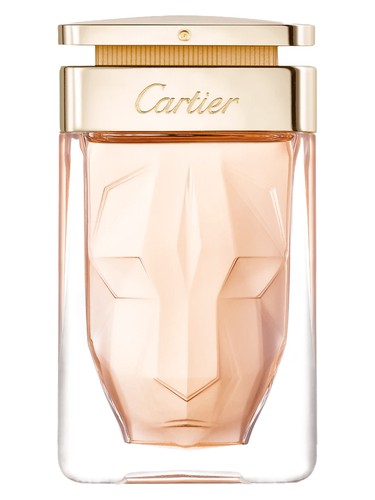
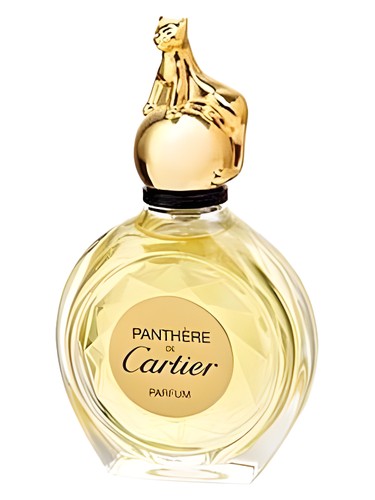
The first spray of Cartier''s Panthère is an ambush of the senses—a bright burst of citrus laced with spice that barely masks the prowling intensity beneath. There''s grapefruit and mandarin orange shimmering at the surface, while ginger and pepper add bite to the sweetness of orange blossom. But even in these opening moments, you sense what''s coming: the labdanum''s resinous warmth and rose''s velvety presence hint at a fragrance that refuses to play coy. This is 1986 bottled—an era when perfumes announced themselves rather than whispered, when femininity meant power rather than restraint.
Within minutes, Panthère sheds its citrus introduction like a velvet coat slipping from shoulders, revealing the true nature of this composition. This isn''t a fragrance that evolves gently; it transforms with purpose, each phase more intoxicating than the last.
The Scent Profile
The heart of Panthère is where this composition earns its reputation—and its devoted following. This is white floral territory in its most uncompromising form, dominated by a trio of heavy-hitters: tuberose, gardenia, and jasmine. The tuberose, creamy and narcotic, holds court here with an almost indecent richness. It''s flanked by carnation''s spicy clove-like facets and ylang-ylang''s heady, banana-tinged sweetness. Gardenia adds a buttery smoothness, while narcissus brings a green, slightly intoxicating edge.
But Panthère doesn''t stop there. The heart notes read like a master class in complexity: heliotrope contributes a powdery, almond-like softness; iris lends its cool, grey-violet elegance; nutmeg adds warmth and depth. There''s even vetiver listed among the heart notes—unusual for a white floral, but it provides an earthy counterpoint to all that opulent florality. The inclusion of freesia offers a lighter, more transparent moment, though it''s nearly overwhelmed by its more assertive companions.
The base is where Panthère reveals its claws. Civet—that notorious animalic note that defined so many ''80s fragrances—purrs through the foundation, lending a feral warmth that''s simultaneously off-putting and utterly compelling. It''s softened (slightly) by sandalwood''s creamy wood, amber''s golden glow, and vanilla''s sweetness. Oakmoss provides that classic chypre-adjacent earthiness, while tonka bean, incense, patchouli, cedar, and musk create a complex, multifaceted foundation that keeps this fragrance interesting for hours. This isn''t a simple white floral; it''s a white floral with teeth.
The accord breakdown confirms what your nose tells you: this is 100% white floral, but with substantial woody (59%), powdery (51%), and amber (50%) components that prevent it from being purely pretty. That 45% animalic rating? That''s the civet doing its controversial work, dividing wearers into camps of devoted admirers and emphatic detractors.
Character & Occasion
Panthère is unequivocally a cold-weather creature. The community data tells a clear story: this fragrance thrives in winter (88%) and fall (81%), while wilting in summer heat (21%). That makes perfect sense—the density of those white florals and the warmth of the base notes need cooler air to avoid becoming overwhelming. In spring (33%), it might work on particularly cool days, but this is fundamentally a fragrance for when the temperature drops and you need something substantial.
The day-to-night profile is equally revealing: while 41% find it acceptable for daytime wear, a full 100% rate it appropriate for evening. This is date-night territory, cocktail-hour glamour, the fragrance equivalent of a silk slip dress and bold lipstick. It''s too much for most office environments, too assertive for casual daytime activities. But when the sun sets and inhibitions lower? Panthère comes into its own.
This is a fragrance for someone who isn''t afraid to be noticed, who appreciates the architectural perfumery of a bygone era, and who understands that "too much" is sometimes exactly right. It skews mature—not in years, but in confidence.
Community Verdict
With a rating of 4.25 out of 5 stars from 790 voters, Panthère has earned its place in the pantheon of respected classics. This is a strong rating, especially for a fragrance that''s nearly four decades old and so unapologetically bold in its composition. The number of votes itself speaks to enduring interest; this isn''t a forgotten relic but a fragrance that continues to attract attention and devotion.
That said, the polarizing nature of vintage-style white florals with animalic bases means Panthère isn''t universally beloved. Some will find the civet too assertive, the tuberose too heady, the overall composition too dense. But for those who connect with it, the love runs deep.
How It Compares
Panthère sits comfortably among the grand white florals of its era and beyond. It shares DNA with Givenchy''s Organza (another opulent white floral with oriental leanings), Chanel''s Coco Eau de Parfum (rich, spicy, and baroque), and Lancôme''s Poème (though Poème leans slightly softer). Paloma Picasso and Dior''s Dune round out the comparison set—all fragrances that favor complexity and richness over modern transparency.
Where Panthère distinguishes itself is in that animalic accord. While many of these comparisons feature warmth and depth, Panthère''s civet note gives it a feral edge that''s increasingly rare in modern reformulations.
The Bottom Line
Cartier''s Panthère remains a remarkable achievement—a white floral that refuses to be tamed, that wears you as much as you wear it. The 4.25 rating reflects genuine admiration from those who appreciate perfumery''s more opulent past, and the 790 votes suggest this isn''t a niche curiosity but a fragrance with real reach.
Should you try it? If you love bold white florals, if you mourn the loss of animalic notes in modern perfumery, if you want something that makes a statement—absolutely. If you prefer light, fresh, or "safe" fragrances, Panthère will likely overwhelm you. Sample first, ideally in cooler weather, and give it time to develop fully on your skin. This is a fragrance that rewards patience and punishes timidity—exactly as the panther itself would demand.
AI-generated editorial review