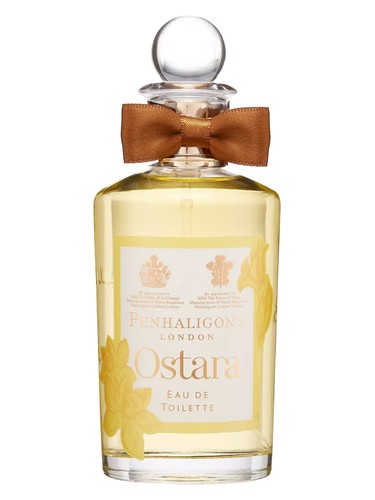
First Impressions
Ostara opens with an exhilarating rush of green—the kind that makes you think of snapping a fresh stem between your fingers on a dewy April morning. There''s an immediate brightness here, a crisp verdancy dominated by violet leaf and a tangle of green notes that feel almost photorealistic. But this isn''t a simple garden stroll. Penhaligon''s has woven in aldehydes that lift the composition with a sparkling, almost effervescent quality, while clementine and bergamot add citric punctuation marks. A whisper of mint and pink pepper provides unexpected animation, and there''s something dark and resinous lurking beneath—juniper and black currant blossom—that prevents this from becoming predictably pastoral. The first spray is both familiar and surprising, like discovering your favorite park has sprouted an entirely new species overnight.
The Scent Profile
The genius of Ostara reveals itself in the transition from those electrifying green top notes into the heart. As the initial verdancy settles, a procession of spring flowers emerges with remarkable clarity. Narcissus takes center stage—not the indolic, heavy version but a bright, almost watery interpretation that feels like the essence of early spring. Hyacinth adds its characteristic green-floral sweetness, while wisteria and cyclamen contribute delicate, airy nuances that keep the composition from becoming too heavy.
What distinguishes this floral heart from countless other spring fragrances is the presence of beeswax. It''s a masterstroke that adds a golden, honeyed texture without sweetness, giving the flowers a tactile quality—as if they''ve been preserved in amber light. Ylang-ylang appears in supporting role, contributing creamy facets without dominating, while hawthorn brings a subtle almond-like softness that bridges the gap between the bright florals and what''s waiting in the base.
The drydown is where Ostara makes its most controversial move, shifting from its vivid green-floral personality into something unexpectedly warm and enveloping. Vanilla, benzoin, and amber create a soft, resinous cushion that feels almost at odds with the brightness that preceded it. White woods and musk provide structure, while styrax adds a leathery-balsamic edge. This base doesn''t betray the opening so much as provide an alternative perspective—spring eventually gives way to summer, after all. The result is a fragrance that wears warmer and longer than its verdant opening might suggest.
Character & Occasion
Ostara''s versatility is reflected in its all-season rating, though this requires some unpacking. While the green-floral character naturally conjures spring, the substantial amber-vanilla base gives it enough warmth to function in cooler months. It''s a fragrance that adapts to its environment rather than imposing a single mood.
The even split between day and night wear (0% for both in the data) suggests this fragrance occupies a liminal space—neither explicitly casual nor formal, neither strictly daytime fresh nor evening opulent. In practice, this means Ostara works beautifully for those in-between moments: a late afternoon meeting that extends into dinner, a spring wedding that transitions from garden ceremony to indoor reception, or simply when you want something more substantial than a simple fresh scent but less demanding than a full evening fragrance.
This is decidedly feminine in its construction, marketed as such and embraced by its audience accordingly. The wearer who will love Ostara most is someone who appreciates complexity over linearity, who wants a green fragrance with backbone, and who doesn''t mind that their spring scent has autumnal ambitions.
Community Verdict
With a rating of 4.22 out of 5 based on 948 votes, Ostara has earned genuine appreciation from a substantial audience. This isn''t a niche darling with fifty devoted fans; nearly a thousand wearers have weighed in, and the consensus is decisively positive. That rating places it in the "worth seeking out" category—high enough to indicate real quality and broad appeal, yet not so stratospheric as to generate unrealistic expectations.
The vote count also suggests staying power in the market. Released in 2015, Ostara continues to attract new wearers and opinions nearly a decade later, which speaks to its enduring relevance in a crowded green floral category.
How It Compares
The comparison to Hermès'' Un Jardin Sur Le Nil makes immediate sense—both explore green, botanical territories with sophistication. Where the Hermès leans into aquatic freshness and maintains its lightness throughout, Ostara takes a more dramatic journey into warmth. The mention of Chanel''s Coco Eau de Parfum and Serge Lutens'' Chergui seems initially puzzling until you experience that amber-rich drydown; Ostara shares their comfort with orientalism, even if it arrives there via a very different route.
Dior''s Dune and Lutens'' Fille en Aiguilles round out the comparisons with their own green-woody perspectives. What unites these fragrances is complexity and a refusal to stay within traditional boundaries. Ostara belongs to this company—fragrances that reward patience and offer different facets depending on when and how you wear them.
The Bottom Line
Ostara represents Penhaligon''s at its most ambitious—a fragrance that tries to capture not just a moment but an entire season, complete with its contradictions. The dominant green accord (100% in the data) delivers on that promise, but it''s the interplay with yellow florals (72%) and the surprising amber warmth (30%) that makes this more than a one-note spring song.
Is it perfect? The dramatic shift from bright green to warm amber won''t appeal to purists seeking either category in isolation. Some will wish it stayed green, others that it committed fully to its oriental tendencies. But for those who appreciate a fragrance that evolves, that tells a story from morning to evening, Ostara offers genuine artistry at a price point (Penhaligon''s standard range) that, while not inexpensive, delivers complexity comparable to fragrances costing significantly more.
Try Ostara if you''ve ever wished your green fragrances had more depth, or if your amber scents could begin with more vitality. It''s a reminder that the best fragrances don''t just smell good—they take you somewhere.
AI-generated editorial review