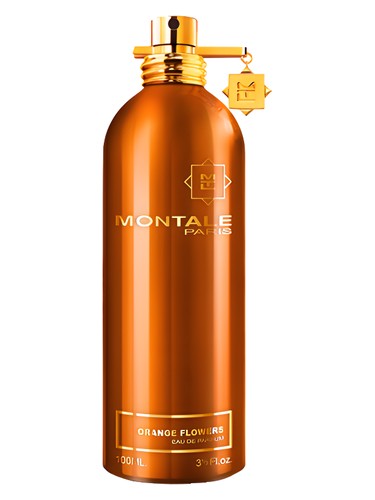
First Impressions
The first spray of Orange Flowers delivers exactly what Montale promises, yet with a twist that catches you off guard. A burst of mandarin orange and lemon hits immediately—bright, tart, and sun-drenched—but there''s something else lurking beneath. A whisper of spice, warm and barely perceptible, that suggests this isn''t going to be your typical citrus-floral romp. Within moments, the composition begins its transformation, as honeyed white florals emerge from the citrus haze like a slow-motion bloom. This is a fragrance that announces itself with confidence, then settles into something far more nuanced than its straightforward name suggests.
The Scent Profile
The opening act is all Mediterranean verve: mandarin orange and lemon create a juicy, almost effervescent introduction that feels like breaking into a perfectly ripe citrus fruit. The spices woven through this top layer add warmth without overwhelming—think of them as the golden hour light filtering through orange trees rather than a heavy-handed exotic flourish.
As the citrus begins its inevitable fade, the heart reveals Montale''s true intention. Orange blossom takes center stage, supported by a lush quartet of jasmine, ylang-ylang, and surprisingly, patchouli. This is where Orange Flowers earns its dominant white floral accord. The orange blossom itself is rich and indolic, with honey threading through the composition like liquid gold. It''s sweet, yes—scoring 72% on the sweetness scale—but the honey accord (clocking in at 50%) keeps it from veering into dessert territory. The jasmine adds creaminess, while ylang-ylang contributes its characteristic banana-like richness. That patchouli, though subtle, provides an earthy anchor that prevents the florals from floating away entirely.
The base is where things get interesting, and where Montale shows its DNA. Vanilla and white musk create the expected soft landing, but oakmoss and cedar add unexpected structure. These woody elements (40% of the accord profile) give Orange Flowers a backbone that many sweet florals lack. The cedar is clean and almost pencil-shaving crisp, while the oakmoss brings a vintage quality that feels like a nod to classic perfumery. The vanilla never becomes cloying; instead, it melds with the white musk to create a skin-like warmth that lets the florals continue singing for hours.
Character & Occasion
Orange Flowers is that rare creation that bridges seasons with unusual grace. The data tells a compelling story: it''s nearly equally suited to fall (79%) and spring (78%), with winter (67%) not far behind. Only summer lags at 53%, and even that''s respectable. This versatility comes from its dual nature—those bright citruses and airy white florals work when temperatures rise, while the honey, vanilla, and woody base notes provide enough warmth for cooler weather.
This is decidedly a daytime fragrance, scoring a perfect 100% for day wear versus 55% for evening. It makes sense: there''s an optimistic, sunlit quality to Orange Flowers that feels most at home in natural light. Think of it as your companion for weekend brunches, office meetings where you want to feel polished but approachable, or leisurely afternoon shopping trips. It''s feminine without being delicate, sweet without being juvenile, and complex enough to hold your interest without demanding constant attention.
The ideal wearer? Someone who appreciates the traditional white floral category but wants it elevated with modern sweetness and surprising depth. If you''ve grown tired of one-dimensional floral soliflores but aren''t ready to dive into challenging avant-garde territory, Orange Flowers offers a comfortable middle ground.
Community Verdict
With a rating of 3.78 out of 5 from 466 votes, Orange Flowers sits in that interesting "very good but not quite great" territory. This isn''t a polarizing fragrance—it''s not racking up extreme scores on either end. Instead, it''s garnered a solid, respectable consensus that suggests it does what it does well, even if it doesn''t blow minds.
That rating tells us this is a safe exploration for those curious about Montale''s approach to white florals. Nearly 500 people have weighed in, giving us a substantial sample size, and the verdict is clear: this is a fragrance worth your time, particularly if the note breakdown appeals to you.
How It Compares
Orange Flowers finds itself in distinguished company. Its similarity to Le Parfum by Elie Saab and Pure Poison by Dior places it firmly in the modern white floral category—perfumes that embrace sweetness and depth over sheer transparency. The Coco Mademoiselle comparison is interesting, suggesting a shared sophistication despite different approaches. Most telling is its kinship with Montale''s own Intense Tiare, which confirms this sits within the brand''s sweeter, more approachable offerings rather than their oud-heavy lineup.
Where Orange Flowers distinguishes itself is in that citrus opening and honey heart. While Pure Poison leans darker and more mysterious, and Le Parfum is unabashedly romantic, Orange Flowers maintains a cheerful brightness even as it develops complexity. It''s less challenging than Velvet Orchid''s purple opulence, more playful than the others, yet still grown-up enough to take seriously.
The Bottom Line
Orange Flowers won''t revolutionize your fragrance wardrobe, but that''s not really the point. At 3.78 out of 5, it''s a well-executed example of what happens when a house known for intensity applies that skill to something more approachable. The value proposition depends on your relationship with Montale''s typically generous concentration and longevity—if you get that characteristic performance, the price point makes sense.
Who should seek this out? If you love white florals but find many too sharp or soapy, if you appreciate sweetness with structure, or if you want something versatile enough to wear across three seasons without thinking too hard about it, Orange Flowers deserves a spot on your sampling list. It''s not trying to be groundbreaking; it''s trying to be beautiful, wearable, and reliably pleasant. By those measures, the community consensus suggests it succeeds admirably.
AI-generated editorial review