First Impressions
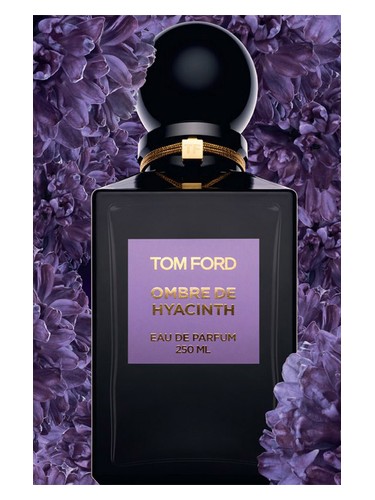
The first spray of Ombre de Hyacinth doesn''t whisper—it announces. A rush of violet leaf and galbanum creates an almost shocking greenness, the kind that feels freshly snapped from the stem rather than romantically interpreted. This is Tom Ford at his most literal, eschewing the brand''s typical opulence for something unexpectedly photorealistic. The magnolia petals soften what could be an austere opening, while olibanum adds a subtle incense-like quality that hints at the complexity to come. It''s spring in a bottle, yes, but not the pastel-hued version—this is the muddy, damp-earth reality of bulbs pushing through cold ground.
The Scent Profile
That aggressively green opening dominates the first fifteen minutes, supported by the accord breakdown that registers green at 100%. The galbanum appears twice in this composition—first in the top, then reinforced in the base—creating a through-line of verdant bitterness that never quite leaves the skin. As the initial blast settles, the hyacinth emerges with remarkable authenticity, carrying that characteristic waxy, slightly soapy quality that real hyacinth possesses. This isn''t a cleaned-up, commercialized floral note; it''s the actual flower with all its peculiar facets intact.
The heart introduces pink pepper for a gentle spicy lift (accounting for that 46% fresh spicy accord), while jasmine weaves through to add traditional floral sweetness. Yet neither note overshadows the star. The hyacinth remains center stage, flanked rather than buried by its supporting players. There''s an ozonic quality here too—that 50% accord reading making perfect sense as the composition takes on an airy, almost aqueous character that recalls morning dew on petals.
The base is where Ombre de Hyacinth reveals its Tom Ford pedigree. Musk and benzoin provide the expected smoothness and warmth, with that 32% amber accord finally emerging to ground what could otherwise float away entirely. The galbanum''s reappearance keeps the greenness alive even as the fragrance warms and softens, creating a fascinating tension between fresh and resinous, cold and warm.
Character & Occasion
The data tells a clear story: this is overwhelmingly a spring fragrance (100%), followed at a distance by summer (53%). Those seasonal ratings make perfect sense—Ombre de Hyacinth captures the particular beauty of late winter transitioning into early spring, when hyacinths actually bloom. It''s a daylight fragrance first and foremost (99% day versus 40% night), best suited to morning wear when its crisp greenness feels most appropriate.
This isn''t a fragrance for someone seeking Tom Ford''s signature sensuality. It''s for the person who wants nature transported directly to their skin, who appreciates florals that smell like flowers rather than perfume. The green-floral profile skews sophisticated rather than young, making it ideal for someone whose style leans more minimalist than maximalist. It works beautifully for professional settings where you want presence without projection, though its relatively niche character means you''re unlikely to trigger recognition or compliments from strangers.
The lower ratings for fall and winter (48% and 33% respectively) reflect what becomes apparent on cooler days—the composition can feel thin and shrill when temperatures drop, lacking the richness needed to bloom in cold air.
Community Verdict
With a sentiment score of 6.5/10, the fragrance community''s response has been decidedly mixed. The 52 collected opinions reveal a pattern: those who love it really love it, particularly praising its "authentic hyacinth character" and its appeal as a "non-citrusy, non-soapy floral." It earns mentions alongside respected fragrances like Hermès 24 Faubourg and Annick Goutal''s Grand Amour, suggesting it holds its own in quality discussions.
However, the cons list is telling. "Limited discussion and community feedback" appears prominently, as does the practical concern that it''s "difficult to find decants." Perhaps most damning: "comparison to Mugler''s Supra Floral suggests alternatives may be preferred." The community summary is blunt—Ombre de Hyacinth "may not be a top choice for hyacinth-forward fragrances," with enthusiasts appearing "more actively engaged with alternatives."
The 4.12/5 rating from 468 votes suggests general appreciation without passionate devotion. It''s well-made and well-regarded, but it hasn''t captured hearts the way some Tom Ford releases have.
How It Compares
The list of similar fragrances is intriguing: Chanel''s Coco Eau de Parfum, Tom Ford''s own Violet Blonde, White Patchouli, and White Suede, plus Serge Lutens'' Chergui. What they share isn''t obvious similarity but rather a certain refined restraint, a willingness to prioritize sophistication over crowd-pleasing sweetness.
Within Tom Ford''s Private Blend collection, Ombre de Hyacinth stands apart for its green focus. Where Violet Blonde explores violet''s powdery facets and White Suede goes creamy and soft, this fragrance commits fully to verdant freshness. Against Mugler''s Supra Floral (mentioned by the community), it appears more austere, less playful—whether that''s a strength or weakness depends entirely on what you''re seeking.
The Bottom Line
Ombre de Hyacinth is a beautiful fragrance with an identity crisis. It''s too literal for those who want Tom Ford''s usual luxurious abstraction, yet too niche and hard-to-find for green floral purists to discover easily. The 4.12 rating reflects its quality without indicating must-have status, and the limited community enthusiasm suggests it''s fallen through the cracks of the fragrance conversation.
Should you try it? Absolutely—if you''re a green floral enthusiast or fragrance collector exploring niche florals. Its authentic hyacinth note is genuinely impressive, and the overall composition demonstrates real skill. But with decants difficult to source and alternatives more readily available, it''s hard to recommend seeking this out desperately. It''s a very good fragrance that deserves more attention than it receives, which is perhaps the most bittersweet verdict of all.
AI-generated editorial review