First Impressions
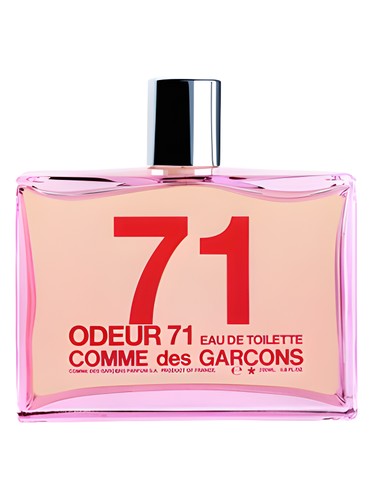
The first spray of Odeur 71 lands somewhere between a sculptor''s studio and a zen garden after rain. This is Comme des Garçons doing what they do best—refusing to play by traditional perfumery rules. The opening presents an immediately recognizable aromatic signature, but there''s something decidedly modern, almost industrial about it. That metallic thread running through the composition announces itself early, not as a harsh discord but as an architectural element, like steel beams supporting a minimalist structure. It''s cerebral and unapologetically strange, the kind of fragrance that makes you sniff your wrist repeatedly, trying to decode what exactly you''re experiencing.
Released in 2000 as part of Comme des Garçons'' series exploring unconventional scent territories, Odeur 71 was designed to capture the smell of "dust on a hot light bulb" and other everyday urban poetry. That conceptual ambition translates into something genuinely difficult to categorize—which is precisely the point.
The Scent Profile
Without traditional note breakdowns to guide us, understanding Odeur 71 means following its accord structure as it unfolds on skin. The dominant aromatic quality—registering at full strength—leads the composition with what reads as a clean, almost laboratory-like freshness. Think herb stems rather than blooming flowers, crushed leaves rather than extracted essences.
The woody element arrives nearly as forcefully at 86%, creating a skeletal framework that feels deliberately spare. This isn''t the plush sandalwood or creamy cedar of classic woody fragrances. Instead, it''s more austere, perhaps suggesting raw timber or bamboo—materials rather than finished products. The interplay between aromatic and woody creates a peculiar dry-wet tension, like moisture condensing on metal.
And then there''s that metallic accord at 67%—the defining characteristic that either captivates or alienates. It manifests as an almost ionized quality, reminiscent of ozone or the smell of rain on concrete. Some detect ink, others find mineral notes, still others experience something closer to industrial rubber or synthetic materials. This metallic signature weaves through the entire development, preventing the fragrance from ever settling into comfortable territory.
The fresh spicy component at 61% adds angular brightness without traditional pepper or ginger warmth. It''s more of a sharp, clean spiciness—medicinal almost—that reinforces the composition''s clinical precision. Subtle amber (21%) and earthy (20%) notes provide just enough grounding to keep Odeur 71 from floating away into pure abstraction, though they never dominate or soften the overall effect.
The fragrance wears remarkably linear, which suits its conceptual nature. This isn''t about a journey from bright citrus to warm vanilla; it''s about maintaining a specific, unwavering vision throughout its lifespan.
Character & Occasion
Odeur 71 thrives in transitional weather, and the data confirms this intuition. Spring leads the seasonal preferences at 85%, followed closely by fall at 71% and summer at 68%. Winter lags significantly at 46%, which makes sense—this isn''t a fragrance seeking warmth or comfort. It wants the crisp edge of spring air, the first cool breeze of autumn, the electric atmosphere before a summer storm.
The day/night split tells an even clearer story: 100% day versus just 34% night. This is morning light streaming through industrial windows, not candlelit dinner territory. Wear it to art galleries, architecture studios, minimalist coffee shops, or while navigating urban landscapes. It pairs naturally with clean lines, neutral palettes, and modern materials—concrete, glass, brushed steel.
Despite being classified as feminine, Odeur 71 transcends traditional gender categories entirely. It''s for anyone drawn to intellectual, challenging fragrances that prioritize concept over comfort. The wearer should appreciate avant-garde aesthetics and not require their fragrance to announce "masculine" or "feminine" in conventional terms.
Community Verdict
With a rating of 3.89 out of 5 from 652 votes, Odeur 71 occupies interesting territory. This isn''t a crowd-pleaser breaking 4.5 stars, nor is it a controversial disaster below 3.0. Instead, it''s earned genuine respect from a substantial community while acknowledging it won''t be everyone''s daily reach. That rating suggests a fragrance that rewards those who understand what it''s attempting, while remaining genuinely challenging for others. For a scent this deliberately unconventional, nearly 4 stars represents strong appreciation from those who get it.
How It Compares
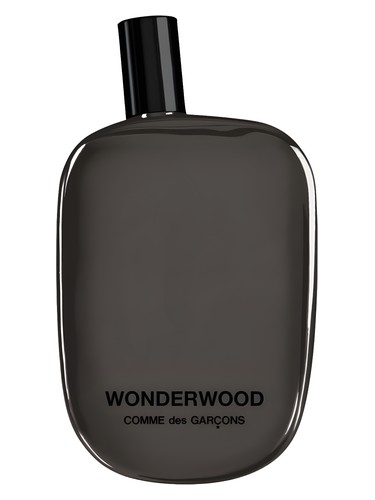
The similar fragrances list reveals Odeur 71''s family tree: Encre Noire''s dark woody minimalism, Wonderwood''s cerebrally woody approach, and multiple other Comme des Garçons entries confirm this brand''s ownership of the avant-garde aromatic-woody space. Tauer''s L''Air du Desert Marocain appears as the outlier, perhaps sharing only that metallic-mineral quality and artistic ambition.
Where Odeur 71 distinguishes itself is that metallic signature. While Encre Noire goes darker and more gothic, and Wonderwood explores cedar''s facets exhaustively, Odeur 71 maintains its unique industrial edge. It''s less severe than Encre Noire, less focused than Wonderwood, but more distinctively strange than either.
The Bottom Line
Odeur 71 isn''t for fragrance beginners seeking their first aromatic or woody scent. It''s for the person who''s already explored the category and wants to experience its outer boundaries. At nearly four stars from over 650 voters, it''s proven itself as more than a curiosity—it''s a legitimate artistic statement that wears surprisingly well in practical contexts.
Sample before buying. This is essential. The metallic quality reads beautifully to some and harshly synthetic to others. If it clicks, you''ve found a truly unique daytime signature that separates you from the aquatic and designer aromatic crowd. If it doesn''t, no amount of intellectual appreciation will make you want to wear it.
For those drawn to conceptual perfumery, minimalist aesthetics, and fragrances that challenge rather than comfort, Odeur 71 remains one of the most compelling arguments for perfume as art rather than mere adornment.
AI-generated editorial review