First Impressions
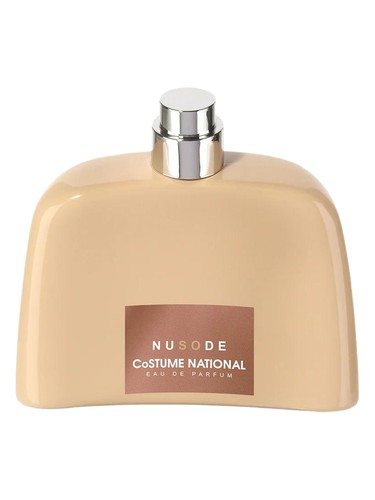
The first spray of NU SO DE announces itself with an unexpectedly exotic flourish—neroli''s bitter-bright citrus tempered by the resinous warmth of cardamom and the herbal bite of caraway. This isn''t the expected opening for a fragrance dominated by white florals, and that''s precisely what makes it intriguing. CoSTUME NATIONAL has never been a house content with conventions, and here they''ve crafted an entrance that feels both architectural and alive, like stepping into a sun-drenched courtyard where spice merchants have just passed through, leaving traces of their wares mingling with orange blossoms overhead.
There''s an immediate brightness here, but it''s calibrated differently than typical fresh fragrances. The spices add a golden warmth that hints at the substantial floral heart waiting beneath, creating a bridge rather than a contrast. It''s the kind of opening that makes you pause and reconsider what you thought you knew about white floral compositions.
The Scent Profile
As NU SO DE settles into its heart, the full force of its character emerges: tuberose in all its creamy, narcotic glory. This is where the fragrance plants its flag, with tuberose backed by ylang-ylang''s lush, slightly banana-like sweetness and the powdery elegance of damask rose. The combination registers at 96% on the tuberose accord scale, and you feel every percentage point. This isn''t a timid interpretation—it''s tuberose confident enough to fill a room, yet refined enough not to overwhelm.
The ylang-ylang adds tropical depth without pushing the composition into heavy oriental territory, while the rose provides just enough structure to keep the more indolic aspects of tuberose in check. Together, these three notes create a white floral symphony that''s simultaneously opulent and surprisingly wearable. The spicy opening hasn''t disappeared entirely; rather, it weaves through the florals like a warming thread, that 61% warm spicy accord ensuring the composition never feels cold or detached.
The base is where NU SO DE reveals its woody backbone—Virginian cedar, patchouli, and sandalwood forming a foundation that reads at 90% on the woody accord scale. This isn''t a fleeting white floral that evaporates within hours. The woods anchor the composition firmly to skin, with cedar providing crisp dryness, patchouli adding earthy depth, and sandalwood offering its characteristic creamy sweetness. The transition from heart to base is seamless, the florals gradually receding into a skin-scent that maintains the fragrance''s essential character while becoming more intimate.
Character & Occasion
The data tells a compelling story about NU SO DE''s versatility. This is fundamentally a transitional season fragrance, scoring highest in fall (91%) and spring (85%)—those liminal moments when weather shifts and wardrobes adapt. It makes perfect sense: the fragrance itself exists in that same transitional space, neither purely fresh nor deeply warm, balancing white floral brightness with woody grounding.
Summer registers at 51%, suggesting it can handle warmth but might feel substantial in high heat. Winter, at 39%, confirms what the composition suggests—this isn''t built for deep cold, lacking the amber and vanilla sweetness that typically powers through frigid temperatures.
Most tellingly, the day/night split reveals NU SO DE as an overwhelmingly daytime fragrance (100% day versus 34% night). This speaks to its essential character: approachable, luminous, sophisticated but not aggressively seductive. It''s the fragrance for important meetings, lunch with someone you want to impress, gallery openings on Saturday afternoons. The tuberose gives it presence without the vampy intensity of evening-oriented white florals.
Community Verdict
With a rating of 3.85 out of 5 from 568 voters, NU SO DE sits comfortably in "very good" territory—appreciated but not universally worshipped. This rating feels honest for a fragrance that knows exactly what it wants to be. It''s not trying to be everything to everyone, and that specificity will naturally divide opinion.
Those 568 votes represent a substantial enough sample size to suggest this is a fragrance worth serious consideration, particularly for those drawn to tuberose-forward compositions that maintain elegance and restraint. The near-4 rating indicates quality and craftsmanship without the polarizing elements that push fragrances toward either cult status or widespread rejection.
How It Compares
NU SO DE finds itself in distinguished company, with similarities noted to Lancôme''s Poème, Narciso Rodriguez''s Narciso Poudrée, Dior''s Pure Poison, Chanel''s Coco Mademoiselle, and Versace''s Crystal Noir. This comparison set reveals the fragrance''s positioning: contemporary, feminine, floral-focused compositions with mainstream appeal but refined execution.
Where Poème leans into creamy florals and Coco Mademoiselle brings patchouli to the foreground, NU SO DE stakes its claim in the white floral-woody territory with that distinctive spicy opening. It''s perhaps less immediately recognizable than Coco Mademoiselle''s ubiquity, less powdery than Narciso Poudrée, but offers a cleaner, more architectural take on tuberose than any of these references.
The Bottom Line
NU SO DE represents CoSTUME NATIONAL''s ability to work within established fragrance families while maintaining their minimalist, slightly avant-garde aesthetic. At 3.85 out of 5, this isn''t a perfect fragrance, but perfection isn''t always the goal. What it offers instead is a well-executed white floral with enough personality to stand out in a crowded category.
This is a fragrance for the tuberose devotee who wants presence without theatrics, for the person whose style is polished but never fussy. If you''ve found other tuberose fragrances too heavy, too sweet, or too obviously seductive, NU SO DE''s daylight brightness and woody structure might be exactly what you''ve been seeking. It won''t be everyone''s signature scent, but for those it resonates with, it offers something genuinely worthwhile: a contemporary white floral that knows when to speak and when to whisper.
AI-generated editorial review