First Impressions
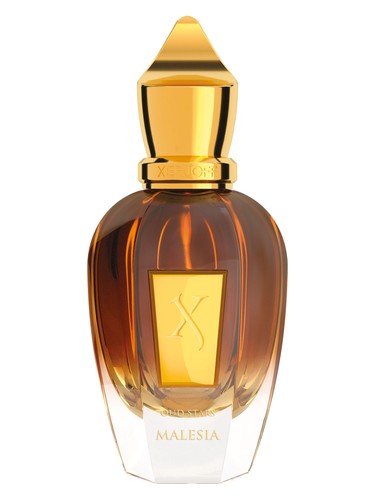
The first spray of Malesia is nothing short of startling—a tender whisper of lily-of-the-valley that feels almost bridal in its innocence, lasting mere moments before being pulled into something far more complex and enigmatic. This is not the gentle, linear floral journey you might expect from that opening note. Instead, Xerjoff has crafted something deliberately contradictory: a fragrance that begins with springtime purity and descends, almost immediately, into an amber-soaked chamber where resins, balsams, and precious woods await. The transition is swift, almost breathtaking, as if stepping from a sun-dappled garden directly into an incense-filled salon draped in silk.
The Scent Profile
That fleeting lily-of-the-valley top note serves as more of a statement of intent than a sustained experience. It''s the hook that catches you off guard, a moment of delicate greenness that announces this won''t be a typical oud fragrance. Within minutes, the heart reveals its true ambitions: a marriage of amber and gurjan balsam that establishes the fragrance''s dominant character. The amber here isn''t the golden, honeyed variety found in many modern compositions—it''s deeper, more resinous, with the gurjan balsam lending a camphoraceous, slightly medicinal quality that adds intrigue without overwhelming.
But the real drama unfolds in the base, where Malesia builds its foundation with a remarkable density of materials. Laotian oud anchors the composition with its characteristic smoky, almost leathery presence, though it''s notably refined rather than aggressively animalic. Tolu balsam and labdanum weave through the structure, adding layers of warmth and a subtle stickiness that gives the fragrance its plush texture. Vanilla and tonka bean provide sweetness, but not in the gourmand sense—this is restrained, almost subliminal sweetness that softens the edges without compromising the composition''s sophistication. Musk rounds everything out, creating a skin-like intimacy that makes this surprisingly wearable despite its obvious richness.
The accord breakdown tells the story plainly: amber dominates at 100%, with woody and oud elements hovering above 50%. There''s a powdery quality at 43% that likely emerges from the interplay of vanilla, tonka, and musk, creating that soft-focus effect that keeps Malesia from feeling too sharp or austere. This is a fragrance built on contrasts—the woody severity of oud tempered by vanillic warmth, the density of balsams lifted by that initial floral brightness.
Character & Occasion
Here''s where Malesia becomes genuinely intriguing: the community data suggests this works across all seasons without a clear preference for day or night wear. In practice, this versatility speaks to the fragrance''s remarkable balance. Despite the heavy-hitting ingredients list—oud, multiple balsams, labdanum—there''s a restraint in the execution that prevents it from becoming oppressive in warmer weather. The powdery, musky elements create enough breathing room for year-round wear, though it undoubtedly blooms most luxuriously in cooler temperatures when the balsamic richness can fully express itself.
The lack of strong day/night skew is equally telling. This isn''t a boardroom fragrance, nor is it exclusively evening territory. Instead, Malesia occupies that sophisticated middle ground—appropriate for a dinner reservation, a gallery opening, or simply as a personal indulgence on days when you want to feel enveloped in something beautiful. Listed as feminine, it''s worth noting the similar fragrances include several masculine compositions (Jubilation XXV Man, Interlude Man), suggesting Malesia transcends simple gender categorization. Anyone drawn to rich, amber-woody compositions will find something to love here.
Community Verdict
With a solid 4.2 out of 5 rating from 379 votes, Malesia has clearly resonated with those who''ve experienced it. This isn''t a niche curiosity with polarizing reviews—it''s a well-regarded fragrance that delivers on its promises. The rating suggests broad appeal among those who seek out this style of perfumery, without the wild variations in opinion that often accompany more challenging compositions. It''s refined enough to satisfy traditionalists while offering enough complexity to keep modern palates engaged.
How It Compares
The comparison to Grand Soir by Maison Francis Kurkdjian is illuminating—both fragrances explore amber and vanilla territories with sophistication and restraint. Where Grand Soir leans more overtly sweet and resinous, Malesia brings additional complexity through its oud and multiple balsam layers. The inclusion of two Xerjoff siblings, Alexandria II and Ceylon, in the similar fragrances list suggests this sits comfortably within the brand''s aesthetic of opulent, ingredient-forward compositions. The Amouage comparisons (Jubilation XXV Man, Interlude Man) point to shared DNA in the oud and resinous departments, though Malesia feels more accessible and less deliberately dense than those powerhouses.
The Bottom Line
Malesia represents Xerjoff at their most assured—a fragrance that showcases precious materials without relying on shock value or bombastic projection. The 4.2 rating feels entirely justified for a composition that balances technical excellence with genuine wearability. Yes, this is positioned in the luxury segment where Xerjoff operates, which means investment-level pricing, but the complexity and quality justify consideration for those building a serious collection.
This is ideal for someone who appreciates amber-woody fragrances but finds many modern ouds either too aggressive or too sweetly commercialized. The lily-of-the-valley opening makes it more approachable than straight oud showcases, while the rich base satisfies those seeking substance and longevity. If you''ve enjoyed Grand Soir but wished for something with more woody depth, or if you love Xerjoff''s house style of luxurious density, Malesia deserves a proper wearing. It''s a fragrance that reveals itself slowly, rewards patience, and ultimately delivers a surprisingly versatile take on ingredients that often resist such flexibility.
AI-generated editorial review