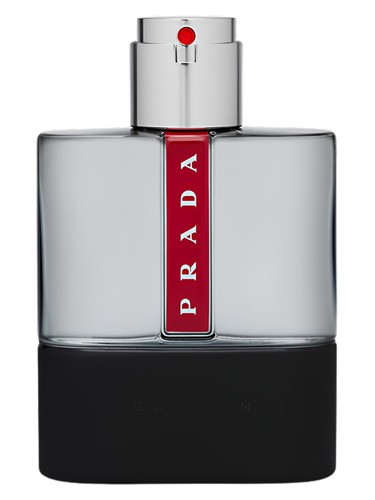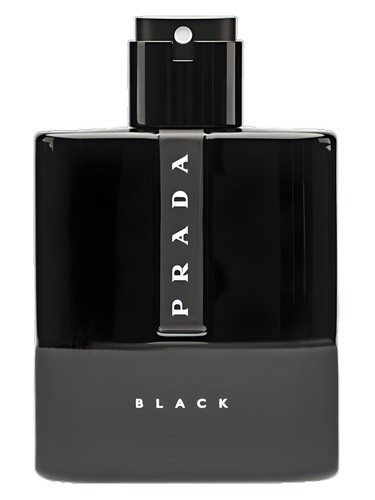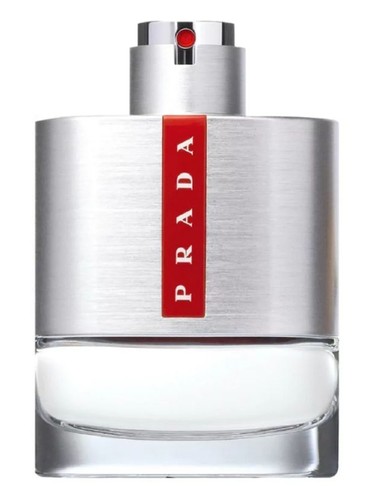
First Impressions
The first spray of Prada Luna Rossa announces itself with a crisp collision of lavender and bitter orange—a pairing so classic it borders on archetype. There''s an immediate coolness here, a minty-green freshness that reads as unapologetically masculine in the traditional sense. It''s the olfactory equivalent of a pressed white shirt: clean, competent, and entirely predictable. The opening doesn''t challenge or surprise; instead, it delivers exactly what the blue-tinted bottle promises. For some, that reliability is precisely the point. For others, it''s the beginning of a familiar story they''ve heard too many times before.
The Scent Profile
Luna Rossa builds its foundation on lavender—not the soapy barbershop variety, but a brighter, more aromatic interpretation that dominates at 68% of the fragrance''s character. The bitter orange provides a citrus counterpoint that keeps the composition from veering too herbal, creating an opening that registers as fresh and green rather than overtly floral. This is lavender with its edges sharpened, its softness traded for a more athletic posture.
As the fragrance settles, mint and clary sage emerge at the heart, reinforcing that fresh-spicy accord that defines modern masculines. The mint doesn''t announce itself with toothpaste obviousness; instead, it weaves through the composition as a cooling thread, enhancing the green quality that makes up 53% of the fragrance''s profile. Clary sage adds an aromatic complexity—slightly herbal, faintly nutty—that prevents the heart from becoming one-dimensional.
The base is where Luna Rossa makes its most contemporary move. Ambrette and ambroxan provide a musky, synthetic cleanliness that has become the calling card of mainstream masculines since the 2010s. This isn''t the warm, skin-like musk of vintage fragrances; it''s the molecular clarity of modern aromachemicals, delivering that 41% musky accord with technical precision rather than sensual depth. The result is a dry-down that hovers close to the skin, clean and slightly ambery, but never particularly memorable.
Character & Occasion
The data tells a clear story about Luna Rossa''s natural habitat: this is a warm-weather workhorse. With 98% suitability for spring and 95% for summer, it''s designed for those months when heavier fragrances feel oppressive. The formulation is 100% oriented toward daytime wear, dropping to just 30% for evening appropriateness—this isn''t the fragrance you reach for when you want to make an entrance at dinner.
Luna Rossa excels in scenarios that demand inoffensiveness: office environments, casual daytime activities, situations where you want to smell fresh without broadcasting your presence. It''s the fragrance equivalent of business casual—appropriate, acceptable, and unlikely to generate strong reactions in either direction. The aromatic-lavender profile skews traditional masculine, making it most suitable for those who prefer their scents unambiguous in gender presentation.
Where Luna Rossa struggles is in cooler weather and evening settings. With only 46% fall suitability and a mere 19% for winter, the lightweight composition simply doesn''t have the depth or warmth to stand up to dropping temperatures. This is a fair-weather friend in the most literal sense.
Community Verdict
The fragrance community''s assessment of Luna Rossa reveals a product caught in an identity crisis. With a sentiment score of 5.8 out of 10—decidedly lukewarm—opinions split between practical appreciation and genuine disappointment.
On the positive side, wearers consistently praise the clean, fresh character that makes it suitable for daily rotation. At discounted prices, many consider it solid value, and the original EDT formulation maintains a core of defenders who appreciate its straightforward approach. The Sport flanker, in particular, earns respect for its versatility.
The criticisms, however, cut deeper. The Ocean flanker receives particularly harsh treatment, described repeatedly as generic and boring—a me-too entry in an already saturated blue fragrance market. Performance issues plague the line, with weak sillage and poor longevity compared to competitors becoming recurring complaints. Multiple community members note what they perceive as quality degradation over time, pointing to flimsier bottle construction as evidence of cost-cutting. Perhaps most damning is the consensus that Luna Rossa simply feels tired—a fragrance that hasn''t evolved while the market around it has.
How It Compares
Luna Rossa exists in the constellation of modern aromatic masculines alongside Dior Sauvage, Versace Pour Homme, and Chanel Allure Homme Sport Eau Extreme. In this competitive set, it occupies the middle ground: less aggressive than Sauvage, less distinctive than the Chanel, less warm than Versace Pour Homme. It''s the safe choice that never quite justifies its safety.
Where fragrances like La Nuit de l''Homme or Le Male carve out specific personalities—seductive and daring respectively—Luna Rossa remains studiously neutral. In a category defined by crowd-pleasers, it manages to please without exciting, to satisfy without inspiring loyalty.
The Bottom Line
With a 4.15 out of 5 rating from 4,586 votes, Prada Luna Rossa achieves something many fragrances cannot: broad acceptability. That respectable score reflects competent execution rather than passionate devotion. This is a fragrance that does what it promises without exceeding those promises.
The value proposition depends entirely on price. At retail, Luna Rossa struggles to justify itself against better-performing competitors. At discount—which community members emphasize as the proper buying opportunity—it becomes a reasonable addition to a rotation for those who need a reliable warm-weather daily wearer.
Who should reach for Luna Rossa? Budget-conscious buyers building a collection, those who specifically want an inoffensive office scent, or anyone who genuinely loves aromatic lavender compositions and doesn''t mind modest performance. Who should skip it? Anyone seeking projection, longevity, or distinctive character. Anyone already owning Sauvage or similar blue fragrances likely doesn''t need this variation on the theme.
A decade after its 2012 launch, Luna Rossa remains perfectly competent—and in today''s fragrance market, competence without distinction simply isn''t enough to stand out.
AI-generated editorial review