First Impressions
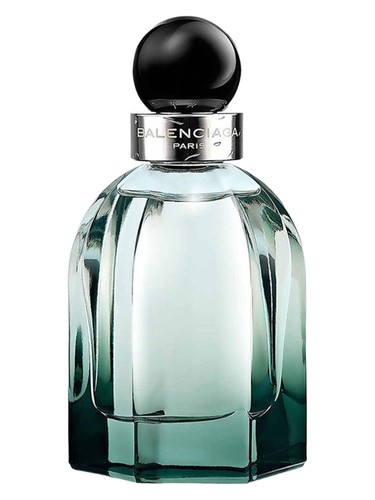
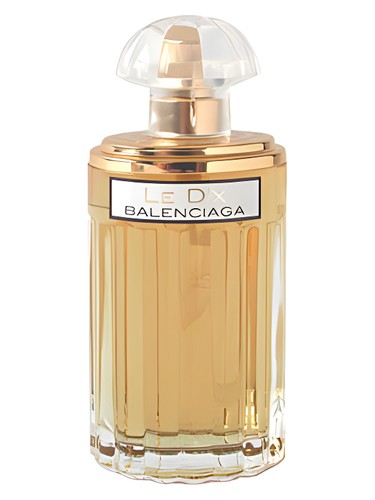
The first moments of Le Dix feel like stepping into a Parisian salon in 1947—not literally, of course, but with the kind of refined elegance that Cristóbal Balenciaga himself might have appreciated. The opening is a brilliant cascade of aldehydes, lifted by bergamot and lemon, with an unexpected whisper of coriander adding intrigue. But here''s where it gets interesting: there''s peach lurking beneath that sparkling surface, softening what could have been a purely austere aldehydic blast into something more approachable, more human. This is freshness with intention—100% fresh according to its dominant accord, yet never screaming for attention.
Within seconds, you understand this is a fragrance from an era when perfumes were designed to announce you before you entered a room, then linger gracefully long after you''d left.
The Scent Profile
Le Dix follows the classic structure of mid-century French perfumery, but it''s no simple copy-and-paste exercise. Those aldehydes that greet you—bright, effervescent, almost champagne-like—form a sparkling canopy over citrus and that intriguing peach note. The coriander adds a subtle spiciness that keeps the opening from tipping into purely sweet territory. It''s a masterclass in balance.
As the fragrance settles, the heart reveals itself as a lavish white floral bouquet. Lilac and lily-of-the-valley create an airy, green-tinged foundation, while rose and jasmine provide the classic French perfumery backbone. Ylang-ylang adds its creamy, banana-tinged sweetness, and orris root contributes that distinctive powdery, lipstick-like quality that sits at 91% in the accord profile. There''s even a whisper of almond in the heart, adding an almost gourmand softness that was quite progressive for 1947.
This powdery-floral heart is where Le Dix truly shows its heritage. It shares DNA with Chanel No 5, certainly, but where No 5 maintains a cooler distance, Le Dix feels warmer, more embracing.
The base is where complexity reaches its zenith. Civet—yes, real animalic civet in the original formulation—adds depth and a whisper of something primal beneath all that refinement. Sandalwood and vetiver provide woody structure (that 80% woody accord isn''t just marketing speak), while benzoin, vanilla, tonka bean, and Peru balsam create a resinous, sweet foundation. Musk and amber amplify the skin-like quality, and there''s even patchouli adding earthiness. With 77% amber in the accord profile, this base is substantial, long-lasting, and thoroughly enveloping.
Character & Occasion
The data tells an interesting story about when Le Dix shines brightest: it''s overwhelmingly a daytime fragrance (100% day versus 57% night), which might surprise those who assume all vintage aldehydics are evening affairs. The truth is that Le Dix''s freshness and powdery elegance make it perfect for sophisticated daytime occasions—board meetings, gallery openings, important lunches where you want to project quiet authority.
Seasonally, this is a transitional star. Fall claims 75% preference, with spring close behind at 72%, and winter at a respectable 64%. Summer, at 31%, is clearly not Le Dix''s moment—and that makes sense. This is a fragrance with presence and warmth, better suited to cooler weather when its aldehydes can sparkle without overwhelming and its base notes can unfold without becoming cloying.
Who is this for? Anyone who appreciates perfume history, certainly, but also those seeking an alternative to the ubiquitous No 5. It''s for the woman who wants vintage elegance without feeling costumed, who can wear something with this much personality and make it her own rather than becoming a supporting character in its story.
Community Verdict
With 662 votes landing at a solid 4.2 out of 5, Le Dix has earned genuine respect from those who''ve experienced it. That rating reflects both admiration and reality: this isn''t an easy, crowd-pleasing fragrance for the modern palate. It demands appreciation for aldehydic florals, comfort with powdery accords, and patience with vintage structures. The fact that it still scores above 4 suggests that those who understand it, truly love it.
This isn''t a fragrance with thousands of ratings because it''s not widely available and it''s certainly not marketed with Instagram campaigns. But the 662 people who took the time to rate it clearly found something worth celebrating.
How It Compares
Le Dix sits comfortably alongside the great mid-century aldehydic florals. Its kinship with Chanel No 5 Parfum is obvious—both share that aldehydic sparkle over white florals. Arpège by Lanvin is another sibling, though perhaps slightly sweeter. Calèche by Hermès shares the crisp, elegant aldehydic opening, while Chamade by Guerlain offers similar vintage warmth. Dune by Dior, though much more modern (1991), shares the powdery, ambery quality.
Where Le Dix distinguishes itself is in that peach-almond softness running through it and the particular warmth of its base. It''s perhaps slightly more approachable than No 5, less austere than Calèche, warmer than Arpège.
The Bottom Line
Le Dix deserves more attention than it receives. At 4.2 out of 5, it''s not perfect—vintage aldehydics rarely are for modern sensibilities—but it''s very, very good at what it does. The challenge is availability and, for some, the learning curve required to appreciate mid-century perfume construction.
Should you seek it out? If you already love aldehydic florals, absolutely. If you''re curious about perfume history or want to understand what Balenciaga represented before it became a fashion powerhouse, yes. If you find No 5 too cold or Arpège too sweet, Le Dix might be your Goldilocks solution. Just don''t expect it in summer, don''t expect it to be subtle, and don''t expect the modern minimalism that dominates contemporary perfumery. This is elegance from another era, preserved in a bottle, still entirely wearable today for those with the confidence to carry it.
AI-generated editorial review