First Impressions
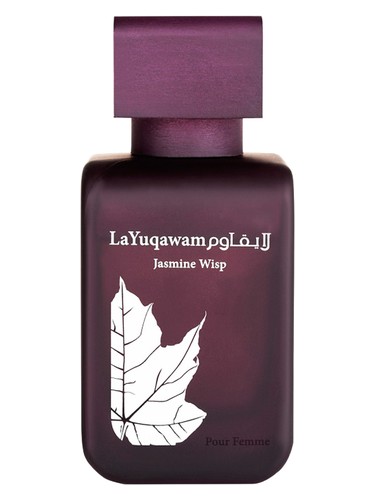
The first spray of La Yuqawam Jasmine Wisp announces itself with unabashed confidence. A trinity of citrus—mandarin orange, grapefruit, and lemon—bursts forth with the kind of intensity that makes you lean back slightly, reassessing what you thought you knew about "feminine fruity florals." This isn''t a whisper; it''s a declaration. Within moments, the opening''s bright acidity begins weaving with something sweeter, something almost tropical in its lushness. Rasasi, the Dubai-based house known for its bold interpretations, has crafted something that refuses to play by conventional rules. You''ll know within the first five minutes whether this fragrance speaks your language—or shouts in a dialect you don''t understand.
The Scent Profile
The citrus opening, while vivid, serves primarily as a gateway to where Jasmine Wisp truly lives: in a fruit-drenched garden where passion meets indulgence. As the mandarin, grapefruit, and lemon begin their retreat, the heart reveals itself as an opulent bouquet of white flowers surrounded by an almost excessive array of fruits. Passionfruit leads the charge with its distinctive sweet-tart character, while pear and peach add their soft, nectar-like sweetness. Coconut contributes a creamy, sun-warmed dimension, and those white flowers—jasmine among them—thread through everything with heady persistence.
This heart is where opinions diverge sharply. The jasmine note, in particular, doesn''t play a supporting role; it demands attention, sometimes overwhelming the delicate balance between fruit and flora. For those attuned to its frequency, it''s intoxicating. For others, it registers as overpowering, even aggressive.
The base settles into familiar gourmand territory with vanilla, amber, and tonka bean creating a sweet, warm foundation. This trio provides the longevity that many have praised, anchoring the composition with a comfort that contrasts notably with the more challenging top and heart. Here, Jasmine Wisp reveals its commercial DNA—those notes that connect it to the sweet, accessible fragrances dominating the contemporary market. The vanilla particularly asserts itself (registering at 77% in the main accords), creating a through-line of sweetness that never fully dissipates.
Character & Occasion
The data tells a compelling story: this is overwhelmingly a spring fragrance (100%), with summer following close behind at 91%. These aren''t arbitrary assignments—the tropical accord (53%) and dominant fruity character (100%) naturally align with warmer weather, when such exuberance feels less cloying. Interestingly, fall scores nearly as high at 87%, suggesting the vanilla and amber base provides enough warmth to transition into cooler months. Winter, at 63%, is the only season where Jasmine Wisp seems somewhat out of place, though die-hard fans clearly wear it year-round.
The day-versus-night breakdown (96% day, 81% night) positions this as a versatile piece, though its brightness and tropical sweetness feel most at home in daylight hours. Community feedback suggests it works particularly well for evening wear and special occasions, which speaks to its projection and presence—this isn''t a fragrance that disappears into the background at a gathering.
Who is this for? The answer isn''t straightforward. While marketed as feminine, Jasmine Wisp attracts oud fragrance enthusiasts and those who gravitate toward strong florals. It requires a certain confidence, a willingness to be noticed, and—perhaps most importantly—a personal chemistry that works with rather than against its intensity.
Community Verdict
The Reddit community''s mixed sentiment (5.5 out of 10) reflects the love-it-or-hate-it nature that defines this fragrance. Based on seven opinions, the pattern is clear: this isn''t a crowd-pleaser, and it doesn''t aspire to be one.
The pros are tangible: Rasasi fans consistently praise the fragrance, citing its affordable price point relative to the quality delivered. Longevity and projection receive particular acclaim—this fragrance performs, staying present on skin for hours. For those who connect with the scent profile, it represents exceptional value.
The cons, however, are equally pronounced. Multiple users report that the jasmine and orange notes become overpowering, tipping from pleasant to aggressive. More concerning, some individuals experience physical reactions—headaches or nausea—particularly those sensitive to strong florals or synthetic ingredients. The community strongly recommends testing before purchasing, as blind-buying based on note listings alone has led to disappointments.
The phrase "polarizing fragrance" appears repeatedly, and it''s accurate. This isn''t a matter of minor preference differences; it''s a fundamental split between those who find it beautiful and those who find it unwearable.
How It Compares
The similar fragrances list reads like a who''s who of modern sweet blockbusters: La Vie Est Belle by Lancôme, La Belle by Jean Paul Gaultier, Hypnotic Poison by Dior, and even Ariana Grande''s Cloud. What unites them is that dominant fruity-sweet profile, heavy vanilla presence, and broad commercial appeal. Where Jasmine Wisp diverges is in its intensity and that divisive floral character. While La Vie Est Belle achieves near-universal appreciation through careful balance, Jasmine Wisp pushes harder, risks more, and consequently polarizes more.
At a fraction of the price of its designer counterparts, it occupies an interesting market position: a Middle Eastern interpretation of Western sweet-floral trends, executed with the boldness characteristic of Arabian perfumery.
The Bottom Line
With a rating of 4.12 out of 5 from 763 votes, La Yuqawam Jasmine Wisp clearly has its admirers. That rating, however, requires context—it reflects passionate appreciation from those who love it, balanced against those who couldn''t connect with its intensity.
This is a fragrance that demands a test wear. If you''re drawn to unapologetically sweet, fruity florals with serious projection, if you appreciate bold jasmine, and if your chemistry welcomes rather than amplifies synthetic ingredients, Jasmine Wisp could become a signature. The value proposition is undeniable for those it suits.
But if you prefer subtlety, if strong florals have historically triggered headaches, or if you''re seeking something universally office-appropriate, look elsewhere. Jasmine Wisp isn''t interested in being all things to all people—and in the homogenized landscape of contemporary perfumery, that refusal to compromise is itself worth noting.
AI-generated editorial review