First Impressions
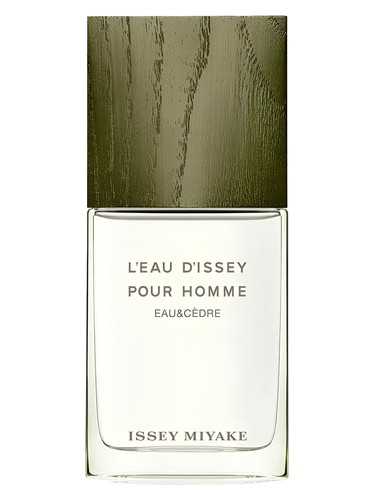
The first spray of L''Eau d''Issey Pour Homme Eau & Cèdre announces itself with an unexpected gentleness. There''s a whisper of cardamom — warm, slightly sweet, aromatic — that introduces what''s to come without fanfare or theatrics. This isn''t a fragrance that shouts for attention. Instead, it draws you closer with the promise of something fundamentally natural, almost meditative in its restraint. Within moments, you understand this composition''s singular focus: cedar, presented with the kind of clarity that Issey Miyake has built its reputation on.
The opening feels less like a traditional perfume pyramid and more like a reverent walk through a sun-dappled forest where the trees have already weathered and softened, their essential character distilled into something wearable, approachable, and remarkably clean.
The Scent Profile
Cardamom handles the introduction with admirable brevity. The spice note provides just enough warmth to prevent the composition from feeling stark, its aromatic quality setting up the woody journey ahead. This isn''t cardamom as exotic flourish; it''s cardamom as gentle handshake, a brief moment of spiced greeting before the main event.
Then comes the cedar — unapologetically dominant, accounting for the fragrance''s complete 100% woody accord rating. This is Atlantic cedar in its most transparent form, neither overly pencil-shaving sharp nor heavily sweetened with synthetics. The wood presents with remarkable fidelity to its natural character: slightly dry, softly resinous, with that distinctive clean quality that makes cedar such a reliable backbone in masculine perfumery. It''s here, in this heart phase, that the composition reveals its minimalist philosophy. No distractions, no unnecessary embellishments — just cedar allowed to express itself fully.
The base introduces vetiver and patchouli as supporting players, grounding the cedar without stealing its thunder. The vetiver adds an earthy dimension (reflected in that 32% earthy accord), while patchouli contributes subtle depth and a whisper of that powdery quality registered in the fragrance''s DNA. Together, they create a foundation that feels rooted and natural, extending the cedar''s presence rather than transforming it into something else entirely.
The progression is linear in the best possible sense — this isn''t a fragrance that shape-shifts dramatically on skin. What you smell after thirty minutes is fundamentally what you''ll smell three hours later, just softer, closer, more intimate.
Character & Occasion
The community data tells a clear story: this is a warm-weather woods fragrance, with equal performance ratings for spring and summer at 96%. It''s an intriguing position — woody fragrances typically skew autumnal, but Eau & Cèdre''s lighter touch and aromatic opening make it genuinely suitable for warmer months when heavier compositions would suffocate.
Fall retains respectability at 69%, while winter trails at just 26%. The fragrance lacks the density and projection needed for cold-weather dominance, but that''s not a criticism — it''s a design choice. This is cedar for daylight hours (100% day rating versus 34% night), for casual settings where you want to smell good without making it obvious you''re trying.
Think weekend errands, outdoor lunches, creative workplaces where you want to maintain professionalism without formality. It''s the scent for the man who appreciates quality basics, who understands that sometimes the most sophisticated choice is also the most straightforward. This isn''t a date-night seducer or a boardroom power move — it''s the olfactory equivalent of a perfectly broken-in oxford shirt.
The aromatic character (44%) and warm spice notes (26%) keep it from feeling austere, while that 17% patchouli accord adds just enough contemporary edge to prevent it from reading as dated or overly conservative.
Community Verdict
With 492 votes tallying to a 3.76 out of 5 rating, Eau & Cèdre sits comfortably in "very good" territory without reaching "masterpiece" status. This is a respectable showing that suggests solid performance and likability without polarizing intensity. The fragrance does what it sets out to do well enough that nearly 500 people have bothered to rate it, but it hasn''t inspired the passionate devotion that pushes ratings above 4.0.
That middle-ground reception makes sense for a composition this deliberately restrained. It''s unlikely to be anyone''s most exciting fragrance, but it''s equally unlikely to disappoint those seeking exactly what it offers: clean, wearable, quality woods for everyday life.
How It Compares
The similar fragrances list reads like a greatest-hits collection of modern masculine perfumery: Encre Noire''s dark vetiver intensity, Terre d''Hermès''s mineral freshness, Dior Homme 2020''s iris-wood sophistication. Eau & Cèdre sits among these established names as the most accessible, the most uncomplicated. Where Encre Noire veers brooding and La Nuit de l''Homme plays seductive, this Issey Miyake offering maintains a straight path through the woods.
It lacks Terre d''Hermès''s distinctive character and Gentleman Reserve Privée''s richness, but it also avoids their complexity. For someone finding those fragrances too demanding or too distinctive for everyday wear, Eau & Cèdre offers a simpler alternative that still maintains quality and natural-smelling materials.
The Bottom Line
L''Eau d''Issey Pour Homme Eau & Cèdre succeeds by knowing exactly what it is: a well-executed, cedar-focused composition for men who want to smell clean, natural, and quietly confident. At a 3.76 rating, it won''t revolutionize your collection, but it might become the bottle you reach for most often during those warm-weather months when you need something effortlessly wearable.
The value proposition depends entirely on what you''re seeking. If you want complexity, projection, or distinctive character, look elsewhere. If you want cedar presented with clarity and restraint, suitable for daily wear from March through September, this delivers exactly that. It''s fragrance as essential wardrobe piece rather than statement accessory — and there''s absolutely nothing wrong with that approach.
AI-generated editorial review