First Impressions
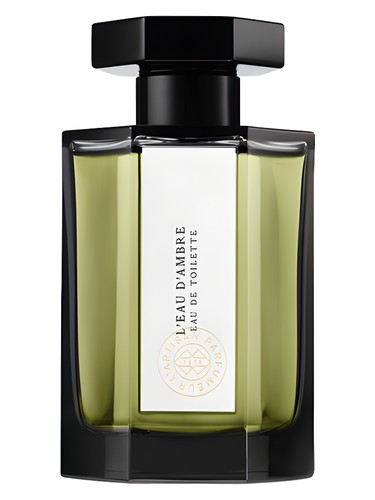
The first spray of L''Eau d''Ambre feels like stepping into a memory you didn''t know you had. There''s an immediate warmth—not the aggressive heat of modern gourmands, but something more composed, more measured. The amber announces itself without shouting, wrapping around your skin like cashmere that''s been stored with vanilla pods and old books. This is a fragrance from 1993, and it wears its age like a badge of honor, belonging to an era when perfumers trusted restraint as much as opulence. Within moments, you understand why this composition has endured for three decades.
The Scent Profile
L''Eau d''Ambre operates with an interesting sort of transparency—the perfume house hasn''t specified traditional top, heart, and base note breakdowns, yet the fragrance speaks clearly through its dominant accords. The amber accord commands the composition entirely, registering at full intensity and serving as both the foundation and the architecture of the scent. This isn''t amber as a supporting player; it''s amber as the entire performance.
But calling this simply an amber soliflore would be reductive. At 60% intensity, vanilla weaves through the amber with remarkable sophistication, never tipping into dessert territory. This is vanilla as it exists in nature—slightly woody, faintly resinous, with a subtle sweetness that enhances rather than dominates. The interplay between these two elements creates a golden, glowing quality that sits close to the skin.
Patchouli enters at 54%, lending an earthy, slightly herbaceous complexity that keeps the composition from becoming one-dimensional. It''s the element that grounds the sweeter components, adding depth and a hint of mystery. The fresh spicy notes (38%) and warm spicy notes (36%) create a gentle tension within the fragrance—a breath of brightness playing against deeper warmth. Finally, a powdery quality (33%) softens the edges, giving L''Eau d''Ambre an almost vintage feel, reminiscent of face powder compacts and silk-lined vanity drawers.
The evolution is subtle rather than dramatic. This fragrance doesn''t transform radically on the skin; instead, it reveals facets gradually, like turning an amber stone in different light. The overall impression remains consistent—warm, enveloping, quietly luxurious.
Character & Occasion
The community has spoken decisively about when L''Eau d''Ambre comes into its own. This is autumn and winter''s fragrance, registering at 100% and 92% respectively for those seasons. It makes perfect sense—this is a scent that craves cooler temperatures, when its warmth becomes a comfort rather than a weight. In spring (22%) and summer (18%), it struggles; the richness that feels perfect against crisp November air can turn cloying under humidity.
Interestingly, L''Eau d''Ambre shows versatility in the day-to-night divide. At 80% for daytime wear, it proves remarkably office-appropriate despite its richness—the restraint in its composition means it never overwhelms a professional setting. At 68% for evening, it maintains enough presence to feel special for dinner or cultural events, though it''s not the bombastic statement scent some occasions demand.
Marketed as feminine, L''Eau d''Ambre actually reads fairly unisex to contemporary sensibilities. The amber-vanilla-patchouli triumvirate doesn''t particularly lean feminine beyond marketing conventions. Anyone who appreciates warm, resinous fragrances will find something to love here, regardless of how they identify.
Community Verdict
With 801 votes tallying up to a 4.01 out of 5 rating, L''Eau d''Ambre has achieved something rare: genuine consensus. That''s a strong rating for a fragrance that''s now thirty years old, suggesting it hasn''t been forgotten or dismissed as dated. The voter pool is substantial enough to be meaningful—this isn''t a niche obscurity with twelve passionate fans inflating scores, but a broadly appreciated composition that has stood the test of time.
The rating also suggests this isn''t a polarizing fragrance. There''s no evidence of love-it-or-hate-it division; instead, L''Eau d''Ambre appears to be consistently well-regarded, if perhaps not reaching the obsessive devotion that pushes certain fragrances past 4.5 stars.
How It Compares
L''Eau d''Ambre exists in distinguished company. Its kinship with Serge Lutens'' Ambre Sultan makes sense—both are amber-forward compositions that take the genre seriously. Where Ambre Sultan leans more herbaceous and intense, L''Eau d''Ambre offers a softer, more immediately wearable approach.
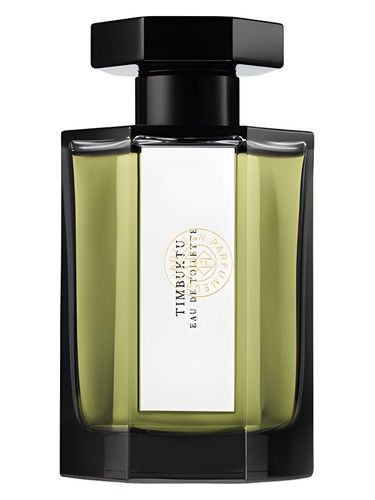
The comparisons to Chanel''s Coco Eau de Parfum and Guerlain''s Shalimar are telling. These are heavyweight classics, and L''Eau d''Ambre holds its ground among them, offering a similar vintage sensibility with perhaps more simplicity and focus. It shares DNA with Dior''s Dune in terms of that subtle powdery quality, while its connection to L''Artisan Parfumeur''s own Timbuktu speaks to the house''s skill with warm, resinous compositions.
In the amber category specifically, L''Eau d''Ambre distinguishes itself through restraint—it''s luxurious without being baroque, complex without being complicated.
The Bottom Line
A 4.01 rating from over 800 voters tells you this fragrance delivers on its promises. L''Eau d''Ambre isn''t trying to revolutionize perfumery or shock you into attention. Instead, it offers something increasingly rare: a beautifully executed idea, rendered with skill and allowed to speak for itself.
For anyone exploring amber fragrances, this is essential homework. It demonstrates what the genre can achieve when composition is prioritized over novelty. The thirty-year longevity speaks volumes—trends have come and gone, but L''Eau d''Ambre remains relevant because it was never chasing relevance in the first place.
Best suited for those who appreciate warmth over freshness, subtlety over projection, and timelessness over trendiness. If you reach for fragrance as comfort rather than announcement, L''Eau d''Ambre deserves a place in your cold-weather rotation.
AI-generated editorial review