First Impressions
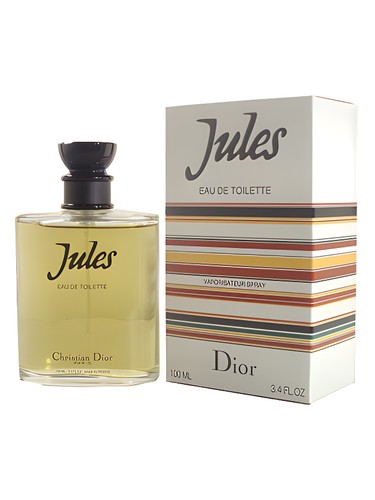
The first spray of Dior''s Jules transports you to a misty herb garden at dawn, where lavender mingles with the sharp, almost medicinal bite of artemisia. This is no gentle introduction—Jules announces itself with conviction. The opening is assertively green and aromatic, laced with caraway''s distinctive anise-like edge and bergamot''s citrus brightness cutting through the herbal density. It''s the kind of fragrance that makes you pause and reconsider what masculine perfumery meant in 1980, before aquatics and sports colognes redefined the category. There''s an old-world sophistication here, though whether it reads as distinguished or dated depends entirely on who''s wearing it—and that''s where things get interesting.
The Scent Profile
Jules builds its aromatic fortress from the ground up, starting with that powerful lavender-artemisia duo that defines the top notes. The caraway adds an unusual spiciness that feels almost culinary, while bergamot provides the only real lightness in an otherwise dense opening. This isn''t the clean, barbershop lavender of contemporary men''s grooming—it''s earthier, more complex, with a slightly bitter herbal quality that speaks to its vintage roots.
As the fragrance settles, the heart reveals an unexpectedly lush bouquet. Carnation and rose bring a spicy-floral character that was more common in masculine fragrances of that era, while basil reinforces the herbaceous theme established up top. Cedar and sandalwood provide woody structure, and cyclamen adds a subtle green floralcy. Jasmine weaves through it all, though it never dominates. This middle phase is where Jules shows its sophistication—the interplay between the floral elements and the woody, herbal notes creates genuine depth.
The base is where Jules firmly plants its flag in classic chypre territory. Oakmoss dominates with that characteristic damp, forest-floor richness, supported by leather that adds a subtle animalic edge. Fir brings a coniferous freshness that keeps the composition from becoming too heavy, while musk, amber, and tonka bean provide warmth and subtle sweetness. This foundation explains why Jules thrives in cooler weather—it has the weight and complexity to stand up to cold air without becoming cloying.
Character & Occasion
The data tells a clear story: Jules is emphatically an autumn and winter fragrance, scoring 100% and 95% respectively for those seasons. Spring is viable at 74%, but summer''s mere 34% rating confirms what your nose already knows—this is not a warm-weather companion. The density of the aromatic and woody accords (100% and 85% respectively) simply doesn''t play well in heat.
Interestingly, Jules performs almost equally well day and night (75% day, 74% night), making it unusually versatile within its seasonal sweet spot. It''s appropriate for the office on a crisp fall morning but wouldn''t feel out of place at an evening dinner as temperatures drop. This adaptability suggests a certain restraint despite its boldness—Jules makes a statement, but not an overwhelming one.
This is a fragrance for those who appreciate the herbaceous, mossy character of classic men''s perfumery. If your reference points are Azzaro pour Homme or the original Polo, you understand the aesthetic. It requires confidence to wear something this unapologetically green and aromatic in an era dominated by blue fragrances and sweet gourmands.
Community Verdict
Here''s where we must address the elephant in the room. Based on 23 community opinions, Jules earns a mixed sentiment score of 6.5 out of 10—respectable but hardly enthusiastic. The 4.34 rating from 500 votes suggests general approval, yet the Reddit community reveals a more complicated truth.
Lovers of Jules praise its green and aromatic notes, appreciating the good evolution and depth when the fragrance performs well. They value its classic chypre structure and undeniable character. But the criticisms are significant and specific: inconsistent performance across different skin chemistries, troubling reports of a "urinal cake" or bathroom cleaner smell emerging on some wearers, and performance that varies dramatically with temperature.
This isn''t about personal preference—it''s about fundamental compatibility. The same fragrance that smells sophisticated and herbaceous on one person can reportedly turn harsh and synthetic on another. The community consensus suggests success with Jules is highly dependent on individual body chemistry and environmental conditions.
How It Compares
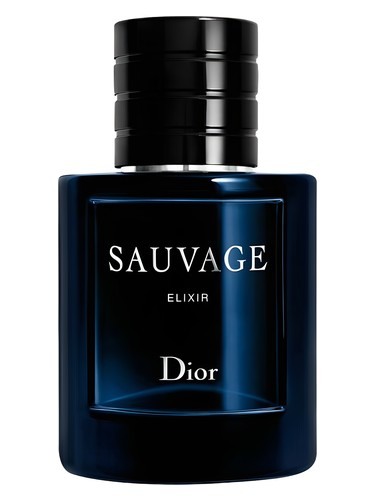
Jules sits comfortably alongside other aromatic powerhouses from its era and lineage. The comparisons to Azzaro pour Homme, Polo by Ralph Lauren, and Aramis are apt—all share that unapologetically masculine, aromatic-woody character that defined men''s fragrance before the 1990s reformulation wave. The mention of Vetiver by Guerlain and Eau Sauvage by Dior (its own stablemate) suggests Jules occupies a respectable position in the classic aromatic canon.
What distinguishes Jules is its particular emphasis on herbaceous green notes and that complex floral heart—it''s slightly more baroque than the streamlined Eau Sauvage, though less overtly powerful than Polo.
The Bottom Line
Dior''s Jules presents a dilemma. On paper and on the right skin, it''s a sophisticated aromatic chypre with genuine character—a 4.34 rating from 500 voters isn''t given lightly. The composition shows real craftsmanship, with its complex interplay of lavender, artemisia, florals, and mossy woods.
But the community data cannot be ignored. If roughly half of dedicated fragrance lovers report chemistry issues or unpleasant developments, that''s a real risk. Jules isn''t a safe blind buy, despite its Dior pedigree and impressive note pyramid.
Who should try it? Vintage fragrance enthusiasts seeking authentic examples of 1980s aromatic masculinity. Those who know they love oakmoss-forward chypres and herbaceous compositions. Anyone who wears Azzaro pour Homme or original Polo successfully and wants something adjacent but distinct.
Sample first, and test in various conditions. If Jules works on your skin, you''ll have found a green, complex alternative to more common aromatic fragrances. If it doesn''t, you''ll understand quickly—and that urinal cake note won''t be subtle. Sometimes the most interesting fragrances are also the most demanding.
AI-generated editorial review