First Impressions
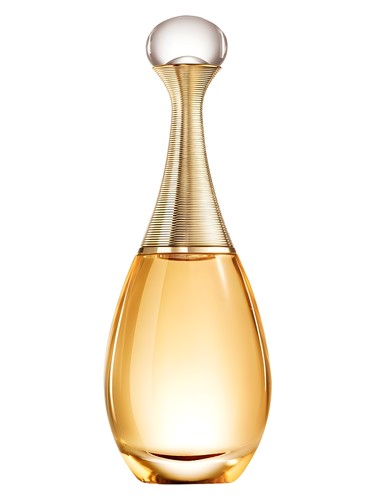
The first spray of J''adore Parfum d''Eau feels like stepping into a conservatory just after dawn, when everything is still dewy and the white blooms haven''t yet opened fully to the sun. It''s a whisper rather than a declaration—unusual for something labeled "Parfum." The mist settles on skin with an almost aqueous quality, and there''s an immediate freshness that feels more like pressed petals than extracted oils. This is white floral perfumery stripped of its usual opulence, rendered in watercolor instead of oil paint. The radiance is there, unmistakably J''adore in spirit, but it arrives softly, almost tentatively, as if testing whether you''re ready for something genuinely new.
The Scent Profile
Without specified individual notes to guide us, J''adore Parfum d''Eau reveals itself through its accord architecture—and what architecture it is. The white floral accord dominates at full intensity, creating a luminous bouquet that refuses to be heavy-handed despite its prominence. Within moments, you''ll detect what reads as a blend of jasmine''s indolic sweetness tempered by something cleaner, perhaps neroli or orange blossom, though Dior keeps the exact composition close to the vest.
The floral accord at 62% provides a supporting chorus, adding dimension and preventing the white florals from becoming monotonous. There''s a verdant, green quality at 50% that runs throughout the composition like a stem connecting all the blooms—this is what keeps J''adore Parfum d''Eau from veering into soapy or overly feminine territory. It smells alive, botanical, as if the flowers were still attached to their leaves.
A citrus brightness at 31% adds sparkle without announcing itself as a distinct top note. It''s more of an aura than a layer, a gentle effervescence that plays with the green aspects. The fruity undertones at 22% read as nectarous rather than sweet—the natural sugar content of petals rather than added confection. A whisper of rose at 17% provides just enough classic floral structure to anchor the composition in recognizability.
The development is subtle rather than dramatic. This isn''t a fragrance that morphs through distinct chapters; instead, it seems to bloom very slowly across hours, revealing facets rather than transformations. The water-based formula affects the way molecules disperse, creating a cloud-like diffusion that stays close to skin.
Character & Occasion
The data tells a clear story: J''adore Parfum d''Eau is spring personified, scoring 100% for the season of renewal, with summer following closely at 83%. This makes perfect sense—the fragrance captures that transition from cool mornings to warm afternoons, from tight buds to full flower. Fall wear drops to 37%, and winter to just 26%, confirming what your nose already knows: this is about lightness, not comfort or warmth.
The day versus night distribution is even more revealing: 98% day to 28% night. This is a sunlight fragrance, designed for natural light and casual elegance. It''s for brunch meetings and garden parties, for working from home in linen, for feeling put-together without feeling formal. The low night score isn''t a failing—it''s simply not that kind of fragrance. You wouldn''t wear a sundress to a gala, and you probably won''t reach for Parfum d''Eau for evening events.
This is a fragrance for those who find traditional white florals too heavy, who get headaches from projection monsters, who want their signature scent to feel like an extension of themselves rather than an announcement of arrival.
Community Verdict
The r/fragrance community approaches J''adore Parfum d''Eau with fascination and wariness in equal measure, landing at a sentiment score of 5.5/10—truly mixed territory. Based on 51 opinions, the conversation reveals a fragrance caught between innovation and practicality.
The praise centers on the scent itself: light, fresh, universally appealing. Many appreciate it as a gentle everyday option that won''t trigger headaches or overwhelm in close quarters. The alcohol-free formula intrigues those interested in new approaches to perfumery.
But the concerns run deep. Without alcohol as a preservative, multiple users worry about shelf life and potential mold growth—legitimate questions about a water-based luxury product. Reports of the formula separating (the inevitable challenge of mixing water and oil) create hesitation about long-term stability. The longevity disappoints those expecting "Parfum" concentration performance; the water base simply doesn''t carry scent molecules the same way alcohol does.
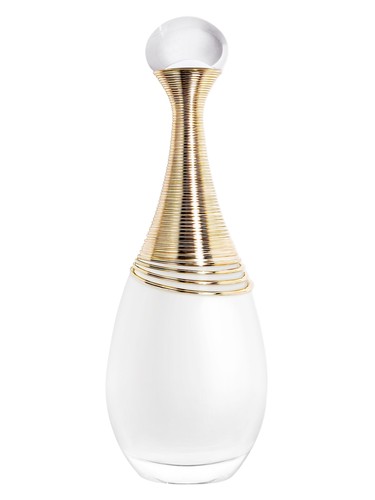
Perhaps most surprisingly for a luxury house like Dior, there are consistent complaints about bottle quality—specifically, gold coating on the base that peels or flakes off. For a premium product, this feels like an oversight that undermines the innovation happening inside the bottle.
How It Compares
J''adore Parfum d''Eau sits in conversation with its own lineage first—the original J''adore remains the gold standard white floral, and this aquatic interpretation reads as a modern, minimalist cousin. Pure Poison by Dior shares that luminous white floral DNA but with more heft. Alien by Mugler and L''Interdit Eau de Parfum by Givenchy offer the white floral experience with more intensity and darkness. Chance Eau Tendre by Chanel provides perhaps the closest parallel: fresh, delicate, optimistic florals designed for ease of wear.
Where J''adore Parfum d''Eau distinguishes itself is in its formula philosophy rather than its scent profile. It''s less about smelling different and more about being different—a bet on whether the future of fragrance might move away from alcohol entirely.
The Bottom Line
With a rating of 4.06 out of 5 from 2,775 votes, J''adore Parfum d''Eau finds considerable appreciation despite the community''s reservations. This gap between rating and sentiment reveals something important: when people judge the scent alone, divorced from concerns about longevity and bottle quality, they genuinely enjoy it.
Should you try it? If you''re curious about fragrance innovation and prefer delicate over dramatic, absolutely. If you''re looking for a fresh spring and summer signature that won''t dominate a room, this delivers beautifully. But approach it knowing what it isn''t: this isn''t a powerhouse, won''t last through a full workday, and may require reapplication.
The value proposition feels complicated at luxury pricing when durability questions linger. Perhaps this is best appreciated as an experiment—Dior testing whether the market is ready for post-alcohol perfumery. The scent itself is lovely, a breath of fresh air in an often-heavy category. Whether the formula can stand the test of time, quite literally, remains to be seen.
AI-generated editorial review