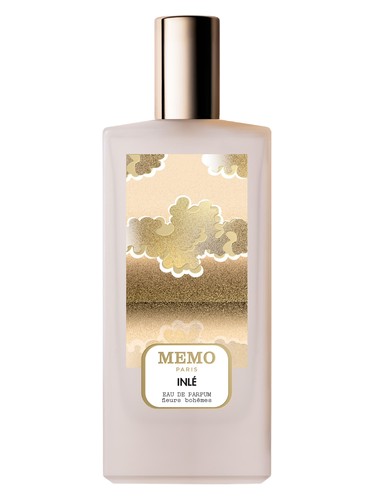
First Impressions
The first spray of Inlé transports you somewhere verdant and alive—a garden suspended between earth and water, where morning mist still clings to unfurling petals. Named after Myanmar''s legendary Inlé Lake, this 2007 creation from Memo Paris opens with an unexpected clarity: tea leaves steeped in early sunlight, brightened by neroli''s honeyed citrus glow and bergamot''s effervescent spark. There''s a whisper of cardamom adding gentle warmth, but nothing that disturbs the overarching sense of freshness. This is the scent of awakening—botanical, crystalline, and utterly inviting.
What strikes you immediately is how the composition manages to feel both lush and weightless. The tea accord doesn''t present as the smoky, robust variety you''d find in a bergamot Earl Grey; instead, it''s delicate, green, almost translucent—more white tea than black, more whisper than declaration. This restraint sets the tone for everything that follows.
The Scent Profile
Inlé''s evolution reads like a carefully composed haiku—spare, intentional, beautiful in its simplicity. Those opening notes of tea and neroli establish a foundation that remains present throughout, never completely vanishing but rather becoming a luminous backdrop for what emerges next.
The heart is where Inlé truly blossoms. Osmanthus takes center stage with its peculiar magic—that apricot-suede softness that smells simultaneously like fruit and flower, tea and skin. It''s joined by jasmine sambac, which lends a creamy, slightly indolic richness without tipping into the overtly heady territory some white florals inhabit. Then comes the surprise: fig. Not the milky, woody fig of Mediterranean compositions, but rather the green, slightly sappy quality of fig leaves themselves, adding another dimension to the garden imagery. These three notes create a harmony that''s decidedly floral (the dominant accord at full intensity) yet unmistakably fruity (registering at 80% intensity in the fragrance''s DNA).
The base notes arrive with gentleness rather than drama. Mate—that South American botanical—reinforces the tea theme while adding an herbaceous, almost grassy quality. Musk provides soft radiance rather than heaviness, while violet contributes a powdery-green facet that feels vintage-inspired without being dated. Cedarwood offers the barest suggestion of structure, just enough to keep this airy composition from floating away entirely. The result is a fragrance that feels green (67% accord strength) and fresh (66%) even as it settles into its final hours.
Character & Occasion
The community consensus is unambiguous: Inlé is a daylight fragrance, favored by 99% of wearers for daytime occasions versus just 19% for evening. This isn''t a fragrance that competes with candlelight or cocktail dresses; it belongs to mornings, to errands, to working lunches and afternoon garden parties.
Seasonally, Inlé shines brightest in spring (100% suitability) and summer (89%), which makes perfect sense given its fresh, floral-fruity character. The green tea and white floral elements practically beg for warm weather, while the subtle spicy touches from cardamom give it just enough complexity to transition into early fall (40% suitability). Winter, conversely, sees minimal enthusiasm (16%)—this is simply not a cold-weather fragrance, lacking the amber, vanilla, or resinous warmth that frigid temperatures demand.
Who is Inlé for? While marketed as feminine, its tea-forward, green character could easily appeal to those who appreciate unisex compositions. It suits anyone drawn to florals that prioritize radiance over opulence, freshness over seduction. This is a fragrance for the person who wants to smell clean, elegant, and utterly approachable—sophisticated without intimidation.
Community Verdict
With a solid 3.91 out of 5 stars from 1,881 votes, Inlé occupies respectable territory. This isn''t a polarizing fragrance that inspires either cult devotion or vehement dismissal; instead, it earns consistent appreciation. The rating suggests a well-executed composition that delivers on its promise without necessarily breaking new ground. It''s the kind of fragrance people like rather than love obsessively—which, depending on your perspective, might be exactly what you''re seeking.
The substantial vote count indicates this isn''t an obscure curiosity but rather a fragrance that''s been genuinely explored and evaluated by a meaningful cross-section of wearers. That near-four-star consensus, accumulated over years, speaks to its reliability and broad appeal.
How It Compares
Inlé shares DNA with some illustrious company. The most obvious comparison is Hermès''s Un Jardin Sur Le Nil, which also explores green, aquatic florals with mango and lotus. Where Hermès leans more deliberately fruity and humid, Inlé emphasizes tea and white flowers. Byredo''s La Tulipe offers another spring floral reference point, though with a cooler, more Nordic sensibility. Mojave Ghost, also from Byredo, shares the magnolia-musk airiness, while Amouage''s Sunshine Woman brings fig into play, though in a more honeyed, opulent context.
Among these peers, Inlé distinguishes itself through its tea-forward architecture and its particular interpretation of osmanthus. It''s perhaps less daring than the Kilians and Byredos of the world, but also more immediately wearable—less conceptual, more embraceable.
The Bottom Line
Inlé represents Memo Paris''s talent for creating evocative, wearable compositions that tell stories without overwhelming the wearer. At 3.91 stars, it won''t revolutionize your fragrance perspective, but it might become your go-to for spring and summer days when you want to smell polished, fresh, and gently beautiful.
The value proposition depends on your priorities. If you''re seeking a unique spring floral with tea and osmanthus at its heart—something more nuanced than department store offerings but more accessible than avant-garde niche—Inlé delivers admirably. Those who find typical white florals cloying or heavy should absolutely explore this. It''s the antidote to perfume fatigue, a reminder that elegance can whisper rather than shout.
Try Inlé if you loved Un Jardin Sur Le Nil but wanted more floral depth, or if you''re curious about osmanthus but intimidated by heavier interpretations. Skip it if you need your fragrances bold, long-lasting, or suitable for all seasons. This is a fair-weather friend in the best possible sense—radiant, reliable, and absolutely lovely when the sun is shining.
AI-generated editorial review