First Impressions
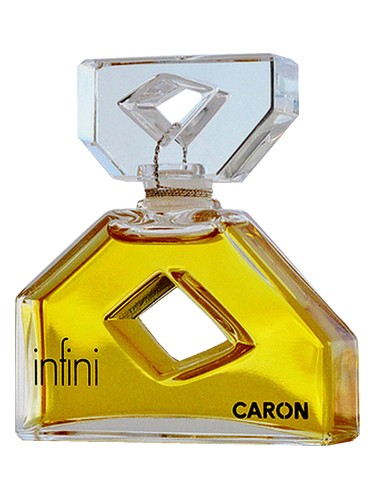
The first spray of Infini delivers what can only be described as a luminous shock—that distinctive fizz of aldehydes meeting skin, immediately softened by a cascade of white petals. This is not the soapy, linear aldehydic experience you might expect from a 1970 release. Instead, Caron crafted something paradoxical: a fragrance that feels simultaneously crisp and enveloping, vintage yet refusing to be relegated to the past. The narcissus and lily-of-the-valley announce themselves with green confidence, while jasmine weaves through with a honeyed warmth that hints at the indulgence to come. Within moments, you understand the name—Infini suggests endlessness, and this opening does feel like it could spiral outward forever, refracting light like cut crystal.
The Scent Profile
Infini''s architecture reveals Caron''s mastery of the white floral genre, built on a foundation of aldehydes that never overwhelm but consistently elevate. The top notes create a study in contrasts: those aldehydes provide sparkle and lift, but rather than the austere soapiness they can sometimes produce, they''re immediately grounded by narcissus''s earthy-green character. Jasmine adds its indolic richness while lily-of-the-valley contributes a dewy, almost aqueous quality. It''s fresh in the truest sense—not citrus-bright, but air-after-rain fresh, with the complexity of real flowers rather than laundry detergent.
As the fragrance settles into its heart, the white floral character deepens considerably. Iris emerges with its powdery-rooty elegance, lending a sophisticated restraint to what could easily have become a heady bouquet. Rose and tuberose join forces here, and this is where Infini shows its vintage bones most clearly. The tuberose isn''t the aggressive variety found in modern compositions; it''s rounded and creamy, playing beautifully against the lilac''s soft, almost nostalgic sweetness. This heart phase feels utterly feminine in the classical sense—opulent but never cloying, romantic without being saccharine.
The base is where Infini surprises most. Vetyver provides an earthy, slightly smoky counterpoint to all that floral richness, while musk and amber create a skin-like warmth. Tonka bean adds subtle vanilla sweetness, and sandalwood contributes its creamy, woody elegance. Together, these base notes don''t so much replace the florals as provide a sophisticated stage for them to continue performing. The white flowers never entirely disappear; they simply become more intimate, closer to the skin, wrapped in this warm, slightly green-tinged embrace.
Character & Occasion
Here''s where Infini defies easy categorization. The data shows equal suitability across all seasons, and wearing it confirms why—this is a fragrance of remarkable adaptability. In spring and summer, those fresh and green accords (registering at 100% and 80% respectively) come to the forefront, making it feel appropriate for warmer weather despite its white floral richness. The aldehydic sparkle keeps it from feeling heavy. In autumn and winter, the amber, tonka, and sandalwood base reveals itself more fully, providing warmth without the cloying sweetness of typical cold-weather fragrances.
The perfume''s versatility extends beyond seasons. While many aldehydic florals lean formal or evening-appropriate, Infini''s fresh character makes it equally compelling for daytime wear. It has the presence to hold its own at an evening event but enough restraint for professional settings. This is a fragrance for someone who appreciates vintage sophistication but doesn''t want to smell like they''re wearing a costume. It suits the woman who owns both tailored blazers and silk slip dresses, who can quote both Virginia Woolf and contemporary poets.
Community Verdict
With a rating of 4.05 out of 5 from 422 votes, Infini has earned its place as a quietly revered classic. This isn''t a score inflated by hype or nostalgia—it''s a solid endorsement from people who''ve actually lived with the fragrance. The voting base is substantial enough to be meaningful but not so massive that it suggests fleeting trend status. These are votes from those who sought out a 1970 Caron release deliberately, who appreciate its particular alchemy of fresh and floral, vintage and wearable. The rating suggests consistent satisfaction rather than polarizing love-or-hate responses, which aligns perfectly with the fragrance''s balanced character.
How It Compares
Infini occupies fascinating territory alongside its listed companions. Like Madame Rochas and First by Van Cleef & Arpels, it belongs to that golden era of white florals that prioritized complexity over simplicity. Where Arpège leans more overtly powdery and Chanel No 5 pushes aldehydes to the foreground, Infini finds a middle path—aldehydic without being austere, floral without being exclusively soft. The kinship with Miss Dior (presumably the vintage formulation) is particularly apt; both achieve that elusive balance between fresh and opulent, green and creamy. What sets Infini apart is that 100% fresh accord—it maintains a brightness that some of its siblings sacrifice for deeper richness.
The Bottom Line
Infini deserves its 4.05 rating and the devoted following it maintains over five decades after its release. This isn''t a fragrance that will announce your presence from across a room, nor is it a safe, forgettable office scent. It occupies that sweet spot of being distinctive without being difficult, vintage without being dated. For someone exploring classic aldehydic florals, it offers an excellent entry point—more approachable than No 5, fresher than many of its contemporaries. For the experienced collector, it represents Caron''s often-overlooked brilliance in this genre. The versatility across seasons and occasions makes it genuinely practical, while the complexity rewards close attention. If you appreciate white florals but crave that aldehydic sparkle, or love aldehydes but want them softened by petals, Infini might just live up to its infinite name.
AI-generated editorial review