First Impressions
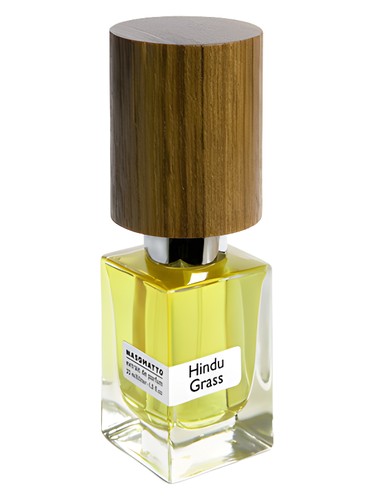
Hindu Grass announces itself with an almost confrontational burst of green—not the polite, dewy green of spring mornings, but something wilder and more primal. This is Nasomatto at its most enigmatic, a fragrance that Alessandro Gualtieri released in 2008 with virtually no note breakdown, leaving wearers to decode its mysteries themselves. That first spray feels like pushing through dense undergrowth, your hands staining with chlorophyll and earth. It''s unapologetically verdant, a wall of living green that doesn''t ask for permission before making itself at home on your skin.
The mystery extends beyond the scent itself. Nasomatto has chosen not to disclose specific notes or even the concentration, a deliberate opacity that forces you to experience the fragrance on its own terms rather than through the filter of your expectations. It''s a bold move that somehow suits Hindu Grass perfectly—this is not a perfume that wants to be understood immediately.
The Scent Profile
Without an official note pyramid to guide us, Hindu Grass reveals itself through its dominant accords: an overwhelming green presence that registers at 100%, supported by a substantial patchouli foundation at 78%. This isn''t the sweet, hippie-adjacent patchouli of head shops; it''s darker, more complex, shot through with earthy richness that grounds the aggressive greenness.
The woody accord at 47% weaves through the composition, adding structure and preventing the green from becoming too sharp or shrill. What''s particularly intriguing is the tobacco accord at 42%—not immediately obvious but present as a dry, slightly bitter undertone that emerges after the initial green assault softens. This tobacco element adds an unexpected warmth and sophistication, suggesting crushed leaves and dried herbs rather than smoke.
At 39%, the warm spicy accord provides subtle heat without overwhelming the cooler green elements. There''s a push-pull dynamic here, a tension between fresh and warm that keeps the fragrance from settling into any single mood. The fresh accord at 33% reinforces the living, vital quality of that dominant greenness—this isn''t dried herbs in a sachet, but something that feels alive and growing.
The evolution is less about distinct phases and more about gradual revelation. Hindu Grass doesn''t transform dramatically from top to base; instead, it slowly unfolds like a fern frond, revealing the patchouli and tobacco that were there all along, hidden beneath that initial green canopy.
Character & Occasion
Despite its feminine designation, Hindu Grass possesses an androgynous quality that transcends traditional gender boundaries. The data reveals it as overwhelmingly a daytime scent, registering at 100% for day wear versus 42% for evening—and this makes perfect sense. This is a fragrance for movement and air, for wearing while actually doing something rather than simply being admired.
Spring emerges as its ideal season at 93%, when the natural world echoes Hindu Grass''s verdant intensity. Fall follows at 77%, where the patchouli and tobacco elements align beautifully with turning leaves and cooler air. Summer at 58% works surprisingly well despite the fragrance''s intensity—that fresh accord keeps it from becoming suffocating in heat. Winter, at just 29%, is clearly not its home; this is a perfume that needs natural light and growth.
This is for the wearer who doesn''t need their fragrance to smile and play nice. It''s for someone comfortable with a scent that challenges rather than comforts, that provokes questions rather than compliments. Hindu Grass works beautifully in creative environments, outdoor settings, and anywhere you want to maintain a certain mystique.
Community Verdict
With a solid 3.95 out of 5 rating from 676 voters, Hindu Grass sits comfortably in "very good" territory without quite reaching masterpiece status. This rating feels honest—it reflects a fragrance that''s accomplished and memorable but decidedly niche. The relatively substantial vote count suggests staying power; this isn''t a forgotten release but one that continues to find its people more than fifteen years after launch.
The rating also hints at polarization. Hindu Grass is clearly not for everyone, and those who don''t connect with its particular brand of green intensity likely rate it quite low, while its devotees champion it passionately. This isn''t a crowd-pleaser, and it doesn''t want to be.
How It Compares
Hindu Grass finds itself in fascinating company. Its similarity to L''Artisan Parfumeur''s Timbuktu speaks to shared woody, incense-like qualities, while the connections to Tom Ford''s Black Orchid and Noir de Noir suggest a darkness and richness that might not be immediately apparent. The link to Serge Lutens''s Chergui points toward that tobacco warmth lurking beneath the green surface.
Most tellingly, its similarity to Nasomatto''s own Absinth confirms Alessandro Gualtieri''s particular aesthetic—a preference for intensity, mystery, and compositions that refuse easy categorization. Where many green fragrances lean fresh and accessible, Hindu Grass shares space with deeper, more complex creations that happen to feature prominent green elements rather than being defined by them.
The Bottom Line
Hindu Grass isn''t an easy sell, and that''s precisely its strength. At a time when many fragrances telegraph their intentions immediately, this remains genuinely mysterious. The lack of disclosed notes isn''t gimmickry—it''s integral to the experience of discovering what this fragrance does on your particular skin.
The 3.95 rating represents fair assessment: this is a very good fragrance for the right person, not a universal masterpiece. Given Nasomatto''s typically premium pricing, it''s a considered purchase rather than an impulse buy. Seek it out if you''re drawn to unconventional greens, if you appreciate patchouli''s earthier expressions, or if you''re simply tired of fragrances that reveal everything in the first five minutes.
Hindu Grass rewards patience and contemplation. It''s a fragrance for those who understand that not everything needs to be immediately understood—sometimes mystery is the point.
AI-generated editorial review