First Impressions
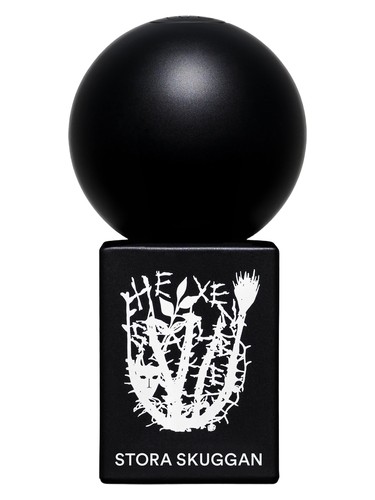
The first spray of Hexensalbe feels like opening an ancient grimoire in a shadowed apothecary. There''s an immediate herbal intensity—dark, slightly medicinal, utterly arresting. Licorice and wormwood announce themselves without pretense, creating an opening that''s simultaneously sweet and bitter, comforting and unsettling. This isn''t the polite introduction of a crowd-pleaser; it''s the olfactory equivalent of a firm handshake from someone who knows exactly who they are. The name—German for "witch''s salve"—proves literal rather than metaphorical. Stora Skuggan has bottled something that smells genuinely like a historical recipe, the kind of concoction that medieval healers (or their more controversial counterparts) might have stirred under moonlight.
The Scent Profile
Hexensalbe''s evolution reads like a lesson in medieval herbalism, each phase revealing another layer of botanical complexity. The opening duo of licorice and wormwood creates an fascinating duality—the licorice brings an anisic sweetness that most would recognize, but it''s immediately tempered by wormwood''s green, slightly bitter astringency. It''s less candy shop, more Renaissance pharmacy shelf, and that tension between sweet and medicinal sets the tone for everything that follows.
As the fragrance settles into its heart, the composition deepens into a garden of historically potent plants. Angelica and rosemary provide aromatic freshness, their green, slightly camphoraceous qualities lending an authenticity to the "salve" concept. Then come the more notorious players: belladonna and tuberose. While belladonna is scentless in reality, its symbolic presence seems to darken the composition''s mood, and the tuberose—typically a heady white floral—is rendered here in its earthier, more narcotic guise. This isn''t tuberose as wedding bouquet; it''s tuberose as night-blooming shadow flower, its creaminess subdued beneath layers of herbs and spice.
The base is where Hexensalbe reveals its modern perfumery credentials while maintaining its historical narrative. Patchouli provides an earthy foundation, but it''s the black hemlock (tsuga) and oakmoss that truly define the fragrance''s conclusion. The tsuga brings a resinous, slightly balsamic woodiness—imagine the smell of evergreen bark, damp and deep. Oakmoss adds its signature forest floor funk, that slightly musty, intensely green quality that grounds the entire composition in soil and shadow. The result is a base that feels less like drydown and more like descent—into earth, into darkness, into something primordial.
Character & Occasion
The community has spoken clearly on this point: Hexensalbe is autumn''s perfume, scoring a perfect 100% for fall wear. This makes intuitive sense—there''s something about its herbal darkness, its earthy woods, its spiced complexity that mirrors the season of dying leaves and shorter days. Winter follows at 78%, and again, the logic holds. This is a scent for cold air and wool scarves, for evenings that arrive early and linger long.
What''s particularly interesting is its day-to-night versatility, leaning slightly toward evening (73%) but entirely wearable during daylight hours (64%). It''s unconventional enough to make a statement during the day—imagine it in a library, a vintage bookshop, an art gallery opening—yet substantial enough to hold its own through dinner and beyond.
Spring scores a respectable 53%, suggesting it might work during that transitional period when winter hasn''t quite released its grip. Summer, at 18%, is clearly not Hexensalbe''s territory. This isn''t a fragrance that plays well with heat and humidity; it wants to be wrapped in layers, both literal and metaphorical.
As for who should wear it: while marketed as feminine, Hexensalbe''s dominant woody and aromatic profile (95% and 86% respectively) transcends conventional gender boundaries. This is for those who appreciate perfumery as art rather than accessory, who want their scent to provoke conversation rather than simply complement.
Community Verdict
With a rating of 4.12 out of 5 from 497 votes, Hexensalbe has earned genuine enthusiasm from its wearers. This is a strong score, particularly for a fragrance this unconventional. Nearly 500 people have weighed in, suggesting meaningful engagement rather than niche obscurity. It''s not quite cult classic territory, but it''s well on its way. The rating suggests that while this won''t be everyone''s cup of (wormwood) tea, those who connect with its dark botanical vision connect deeply.
How It Compares
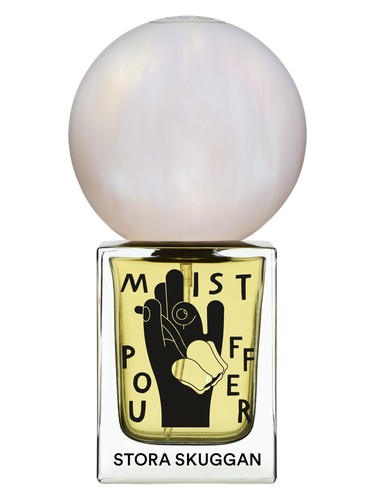
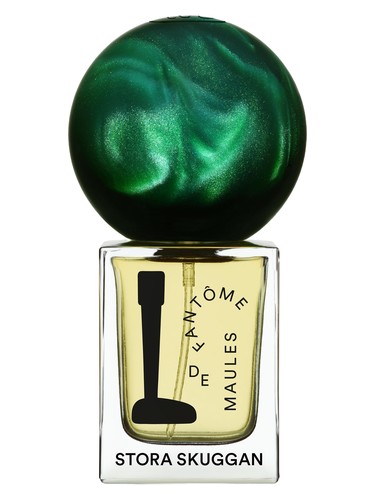
Stora Skuggan''s own Fantome de Maules and Mistpouffer appear among the similar fragrances, which speaks to the brand''s consistent aesthetic—atmospheric, conceptual, uncompromising. The inclusion of Oriza L. Legrand''s Relique D''Amour and Le Labo''s Thé Noir 29 positions Hexensalbe within a lineage of sophisticated, unconventional woody aromatics. Maison Martin Margiela''s By the Fireplace suggests a shared warmth and comfort, though Hexensalbe achieves this through herbs rather than chestnuts and wood smoke.
What distinguishes Hexensalbe is its commitment to its concept. Where some fragrances gesture toward their inspiration, this one embodies it fully, for better or worse.
The Bottom Line
Hexensalbe succeeds on its own peculiar terms. At 4.12 stars, it''s clearly resonating with those who seek something beyond the conventional. This isn''t a safe blind buy, nor is it trying to be. It''s a fragrance that demands sampling, contemplation, perhaps even multiple wearings before judgment.
Who should seek it out? Anyone exhausted by generic florals and aquatics. Those who gravitate toward woody, spicy, and aromatic compositions. Readers of historical fiction and folklore. People who own at least one piece of clothing in charcoal or forest green. Anyone who''s ever been called "intense" and taken it as a compliment.
Stora Skuggan has created something genuinely unusual here—a perfume that smells like its concept without becoming a gimmick. Whether that concept appeals to you is a question only your own nose can answer.
AI-generated editorial review