First Impressions
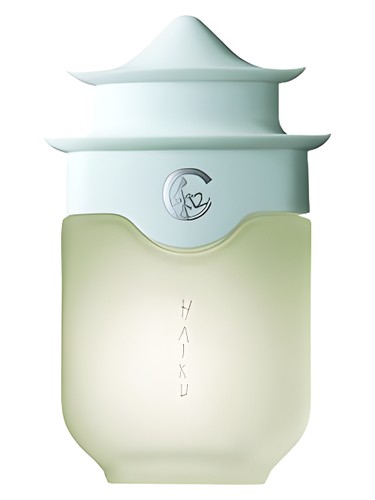
The first spray of Haiku delivers exactly what its poetic name promises: a moment of crystalline clarity. There''s an immediate burst of dewiness—not the synthetic aquatic kind, but something closer to the moisture that clings to fruit in early morning. Pomegranate and yuzu dance with an unexpected pear sweetness, while freesia adds its characteristic green-soapy freshness. This is the olfactory equivalent of stepping into a Japanese garden just after rain, when everything feels scrubbed clean and impossibly vibrant. For a fragrance launched by Avon in 2000, Haiku demonstrates remarkable sophistication in its opening, establishing a white floral identity that manages to feel both polished and utterly approachable.
The Scent Profile
Haiku''s evolution unfolds like the gradual opening of petals throughout a spring day. Those initial notes of dew drop, pomegranate, and yuzu create a sparkling, fruit-forward introduction that reads more green than overtly citrus. The pear adds roundness without tipping into candy territory, while freesia contributes a crisp, almost soapy cleanliness that sets the stage for what''s to come.
As the fragrance settles into its heart, the white floral accord—which registers at a dominant 100% according to its composition profile—takes command. Lily-of-the-valley brings its delicate, green sweetness, while jasmine and tuberose provide the creamy, indolic richness that gives the scent its backbone. Chinese peony adds a fresh, rosy facet, and here''s where Haiku gets interesting: kumquat, prunella, and fig weave through these florals, preventing the composition from becoming a straightforward white flower soliflore. The fig note, in particular, adds a milky, slightly woody dimension that bridges the heart to the base.
The drydown reveals surprising depth for what initially presents as a fresh fragrance. Sandalwood and vetiver provide a woody foundation (registering at 42% in the accord breakdown), while musk keeps things clean and skin-close. Tonka bean and vanilla add just enough warmth to round out the edges without turning Haiku into a gourmand. This base is subtle—this is decidedly not a heavy oriental—but it''s present enough to give the fragrance its reported longevity.
Character & Occasion
The data tells a clear story: Haiku is a spring perfume first and foremost, scoring 97% seasonal suitability for those warmer, breezy months. Summer follows at 67%, which makes perfect sense given the fresh (54%) and green (34%) accords that complement the dominant white floral character. This is a fragrance that thrives in daylight, registering 100% for day wear versus just 16% for evening occasions.
This positioning makes Haiku the perfect office companion—a theme the community data strongly reinforces. It''s fresh enough not to overwhelm in close quarters, sophisticated enough to feel intentional rather than merely "clean," and versatile enough to work from morning meetings through after-work drinks. The white floral character gives it femininity and presence without shouting, while the woody and musky base keeps it grounded.
Who is Haiku for? Anyone who wants to smell polished without trying too hard. It''s for the person who appreciates jasmine and lily-of-the-valley but doesn''t want to announce their entrance with a heavy sillage cloud. The spring and summer seasonality, combined with its fresh-green facets, suggests an ideal wearer who gravitates toward natural elegance over dramatic statement-making.
Community Verdict
The Reddit fragrance community has embraced Haiku with a decidedly positive sentiment, scoring it 7.8 out of 10. The praise centers on several key strengths: users consistently mention its clean, fresh scent profile and are impressed by its longevity and lasting power—surprising for such a fresh composition. The fragrance earns particular appreciation for its versatility, with multiple users noting it pairs beautifully when layered with complementary scents. Perhaps most tellingly, wearers report receiving compliments, that most coveted of fragrance metrics.
But there''s a shadow over this positivity: availability. Users express frustration at the difficulty finding dupes or similar fragrances that capture Haiku''s particular magic. The fragrance has been discontinued, leading to complaints about limited product availability. There''s also a curious note about the jasmine composition not being clearly documented—users wish for more transparency about the specific type or quality of jasmine used.
Interestingly, while the broader data marks Haiku as ideal for spring and summer day wear, the community specifically calls out winter occasions as a good fit, suggesting the woody-vanilla base plays more significantly on skin than the note pyramid might suggest.
How It Comparisons
Haiku finds itself in illustrious company, drawing comparisons to J''adore by Dior, Pleasures by Estée Lauder, Flowerbomb by Viktor&Rolf, Daisy by Marc Jacobs, and Alien by Mugler. This is a wide-ranging group that spans fresh florals, white florals, and even Alien''s intensely woody-amber profile—suggesting Haiku occupies a versatile middle ground.
The comparison to Pleasures makes particular sense: both are fresh, clean compositions built on white florals with green facets. J''adore shares the sophisticated lily-of-the-valley and jasmine heart, though Dior''s offering skews richer and more overtly luxurious. Daisy echoes Haiku''s approachable, spring-ready freshness, while Flowerbomb and Alien suggest that some wearers find more depth and presence in Haiku''s base than the fresh opening might suggest.
What distinguishes Haiku is its accessibility—both in original price point and approachability—combined with a composition that doesn''t smell budget-conscious.
The Bottom Line
With a rating of 3.91 out of 5 from 970 votes, Haiku sits comfortably in "very good" territory—not a masterpiece for the ages, but a genuinely well-crafted fragrance that delivers on its promise. That this rating comes from nearly a thousand voters gives it statistical credibility; this isn''t a niche darling with a small cult following, but a fragrance that has genuinely pleased a broad audience.
The tragedy is the availability issue. Haiku deserves to be a staple, the kind of fragrance you reach for when you want to smell good without overthinking it. Its strength lies in its effortlessness—a fresh white floral with enough depth to last but enough lightness to wear liberally.
Who should seek it out? Anyone who loves fresh florals but finds many modern options too sweet, too loud, or too fleeting. Fans of Pleasures or the original Daisy formulation will likely appreciate Haiku''s aesthetic. Those who enjoy layering fragrances should definitely hunt it down, given the community''s enthusiasm for its versatility in that regard.
If you spot Haiku on a resale site or tucked away in a forgotten Avon catalog, grab it. This is a fragrance that understood the assignment—it captured a moment of beauty, crystallized it in a bottle, and made it wearable. Sometimes poetry and perfume truly do align.
AI-generated editorial review