First Impressions
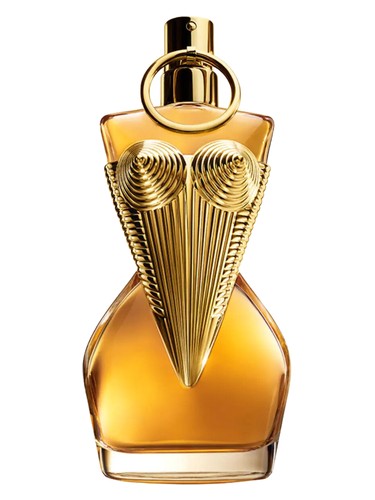
The first spray of Gaultier Divine Le Parfum feels like stepping from cool shadow into brilliant sunlight. There''s an immediate warmth—not the aggressive heat of spice, but the enveloping glow of amber meeting skin. What catches you off-guard is the contradiction: this is clearly a solar fragrance, yet it arrives with the richness and depth of parfum concentration. Lily floats atop this luminous opening, its green freshness tempered by something almost aldehydic, a subtle shimmer that suggests expensive soap or freshly pressed linen left to dry in Mediterranean sun. This isn''t the innocent sunshine of citrus-forward scents; it''s something more knowing, more deliberate.
The Scent Profile
Jean Paul Gaultier has orchestrated Divine Le Parfum around a dominant amber backbone—the data confirms this accord registers at full intensity—but the journey there unfolds with surprising tropical detours. Those solar notes in the opening work less like a traditional citrus fanfare and more like the feeling of warmth itself, abstract and enveloping. The lily provides just enough verdant coolness to prevent the composition from becoming cloying, its petals offering a breath of air before you''re drawn deeper.
The heart reveals where Divine earns its name. Frangipani—that creamy, indolic flower forever associated with Hawaiian leis and Polynesian beaches—blooms with full-bodied sweetness. But Gaultier''s perfumers have salted this tropical paradise. Sea salt cuts through the frangipani''s natural richness, creating tension between vacation-ready florals and something more sophisticated, more wearable in urban contexts. This salty dimension registers at 38% in the fragrance''s overall profile, enough to be distinctly perceptible without dominating. It''s a clever trick: the salt makes the sweetness feel intentional rather than accidental, chosen rather than inevitable.
As Divine settles into its base, amber and benzoin create a warm, resinous foundation that the fragrance data suggests drives the entire composition. The amber accord sits at maximum intensity, enveloping those tropical florals in a golden haze that feels both sensual and comforting. Benzoin adds its characteristic vanilla-adjacent sweetness with a slight powder, rounding edges and extending longevity. In parfum concentration, these base notes don''t simply appear after an hour—they''re present from the beginning, creating a rich density that distinguishes this from lighter interpretations of the solar-floral theme.
Character & Occasion
The community data reveals something intriguing about Divine Le Parfum: it registers as suitable for all seasons with an even split between day and night wear. This versatility speaks to Gaultier''s balancing act. The tropical florals and solar warmth suggest summer, yet the amber richness and parfum concentration provide enough weight for cooler months. In practice, this translates to a fragrance that adapts to context—lighter applications work for daytime professional settings, while generous sprays create evening-appropriate presence.
This is fundamentally a fragrance for someone who wants to be noticed but not announced. The white floral and tropical accords (registering at 46% and 45% respectively) provide beauty and accessibility, while that dominant amber keeps things grounded in sensuality rather than sweetness. It''s feminine without being girlish, warm without being heavy, distinctive without being polarizing. The aldehydic quality at 25% adds just enough sophistication to elevate this beyond simple tropical crowd-pleasers.
Community Verdict
With a rating of 3.99 out of 5 from 1,101 votes, Divine Le Parfum has garnered notably positive reception for a 2024 release. Breaking the 3.9 threshold with over a thousand votes suggests genuine appeal rather than launch-window enthusiasm. This isn''t a niche darling with cult status among a few hundred devotees, nor is it a mass-market release limping toward 3.5. The rating indicates a fragrance that delivers on its promises to a broad audience while maintaining enough character to inspire genuine affection. That near-4.0 score is particularly impressive for a mainstream designer release in an increasingly crowded amber-floral category.
How It Compares
Gaultier positions Divine Le Parfum in conversation with some heavyweight contemporary feminines. The comparison to Mugler''s Alien makes sense—both build around a dominant accord (jasmine for Alien, amber for Divine) with solar warmth. Prada Paradoxe shares that aldehydic shimmer and white floral elegance, while Libre Intense and L''Interdit offer alternative takes on modern feminine sensuality. What distinguishes Divine is its commitment to tropical florals—that frangipani and sea salt combination creates a vacation-ready quality that the more traditionally European compositions lack. Where Good Girl leans gourmand-sweet, Divine stays firmly floral-amber. It''s less edgy than some comparisons, more approachable, but with enough parfum richness to feel substantial.
The Bottom Line
Gaultier Divine Le Parfum succeeds as a modern amber-floral that refuses to choose between accessibility and sophistication. The nearly 4-star rating from over a thousand voters suggests this isn''t a revolutionary fragrance, but it is a very good one—polished, versatile, and genuinely pleasant to wear. In parfum concentration, it offers legitimate longevity and sillage without the premium pricing of niche alternatives.
The ideal wearer appreciates tropical florals but lives a life that doesn''t accommodate full-time vacation vibes. She wants warmth and presence but needs to navigate both boardrooms and beach clubs. The all-season, day-to-night versatility makes this particularly valuable for those building a focused collection—one bottle that works year-round holds genuine appeal.
If you''ve found Alien too intense, Paradoxe too clean, or Libre too sharp, Divine Le Parfum occupies a golden middle ground worth exploring. It won''t change your life, but it might become the fragrance you reach for when you want to feel polished, warm, and subtly radiant—which, honestly, is most days.
AI-generated editorial review