First Impressions
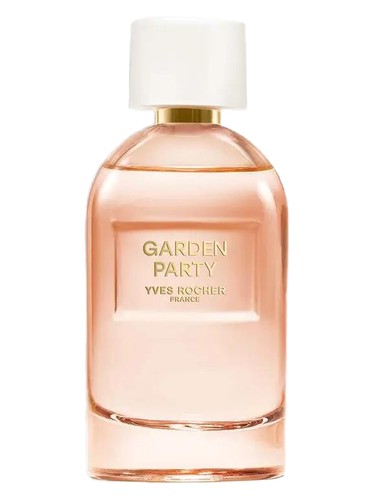
The first spritz of Garden Party delivers exactly what its name promises: that moment when you step into a sun-dappled garden on a May morning, dew still clinging to rose petals and crushed grass releasing its verdant breath underfoot. This is rose reimagined through a distinctly green lens, where the queen of flowers shares the stage with aromatic stems, leaves, and that ineffable quality of living, growing things. It''s refreshing rather than romantic, energizing rather than seductive—a rose composition that feels like it was plucked from the earth rather than arranged in a crystal vase.
The Scent Profile
While Yves Rocher hasn''t disclosed the specific note breakdown for Garden Party, the dominant accords tell a clear story of how this fragrance unfolds on skin. Rose anchors the composition completely, registering at maximum intensity, but this isn''t your grandmother''s powdery rose or a heavy, indolic variety. Instead, it''s tempered and transformed by an equally prominent green accord that gives the rose context—these blooms exist in nature, surrounded by foliage and garden air.
The aromatic elements weave through the heart, adding an herbaceous quality that prevents the rose from becoming too sweet or traditionally floral. There''s an almost tea-like quality to this interplay, where bitter-green notes dance with the rose''s natural sweetness. Fresh spicy accords contribute a subtle piquancy, perhaps suggesting the peppery bite of geranium leaves or the sharp brightness of garden herbs catching afternoon sun.
The floral accord remains surprisingly restrained, allowing the green and aromatic facets to define the fragrance''s personality as much as the rose itself. A whisper of citrus adds sparkle without dominating, like sunlight catching on water droplets. What makes Garden Party distinctive is this balance—it''s a rose perfume that refuses to be just a rose perfume, insisting instead on capturing an entire garden ecosystem in a bottle.
Character & Occasion
The community data reveals Garden Party''s true calling with remarkable clarity: this is a warm-weather, daytime fragrance through and through. Spring and summer claim near-perfect scores (100% and 97% respectively), while fall and winter barely register—and for good reason. This is a fragrance that needs warmth and light to truly shine, blooming on skin during those months when you might actually attend a garden party.
The day-to-night split is even more dramatic, with 99% daytime suitability versus just 11% for evening wear. Garden Party makes no apologies for its sunny disposition. This is the perfume for Saturday morning farmers'' markets, outdoor brunch dates, walks through botanical gardens, and casual office days when the dress code relaxes with the season. It''s the olfactory equivalent of a linen sundress or a crisp white shirt—effortlessly appropriate, refreshingly uncomplicated.
The feminine classification feels apt not because of any gendered florals, but because of the fragrance''s light, airy construction. That said, its green and aromatic character could easily be appreciated by anyone drawn to fresh, botanical scents over heavy orientals or intense woody compositions.
Community Verdict
With 673 votes landing on a 3.7 out of 5 rating, Garden Party occupies interesting territory. This is a fragrance that clearly resonates with a substantial audience—the vote count demonstrates genuine interest and wear—while the rating suggests something reliably good rather than groundbreaking. It''s worth noting that accessible, fresh fragrances often score in this range not because they''re flawed, but because they prioritize wearability over complexity, approachability over avant-garde experimentation.
The rating reflects a fragrance that delivers on its promise without pretension. It won''t convert rose skeptics or satisfy those seeking maximum projection and longevity, but for those drawn to its garden-fresh concept, it appears to be a satisfying interpretation of the theme.
How It Compares
Garden Party finds itself in good company among Yves Rocher''s own portfolio, with notable similarities to Comme une Evidence, Quelques Notes d''Amour, and Mon Evidence. This positioning suggests a house style that favors accessible, romantic-yet-modern femininity. The comparison to Elizabeth Arden''s Green Tea is particularly telling—both fragrances prioritize freshness and wearability, offering uncomplicated beauty at accessible price points.
The mention of Lanvin''s Eclat d''Arpège, however, elevates the conversation. If Garden Party travels in these circles stylistically, it''s working within a respected tradition of green-floral compositions that emphasize transparency and light. Where Garden Party distinguishes itself is in that dominant rose accord balanced against the greenery—it''s perhaps rosier than Green Tea, greener than traditional rose soliflores, occupying a sweet spot for those who want both elements in equal measure.
The Bottom Line
Garden Party succeeds by understanding its assignment and executing it well. This isn''t a fragrance trying to be mysterious, provocative, or transformative. It''s a beautiful, wearable interpretation of rose in a garden setting, perfect for the person who wants to smell fresh, feminine, and put-together during the warmer months without making a loud statement.
The 3.7 rating and substantial vote count suggest a fragrance that works for many without necessarily being anyone''s desert island scent—and that''s perfectly acceptable. Not every perfume needs to be a masterpiece; sometimes we need reliable daily companions that make us feel good without demanding attention. At Yves Rocher''s typically accessible price point, Garden Party offers excellent value for those seeking a spring and summer rose that won''t wilt in the heat.
This is for the person who finds traditional rose perfumes too heavy, green fragrances too sharp, and floral compositions too sweet. If you''ve ever wanted to capture that fleeting moment when you brush past a rosebush in bloom and the whole garden seems to release its breath, Garden Party extends that invitation.
AI-generated editorial review