First Impressions
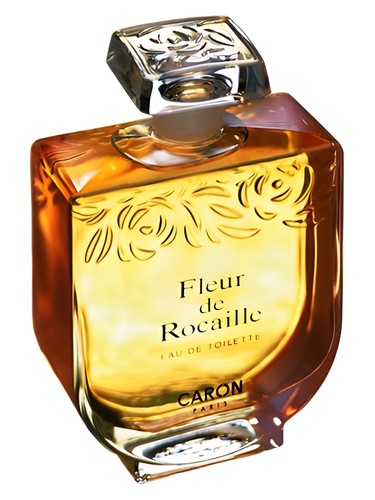
The first spray of Fleurs de Rocaille is a study in contradictions—a burst of shimmering aldehydes that somehow feels both crystalline and soft, like morning dew caught in a spider''s web. This is Caron in 1934, capturing that peculiar magic of pre-war French perfumery when floralcy wasn''t simply pretty, but architectural. The opening arrives with the cool sparkle of aldehydes meeting the tender embrace of rose tincture, lilac, and jasmine. It''s fresh, yes—76% fresh according to those who know it well—but there''s nothing simple about this freshness. This is the scent of a formal garden at dawn, where cultivated beauty meets the wild persistence of flowers growing between weathered stones.
The Scent Profile
Fleurs de Rocaille unfolds like a perfectly choreographed dance between old-world elegance and surprising vitality. Those opening aldehydes don''t announce themselves with the soapy boldness of some contemporaries; instead, they create a luminous halo around a bouquet that''s decidedly romantic. The tincture of rose lends a slightly bitter, authentic quality—this isn''t rose jam or rose candy, but the actual green stem and petal. Lilac and jasmine weave through, creating that white floral character (61% of wearers detect it) without veering into the heady, indolic territory of some florals.
As the composition settles into its heart, carnation takes center stage alongside ylang-ylang, lily-of-the-valley, and violet. Here''s where Fleurs de Rocaille reveals its full personality: the spicy, clove-like facets of carnation add warmth and complexity, while lily-of-the-valley contributes a crisp, green sweetness. The violet brings its characteristic powderiness (noted by 43% of wearers), but it''s gentle, more like the natural dusting on a flower petal than face powder. Ylang-ylang rounds out the heart with creamy, slightly fruity notes that prevent the composition from becoming too sharp or austere.
The base is where the "rocaille"—those rocky crevices—makes itself known. Oak moss provides that classic chypre foundation, earthy and slightly bitter, grounding all that floral beauty with undeniable substance. Sandalwood and Virginia cedar create a woody backbone (61% woody character) that feels both vintage and surprisingly modern. Musk softens the edges, adding skin-like warmth that allows the entire composition to settle close and intimate after its bright opening.
Character & Occasion
Spring claims this perfume as its own—82% of wearers associate it with the season of renewal, and it''s easy to understand why. Fleurs de Rocaille captures that particular moment when winter''s severity gives way to the first brave blooms, when there''s still a crispness in the air but life is unmistakably returning. Fall follows at 53%, and the woody-mossy base makes perfect sense for autumn''s golden light and cooling temperatures.
This is decidedly a daytime fragrance, worn by the data at 100% for day versus just 45% for night. There''s nothing about Fleurs de Rocaille that demands evening wear—no sultry heaviness, no dramatic sillage meant to fill a room. Instead, this is perfume as personal signature, meant to be discovered rather than announced. It''s for professional settings where you want to be remembered as elegant and thoughtful. For weekend errands when you feel like putting on your pearls with your jeans. For any moment when you want to feel pulled together without trying too hard.
The woman who reaches for Fleurs de Rocaille appreciates heritage and craftsmanship. She''s not chasing trends, but she''s not stuck in the past either. She understands that true style is timeless.
Community Verdict
With a rating of 4.06 out of 5 from 521 votes, Fleurs de Rocaille has earned genuine respect. This isn''t a niche curiosity with ten devoted fans or a mainstream blockbuster with inflated scores—it''s a classic that continues to find its people nearly 90 years after its creation. That rating, hovering just above 4, suggests a perfume that rewards those who seek it out, though it may not convert everyone on first spray. This is particularly impressive for a vintage composition competing against modern reformulations and contemporary releases.
The voting numbers tell us this isn''t a forgotten relic; over 500 people have taken the time to rate it, suggesting an active, engaged community around this Caron creation.
How It Compares
Fleurs de Rocaille sits comfortably among the grand aldehydic florals of the early-to-mid 20th century. Its companions include Chanel No 5 Parfum, L''Air du Temps by Nina Ricci, Arpège by Lanvin, and Madame Rochas—a formidable family tree. Where No 5 dazzles with its precision and abstract florality, Fleurs de Rocaille feels more naturalistic, more garden than laboratory. Against L''Air du Temps''s ethereal dove-like softness, it offers more structure and complexity. First by Van Cleef & Arpels shares its green sophistication, while Madame Rochas echoes its chypre tendencies.
What distinguishes Fleurs de Rocaille is its particular balance—fresh enough for modern sensibilities, vintage enough to feel special, complex enough to reward attention, but approachable enough for everyday wear.
The Bottom Line
Fleurs de Rocaille deserves its 4.06 rating and the quiet devotion of its admirers. This isn''t a perfume that will convert those who dismiss vintage florals as "old lady" scents, nor should it try. Instead, it offers something increasingly rare: a well-constructed, beautifully balanced floral composition with real depth and character.
Should you try it? Yes, if you appreciate perfumery as craft rather than just commodity. Yes, if you''re building a fragrance wardrobe and need a sophisticated spring daytime scent. Yes, if you''ve loved any of its aldehydic floral siblings but want something slightly less ubiquitous than No 5. At nearly 90 years old, Fleurs de Rocaille remains relevant not because it''s trendy, but because it''s true—to its materials, its era, and its enduring vision of flowers flourishing in the most unlikely places.
AI-generated editorial review