First Impressions
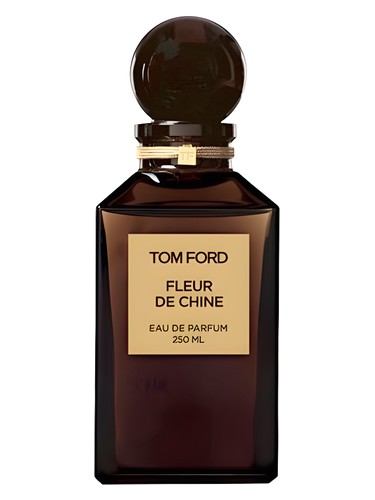
There''s something deliberately mysterious about Fleur de Chine. From the moment it touches skin, this Tom Ford creation refuses to reveal all its secrets at once. The opening is unmistakably floral—not the delicate whisper of a single blossom, but rather a full-throated declaration of petals in bloom. It''s the kind of entrance that commands attention without shouting, a trait that runs through Tom Ford''s Private Blend collection like a signature. The initial spray carries an opulence that feels intentionally exotic, as if the fragrance is inviting you into a world where East and West collide in the most luxurious way possible.
What strikes you immediately is the richness. This isn''t a light, airy floral designed to fade into the background. There''s weight here, a substantive quality that announces itself as serious perfumery. The floral accord dominates completely—and when I say dominates, the data backs this up with a perfect 100% floral rating—but it''s supported by an amber warmth that begins to emerge almost immediately, wrapping around those flowers like golden silk.
The Scent Profile
Here''s where Fleur de Chine becomes particularly intriguing: Tom Ford has kept the specific note breakdown under wraps, leaving us to decode this fragrance through experience rather than ingredient lists. What we can confirm through community consensus is that the floral character reigns supreme, while amber (37%), woody elements (35%), and fruity nuances (35%) provide a complex supporting cast.
The development is less about traditional top-to-heart-to-base evolution and more about a gradual unfurling. Those initial flowers—likely including rose, given the 26% rose accord rating—maintain their presence throughout the wear, but they''re constantly shifting in relationship to what surrounds them. The amber accord grows stronger as the fragrance settles, adding a resinous, slightly honeyed quality that prevents the florals from becoming too green or sharp.
There''s a woody foundation that grounds everything, keeping this from drifting into purely feminine territory despite its classification. The fruity aspects add an unexpected dimension—not sweet candy fruit, but something more subtle, perhaps the natural fruitiness that comes from certain flowers themselves. A citrus element (26%) likely provides brightness in the earlier stages, though it''s woven so seamlessly into the floral tapestry that it never announces itself as a distinct phase.
The overall impression is of a fragrance that maintains remarkable consistency while still evolving. It''s not a loud performer, but rather a persistent, elegant presence that stays close to the skin with quiet confidence.
Character & Occasion
Fleur de Chine is decidedly a transitional season fragrance, and the community data tells a clear story here. Spring leads the pack at 84% suitability—no surprise given that dominant floral character—but fall follows close behind at 77%. This is a fragrance that loves moderate temperatures, where it can bloom without becoming overwhelming. Summer wearability sits at 53%, suggesting it can handle warmth but might feel a touch heavy on the hottest days, while winter''s 45% rating confirms this isn''t meant for bitter cold.
The day/night split is particularly revealing: 100% day versus 51% night. This positions Fleur de Chine firmly in sophisticated daytime territory—think important meetings, gallery openings, or long lunches where you want to project polish without drama. It''s not that it can''t work for evening; rather, it lacks the bombastic intensity typically associated with night-time fragrances.
This is a fragrance for someone who appreciates floral compositions but wants something more substantial than a typical fresh floral. It suits confident wearers who aren''t chasing compliments but rather seeking a signature that reflects sophistication and a certain worldliness.
Community Verdict
With a rating of 4.07 out of 5 from 624 votes, Fleur de Chine has earned solid appreciation from those who''ve experienced it. This isn''t the most voted-upon fragrance in the Tom Ford stable—suggesting it maintains a certain insider status—but those who''ve engaged with it have largely found it worthy. The rating indicates consistent quality and appeal, though perhaps not the universal adoration of true blockbusters. It''s a fragrance that rewards those who seek it out rather than one that announces itself to the masses.
How It Compares
Fleur de Chine sits within a fascinating constellation of fragrances. Its closest relative is Tom Ford''s own Champaca Absolute, suggesting shared DNA in that exotic floral approach. Velvet Orchid offers another point of comparison within the brand''s portfolio, while the connections to Chanel''s Coco Eau de Parfum and Dior''s Poison position it within the lineage of sophisticated, complex florals with oriental leanings. The Shanghai Lily comparison is particularly apt, hinting at that East-meets-West sensibility that defines Fleur de Chine''s character.
What sets it apart is that enigmatic quality—the refusal to reveal its complete formula creates an air of mystery that makes each wearing feel like a rediscovery.
The Bottom Line
Fleur de Chine occupies an interesting space in the Tom Ford universe: not as immediately accessible as some of the brand''s more popular offerings, but deeply rewarding for those who appreciate layered, sophisticated florals with an exotic edge. The 4.07 rating reflects its quality and appeal, though it''s worth noting this isn''t a crowd-pleaser in the conventional sense.
This is a fragrance for the established perfume wardrobe rather than the starting collection. If you''re drawn to substantial florals with amber warmth, if you appreciate fragrances that maintain an air of mystery, or if you''re simply curious about Tom Ford''s more enigmatic creations, Fleur de Chine deserves your attention. It''s best experienced in person before purchasing—this isn''t a blind-buy fragrance—but for the right wearer, it offers a distinctive alternative to more obvious floral compositions.
AI-generated editorial review